‘Enola Holmes 3’ lands on Netflix — and the franchise finally has to grow up
IndieWire’s verdict on the third Enola Holmes film lands the same week Netflix needs another quiet win — and finds a series that has finally outgrown its heroine.
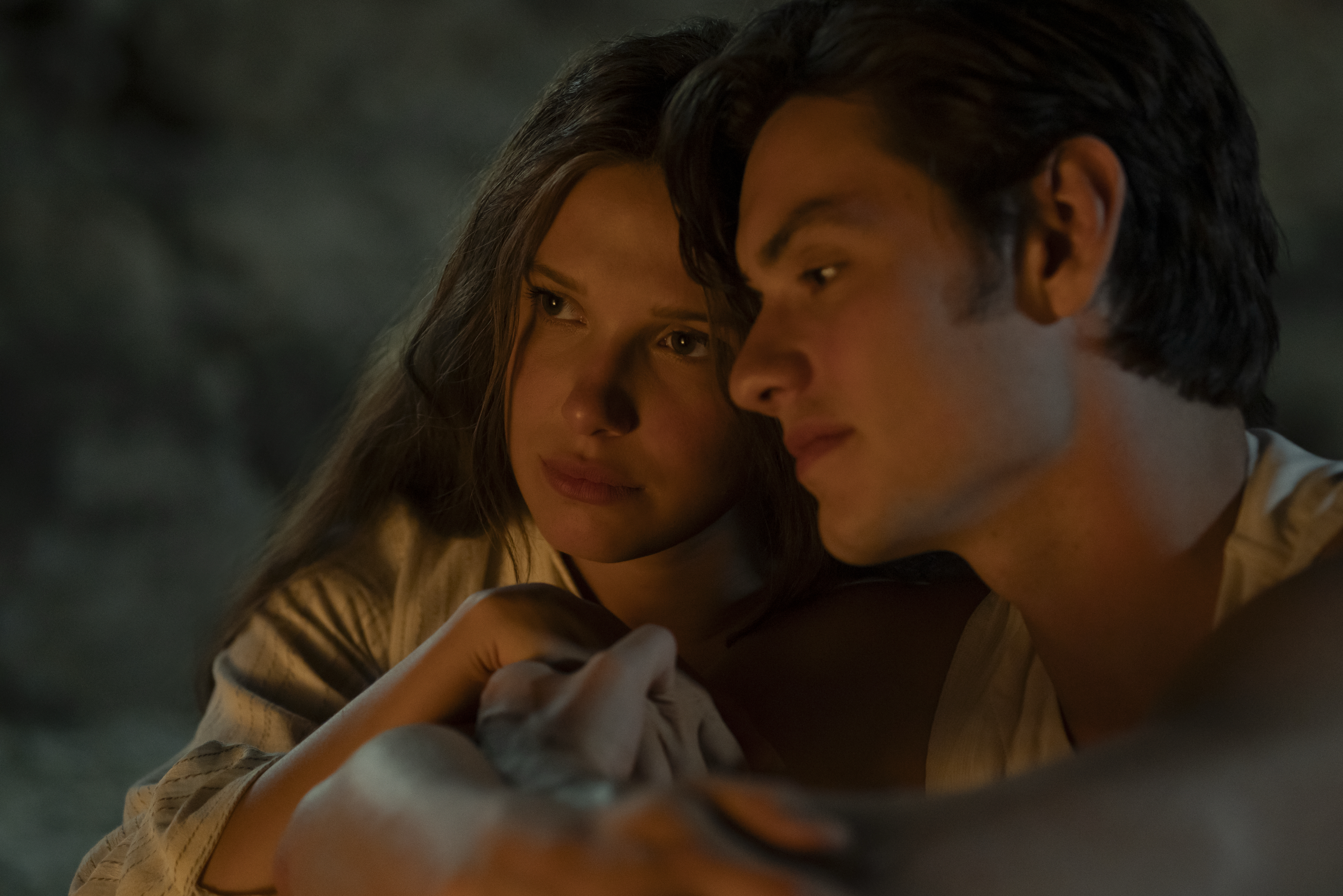
The third Enola Holmes film arrived on Netflix on 30 June 2026, and the early verdict from the platform’s most attentive film critic is unusually blunt: charming, but, in the critic’s own teasing phrase, a little bit elementary. IndieWire’s review of Enola Holmes 3 runs through the case for and against a franchise that has spent five years teaching its young detective to walk, and is now being asked to run.
For Netflix, the timing matters more than the verdict. The streamer has spent the better part of 2026 working out what its film division is actually for, in an environment where the cost of every original feature is a line item and the cost of an under-performing one is a press cycle. A returning family-friendly franchise — built around a recognisable star, a recognisable brand (the Sherlock Holmes mythos is in the public domain, but the Enola books are owned by Nancy Springer and licensed through the estate’s machinery), and a recognisable audience — is exactly the kind of asset a publicly traded streamer is supposed to be able to deploy. The IndieWire review suggests the asset is still working, just not as smoothly as it once did.
What the reviewer actually flagged
The headline of IndieWire’s review of Enola Holmes 3 — shared via Telegram on 30 June 2026 at 23:53 UTC — does the film a small courtesy: it calls the third entry in the Netflix film franchise a "charming young detective saga" that has "some growing pains." That is reviewer language for the central problem the series now has. The first film had the freshness of a debut; the second had the confidence of a follow-up that knew it would get a third. The third is the first one that has to behave like a middle of a story.
That pressure shows up in two predictable places. The younger-Holmes-sister premise that powered the original — a teenage girl solving cases in late-Victorian England while her more famous brother was off doing whatever the IP lawyers had licensed — only goes so far. By the third outing the audience knows the bit, the production design knows the bit, and the star knows the bit. The reviewer’s "elementary" is the polite version of: the mystery itself has stopped being the point.
The second pressure is structural. Netflix did not buy an Enola Holmes trilogy; it bought a developing relationship with Millie Bobby Brown, who has since 2021 become one of the few performers under 25 with both a streaming anchor role (the Stranger Things era, which is now genuinely in the rear-view) and the leverage to attach herself to producer credits elsewhere. A third Enola Holmes is, in that sense, not really a third film. It is the third contractual handshake in a longer commercial conversation.
The counter-read — why Netflix is happy anyway
It is worth resisting the assumption that an "elementary" review equals a damaged asset. The same IndieWire dispatch makes clear the film is still charming, still led by Brown, and still built around a property that parents will queue up without checking Rotten Tomatoes first. The Enola Holmes films have never been prestige objects in the Roma or The Power of the Dog sense; they are product — well-budgeted, broadly appealing, and algorithmically predictable.
That is not a dismissal. Netflix’s film business is run on the same logic as its television business: a steady drumbeat of mid-budget, mid-risk, broad-appeal originals that perform reliably in the first 72 hours and then amortise across international catalogues for years. By that standard, the Enola Holmes films are exactly the kind of thing the streamer needs more of, not less. A review that calls the third entry charming-but-elementary is, in operating terms, fine.
The counter-narrative to the critical grumbling is therefore a financial one. Enola Holmes (2020) and Enola Holmes 2 (2022) both performed strongly on Netflix’s internal metrics and on the modest external signals the company is willing to release; a third entry that lands cleanly into the same slot preserves a template that the streamer can in principle copy with other period-friendly, female-led, YA-elastic properties — the Heartstopper slot for film, the Wednesday slot for serialised IP, and so on.
What this says about franchise cinema in 2026
The interesting structural story is not about Millie Bobby Brown. It is about what happens to a streaming-era franchise when the streamer itself stops growing.
For most of the 2018-2024 window, the Enola Holmes films existed inside a logic of acquisition and expansion: Netflix was paying for the privilege of being the place audiences came to find new things, and a returning series was proof the streamer had earned that position. By 2026 the calculus has flipped. The subscriber base in the United States and Western Europe is essentially tapped out; the growth story now lives in advertising tiers, password-sharing crackdowns, and the slow build of live programming. A franchise like Enola Holmes matters less as a growth engine and more as a retention tool — something to keep the family account paying its monthly fee during the months when the streamer’s splashier originals miss.
That is the larger frame in which IndieWire’s "growing pains" diagnosis lands. The growing pains are not really about the film. They are about the platform’s relationship to the kind of film it once needed and now merely uses. The third Enola Holmes is a serviceable product in a service-economy business. IndieWire notices the seams because critics are paid to. Most viewers will not.
Stakes
The honest forward view is unsentimental. Netflix has a strong commercial incentive to keep Enola Holmes going as long as Brown is willing to make them and as long as the family-audience slot stays reliably filled. The streamer has a separate, weaker incentive to push the property toward the kind of tonal risk that would actually move the critical needle — darker mysteries, longer runtime, fewer fourth-wall breaks — because every such bet risks the very reliability the franchise is built on. IndieWire’s review reads, in that light, less like a warning shot and more like a weather report: charming, charming, charming, and then elementary.
For Brown, the calculus is more interesting. The actress now has the standing to make Enola Holmes 3 without it being the most interesting thing she is doing, which is the position every adult film star eventually wants to reach. For the Holmes estate and the Springer-derived licensing apparatus, the franchise is the kind of recurring tail that justifies a sub-genre of children’s detective fiction staying in print. For everyone else, Enola Holmes 3 is a Tuesday afternoon on Netflix — which, on a 30 June release calendar, is exactly when the streamer wants you watching.
This publication framed this piece around the question of what a review like IndieWire’s tells us about the platform that commissioned the film, rather than the film alone. Most wire coverage ran the headline; the more durable story is the franchise’s middle-aged relationship with its own audience.
Wire provenance
This editorial synthesis draws on the following public wire/social posts:
- https://t.me/indiewire/