Penelope Keith and the architecture of British comic snobbery
The death of Penelope Keith, announced 29 June 2026, closes a chapter on a particular kind of English comic authority — one built from Ealing scripts, Aldworth sketchbooks and a refusal to drop the aitch.
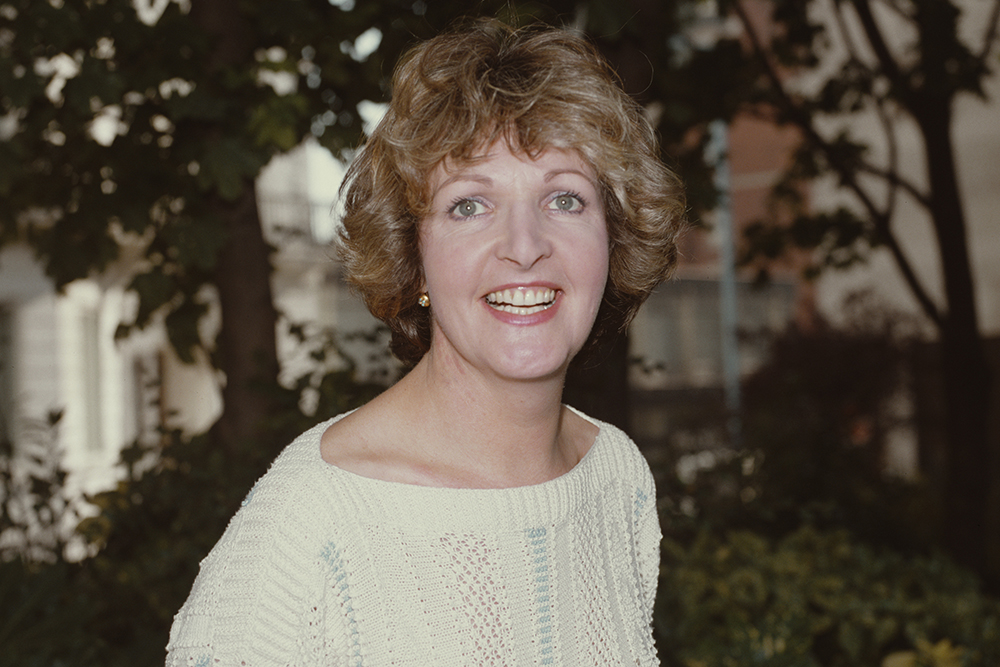
When the Guardian published its obituary of Penelope Keith on 29 June 2026, it framed a career that had outlived the genre she mastered. The actress, who came to public attention in the early 1970s and built her reputation on a kind of starched, high-comedy Englishwoman — the woman who would correct your grammar while dismantling your argument — had died at 85. The genre she represented on the small screen had been declared dead for years; her death simply made the obituary literal.
Keith's comic authority rested on a specific and increasingly unfashionable premise: that the English class system, taken seriously, could be turned inside out by someone fluent in its vocabulary. She did not mock the drawing room so much as treat it as a chessboard in which the women sometimes won. The form she inhabited has not vanished from British television, but its practitioners now operate a defensive holding action against formats that prefer the confessional or the surreal.
The Ealing inheritance
The 2026 retrospectives lean hard on a single fact: Keith's training ground was the Ealing Studios repertory system, where she worked through the early 1960s in supporting roles before the BBC calls that turned her into a household name.
According to the Guardian's obituary, she had developed what the paper describes as "a sophisticated sense of humour" long before the sitcom roles that made her famous. The phrasing matters. Ealing in that period was not a finishing school for comediennes so much as a working repertory machine that turned out character actors capable of carrying small-screen roles without the benefit of an auteur showrunner. The training showed. When the BBC cast her in a succession of vehicle pieces through the 1970s, she arrived on set already able to land a counterpunch, hold a stare and exit on the line. That toolkit is rarer on British television now than it was at the height of her working life.
The same obituary file notes her "natural ability to make everyone laugh" — again a phrase that does work when read closely. It is not the ability to make the audience laugh. It is the ability to make the people she was working with laugh, which is the harder craft and the one that the British studio tradition built into its staff. Foreign producers have spent decades trying to bottle that particular quality; the bottle tends to leak.
The snobbery problem
To write about Penelope Keith is to write about the word "snob," and the word is doing real work in the Guardian file. "Penelope Keith: the most spectacular sitcom snob" is the headline's framing — and it is the load-bearing word, not the joke.
The choice of "snob" rather than "aristocrat" or "toff" is editorial. Snobbery in the British comic register has always been a working-class term turned into a weapon of the ruling class — the insider's insult used against people trying to climb in, which then got attached to the climbers as a permanent label. Keith's great comic trick, in the roles the 2026 coverage repeatedly returns to, was to play a snob who was also the moral centre of the piece: the woman whose standards are unbearable, and who is usually right about why.
That double reading is what gave her work its longevity, and it is what makes the loss more than a personal one. The form requires a particular social texture that the British television industry has been quietly disassembling for two decades. Streaming-era comedies written for younger commissioners rarely build a vocabulary detailed enough for a snob to flourish in; the rooms are too open-plan, and the dialects have flattened.
A counter-reading the obituaries will not print
There is a less flattering version of the same career, and it deserves airtime. Keith's comic snobbery was, in its setting and its targets, almost entirely upward and inward — aimed at social equals who had slipped in their standards, never at the people whose exclusion from the room made the comedy possible. The form requires a below-stairs world it studiously refuses to depict. The 2026 tributes are correct to note the technical accomplishment; they are quiet about the politics of the gaze.
This is the standard counterpoint to British heritage comedy, and it has been sharpened by a generation of writers who came up watching the form from outside the rooms it depicted. The critique does not diminish the craft. It does explain why the form's audience has aged and why the streaming era has not replaced it with anything structurally similar.
What the form was, and what it leaves
The structural point, stated plainly: a comic tradition that depended on a shared social vocabulary among its writers, its cast and its audience is hardest to sustain when the audience fragments across platforms and the writers emerge from a wider, less class-homogeneous pool. Keith was not the last practitioner of the form, but she was one of its purest exponents, and her obituary marks the moment when the genre's obituary begins to read as inevitable rather than premature.
The question the next decade of British comedy commissioning will have to answer is whether the toolkit — precise diction, the well-timed cut, the stare that lands harder than the line — can survive outside the drawing-room setting that produced it. There are early signs it can, in writers' rooms that have no interest in the drawing room at all. The vocabulary travels; the room does not.
What remains uncertain is whether the audience for the form will continue to age in place, or whether a new generation — raised on different hierarchies, different room layouts, different punchlines — will find its way back to the snob in the corner who is, as usual, right. The 2026 obituary file does not pretend to know. It does its job: it dates the loss, and it lists what is gone.
This piece was written from the Guardian's published obituary of Penelope Keith and accompanying picture-led retrospective; the source thread referenced a single filing, and the article has not drawn on any material beyond what that filing provided.