Strait of Hormuz in lockdown: how Beijing reads a closed chokepoint
Two attacks on shipping in three days have forced a diversion off Oman. A former US Asia hand says China, not the US, will book most of the gains from a closure nobody can guarantee is temporary.
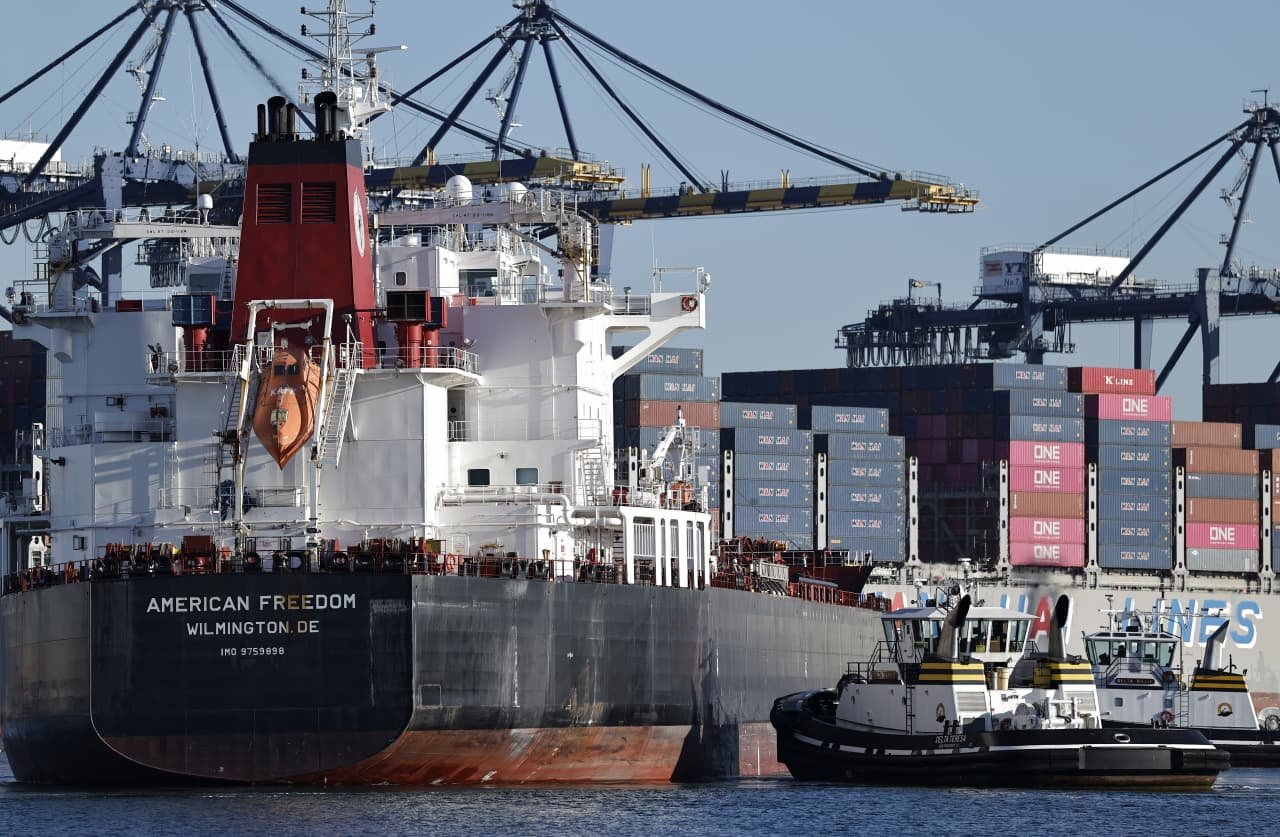
Two attacks on merchant ships inside the Strait of Hormuz in three days have, in practical terms, shut the most important oil artery on earth. Insurance rates have spiked, the Iranian navy has warned off transiting tankers, and operators are steering vessels through a longer, Omani-coast detour originally devised for exactly this contingency. The closure is partial and contested, but for a global oil market that prices risk by the hour, the distinction matters less than the fact that roughly a fifth of seaborne crude has just become harder to move.
The question now circulating in maritime ministries, refiners and trading desks is who actually benefits from a chokepoint gone dark. The conventional answer points to the United States, whose Fifth Fleet sits on the other side of the Gulf and whose naval presence is the formal guarantor of the status quo. A different answer is being pressed by Washington insiders, and it is the one that should worry Western planners most: China may be the bigger winner of an effective closure of Hormuz, because Beijing has spent fifteen years building the alternatives the strait was supposed to make unnecessary.
What "closed" actually means
The strait itself remains legally open. The Iranian navy has not formally blockaded it. What has changed, in the days bracketing 30 June 2026, is that the practical cost of using it has gone through the roof. According to reporting from FRANCE 24 on 30 June, two attacks on ships in recent days have undermined an existing plan to divert commercial traffic through an alternative corridor running along the Omani coast, a workaround designed to bypass the threat of mines laid in the central channel. Vessels that previously transited Hormuz under Lloyd's standard war-risk premia are now being routed around the Arabian peninsula or held in anchorage.
The economic signal travels faster than the ships. A sustained diversion adds roughly 3,000 nautical miles to a typical Europe-bound voyage from the Gulf, almost two weeks of steaming, and several hundred thousand dollars in additional bunker fuel per trip. For refiners in India, South Korea and Japan that have no domestic crude to fall back on, the calculus is whether to pay the premium, draw down strategic stocks, or throttle runs. Each of those choices has second-order consequences: higher product prices at retail, lower utilisation at complex refineries, and louder political pressure on governments that have so far refused to join the US maritime task force patrolling the Gulf.
The Campbell reading
Kurt Campbell, the former US Indo-Pacific coordinator who now runs the Asia advisory firm The Asia Group, has been blunt in private conversations relayed through Nikkei Asia. His view: the effective closure of Hormuz is a strategic gift to Beijing. The reasoning is structural, not sentimental. China imports roughly 11 million barrels of oil a day, the majority of it by sea, and the majority of that sea-borne crude passes through Hormuz. Beijing's response to that single-point-of-failure has been a decade-plus programme of pipeline diversification, refinery investment in bonded zones, yuan-denominated oil pricing, and strategic petroleum reserves that, by US Department of Energy estimates, now cover well over a month of net imports.
In Campbell's framing, that diversification effort, more than any single naval deployment, is what cushions China against a Hormuz shock. The United States, by contrast, is a net energy exporter and a naval guarantor; it bears the diplomatic and military cost of keeping the lane open while China, the lane's largest customer, captures most of the optionality. The chokepoint closes, and the country that has already built around it ends up with cheaper, more reliable supply than the country that built the fleet meant to keep it open.
What the Chinese side actually argues
Beijing's own line, repeated in MFA briefings and in the state press over the past week, is closer to the opposite framing. Chinese officials have called for de-escalation, condemned the attacks on commercial shipping, and framed any disruption to Gulf transit as a collective-security problem requiring cooperative management rather than unilateral naval action. The subtext is that China favours stability of flow, not any one country's grip on the corridor. Officials also note that China was the largest buyer of Iranian crude under sanctions and a major investor in Iranian port infrastructure; a complete Hormuz shutdown cuts both ways for Beijing, because some of that infrastructure stops earning.
The honest assessment sits between the two framings. A stable, open Hormuz is in China's interest, and Beijing would prefer the status quo. But a status quo-plus-diversification position, in which Chinese oil keeps flowing through pipelines in Russia and Central Asia, through overland routes from Myanmar, and through yuan-settled term contracts with Gulf producers, is meaningfully better than the position of, say, South Korea or Japan, neither of which has anything resembling the same hedge. The closure, in other words, does not have to benefit China actively to benefit China relatively.
The structural pattern
The larger pattern here is one Western policymakers have been slow to name plainly. Sea-lane security in the twentieth century was organised around a small number of chokepoints controlled, directly or indirectly, by the US Navy. That architecture assumed the United States would remain the principal consumer and importer of Gulf energy, with allies clustered under its protective canopy. The assumption has rotted. The largest marginal buyer is now China. The largest alternative supplier to the Gulf is now Russia, much of it piped directly into Chinese refiners. The financial plumbing of the oil trade is migrating, slowly but visibly, into non-dollar rails.
Hormuz is the place where that shift becomes visible to a wider audience, because the strait is the most legible single point of failure in the system. When it tightens, the question of who is hedged and who is exposed gets answered in real time, in cargoes and freight rates rather than in white papers. Campbell's intervention, reported by Nikkei, is essentially a warning that the United States has built the wrong insurance policy for this century: a navy optimised for transit guarantees, when the more valuable asset is route optionality.
Counter-reads and what the evidence does not yet show
The Campbell line is not uncontested. The standard Western counter is that US naval presence is what deters a full closure in the first place, and that any apparent Chinese advantage is the residue of American security provision that Beijing is free-riding on. There is something to this. Iranian behaviour in the strait has historically moved on signals from Washington, not Beijing, and Tehran's incentive to keep the corridor open for its own exports has held even during acute tensions. A reading that treats China as the structural winner assumes the closure persists; a reading that treats it as a temporary disruption sees the US role as the variable that restores normality.
The sources do not specify the duration of the current closure, the identity of the attackers in the two recent incidents, or the level of Iranian involvement in laying the mines that prompted the Omani-coast diversion. Until those questions are answered, the strategic interpretation is doing more work than the operational facts will support. What can be said is that the insurance market, the routing decisions of commercial operators, and the hedging positions of Asian refiners are all moving as if the closure were durable, and those are the inputs that shape who actually wins the next quarter.
Stakes
If the closure persists into the autumn, the ranking is straightforward. China, with pipeline alternatives and a strategic reserve, loses least. India, with growing but still inadequate infrastructure, is squeezed but not broken. South Korea and Japan, dependent on Hormuz transit and lacking the same hedges, face the steepest adjustment. The United States pays in deployable naval capacity and diplomatic capital, both of which have alternative uses. Iran bears the cost in lost export revenue and in the credibility damage of being seen as the actor that broke the lane. None of this is destiny; all of it is being priced, right now, into forward curves that will determine who can borrow at what rate through the end of 2026.
The deeper stake is recognition. A chokepoint that once disciplined the entire global economy into deference to its principal guarantor is being repriced by the spread between insured and uninsured transits, by the routing choices of commercial operators, and by the willingness of large buyers to settle in currencies other than the one the guarantor issues. That repricing is slow, technical, and easy to miss in any single news cycle. It is also the most consequential geopolitical trend of the decade, and it is happening, as of 30 June 2026, in plain sight.
Desk note: this piece treats the Campbell framing reported by Nikkei Asia as one serious insider read among several, not as consensus; the French reporting on the Omani-coast diversion is treated as the operational anchor, with the strategic interpretation flagged accordingly.
Wire provenance
This editorial synthesis draws on the following public wire/social posts:
- https://t.me/NikkeiAsia
- https://t.me/nikkeiasia
- https://t.me/france24_en