Calais Campbell's brother charged with mother's murder in Fulton County
Ciarre Campbell faces murder and aggravated assault charges after the body of Nateal Campbell was found this week — a private tragedy now entangled with one of the league's most respected veterans.
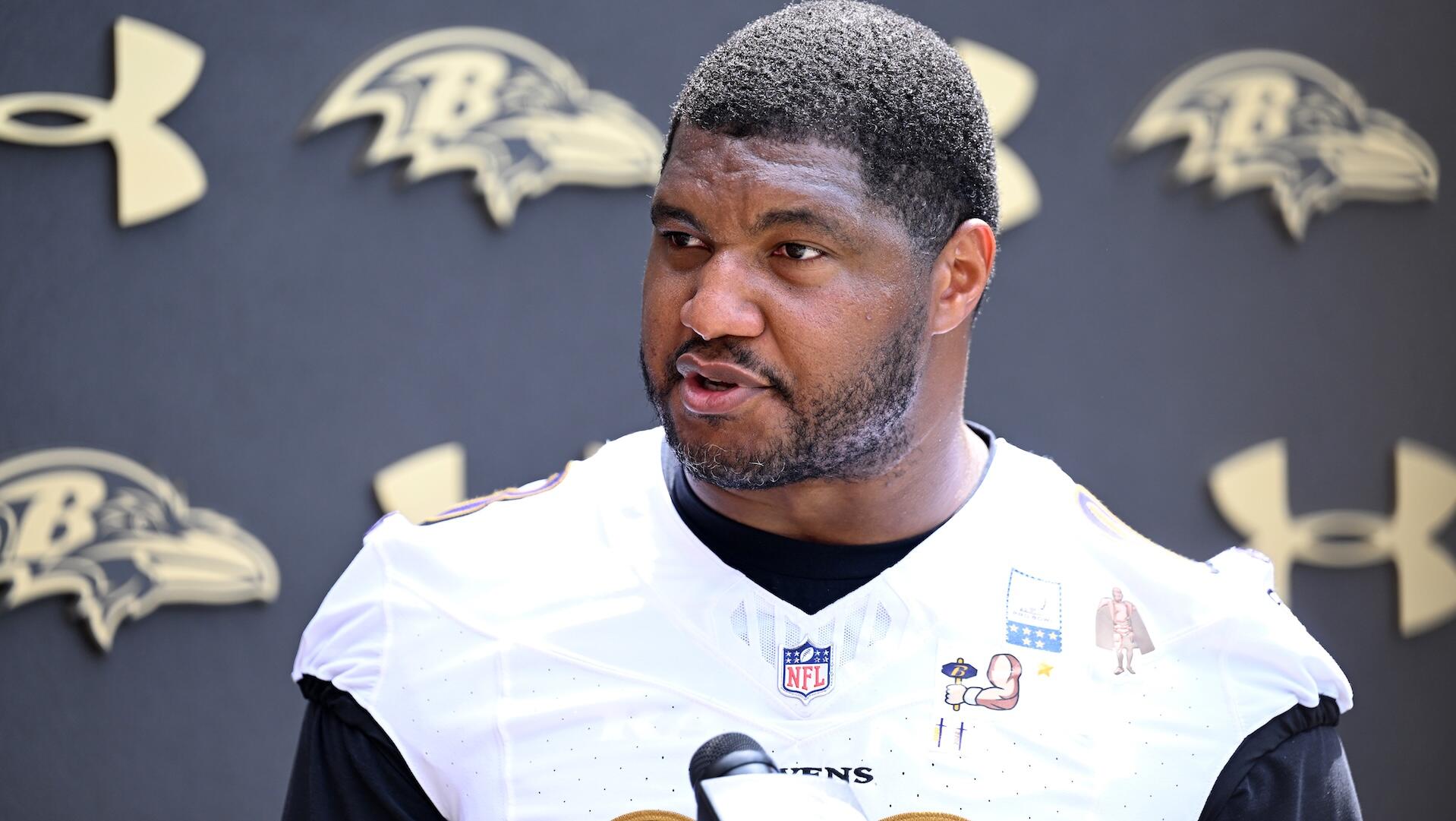
The body of Nateal Campbell was discovered on Tuesday in Fulton County, Georgia. Within forty-eight hours, her son Ciarre Campbell had been arrested and charged with her murder and aggravated assault, according to a CBS Sports report published 1 July 2026 at 14:21 UTC. The case has drawn national attention not for any public figure it touches, but for the family it places at its centre: the sibling of Calais Campbell, the 6-foot-8 defensive lineman who has spent nearly two decades in the NFL and is widely regarded as one of the most respected veterans of his generation.
The killing of a parent by a child is among the most closely scrutinised categories of homicide in American criminal reporting. It sits at the intersection of domestic-violence data, mental-health policy, and the limits of what prosecutors can prove about motive. The Fulton County case now unfolding will test all three — and it will do so against a backdrop few families ever have to navigate, namely the relentless public exposure that follows an athlete of Calais Campbell's standing.
What is on the record
CBS Sports reports that Ciarre Campbell faces one count of murder and a separate count of aggravated assault. The outlet does not specify a weapon, a location inside Fulton County, or the circumstances in which Nateal Campbell's body was recovered. As of the report's timestamp on 1 July 2026, no arraignment date had been published. The case will be processed through the Fulton County Magistrate Court, which handles initial appearances and bond determinations for felony charges filed in the county that includes most of Atlanta.
The CBS report identifies the relationship between suspect and victim plainly — mother and son — and names Calais Campbell as Ciarre's brother. It does not quote any family member, attorney, or law-enforcement spokesperson. That silence is itself a data point: in the immediate aftermath of a family homicide, public statements are typically filtered through a single family representative or retained counsel, and neither has yet spoken on the record.
The Calais Campbell context — and why it matters here
Calais Campbell, now 39, was drafted by the Arizona Cardinals in 2008 and has played for the Jacksonville Jaguars, Baltimore Ravens, Atlanta Falcons, and Miami Dolphins across a 17-season career. He is a six-time Pro Bowl selection, the 2019 Walter Payton NFL Man of the Year, and a figure whose off-field philanthropy — particularly the Caleb Cares Foundation's work with underserved youth — has been as widely covered as his on-field production.
In a country where athlete family members are routinely treated as newsworthy extensions of the player himself, the reporting on this case will be unusually difficult to keep proportionate. Calais Campbell is not charged, is not a suspect, and has issued no public statement. He is, by any reasonable reading of the facts on the record, a grieving son. The structural temptation — to treat him as either a sympathetic witness who must explain his brother, or as a celebrity whose silence itself demands explanation — is one that CBS Sports, to its credit, has not yet yielded to. The challenge for the rest of the press cycle will be to sustain that restraint.
What the record does not yet say
Three things are conspicuously absent from the CBS Sports report. First, there is no published account of the events leading up to the killing — no history of prior calls to the residence, no documented mental-health crisis, no protective-order history that might help a reader understand what brought Ciarre Campbell and Nateal Campbell into contact on the day in question. Second, there is no identification of an attorney for the defendant, which means there is no adversarial voice yet in the public record. Third, there is no Fulton County Sheriff's Office or Atlanta Police Department press release in the CBS report, which limits the ability of independent outlets to verify the chain of custody, the time of the body's recovery, or the basis for the aggravated-assault charge.
That third gap is the one most likely to be filled within seventy-two hours, as Georgia's open-records rules and the routine press operations of the Fulton County Sheriff's Office typically produce charging documents and incident summaries within that window. Until then, the only factual spine the public has is the one sentence that opened this case in the national press: Ciarre Campbell has been charged; Nateal Campbell is dead; the family that produced one of the NFL's most decorated defensive linemen is now at the centre of a homicide prosecution in Georgia.
Stakes
The legal stakes are clear: Ciarre Campbell faces life in prison if convicted of murder under Georgia's sentencing structure, with the aggravated-assault count adding a consecutive-eligibility layer. The reputational stakes for the Campbell family — and specifically for Calais Campbell's philanthropic footprint, which depends on the credibility of his public character — are subtler but real. The risk that a private family tragedy becomes a referendum on a player who has nothing to do with the alleged conduct is the kind of distortion that American sports media has historically been poor at preventing.
The more durable stakes are institutional. The NFL in 2026 operates under a player-personal-conduct policy that has, over the past decade, been used to discipline players for off-field incidents involving family members only in narrow circumstances. Calais Campbell is not subject to that policy on the facts available, and his standing with any current team should not be affected by a sibling's arrest. That distinction — between a player's conduct and a family member's — is one the league and its broadcast partners have repeatedly fumbled. This case will test whether they have learned the lesson.
— How Monexus framed this: a domestic-homicide story reported in restrained, evidentiary terms, with the athlete's identity treated as contextual rather than foregrounded. The wire has focused on the brother's arrest; this piece holds the line on what is and is not on the public record.