Zelensky in Dublin: why a presidential stopover matters more than the photograph suggests
Volodymyr Zelensky's arrival in Dublin on 1 July for the opening of Ireland's EU Council presidency is being framed as a courtesy visit. The agenda behind it is denser than the read-out.
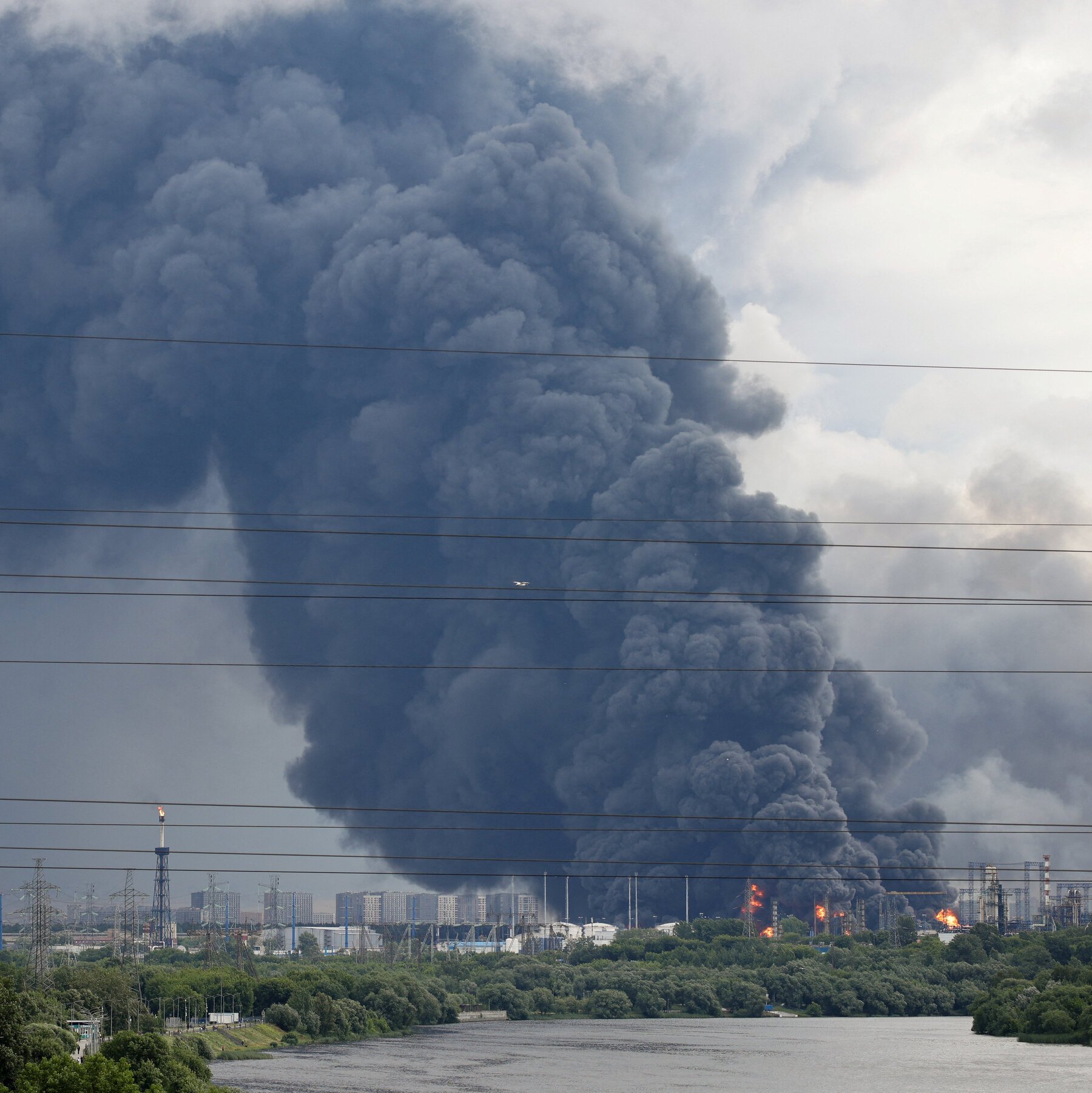
President Volodymyr Zelensky touched down in Ireland on the morning of 1 July 2026, according to his official Telegram channel, to attend the opening ceremony of Ireland's six-month presidency of the Council of the European Union. The Ukrainian leader said in a post timed to his arrival that he would take part in the ceremony and meet Prime Minister Micheál Martin and European Council President António Costa. The stop was confirmed independently by Kyiv Post and the Ireland-watching Telegram account noel_reports, both of which carried the wire within minutes of the presidential post.
Dublin is a venue most Europeans read as ceremonial, not strategic. That reading misses what is actually being assembled this week. The Irish presidency inherits a Council agenda already shaped by a war on the Union's eastern edge, a defence-industrial base that is being rebuilt at speed, and a debate over the next long-term budget that will determine whether Kyiv is being financed as a partner or as a ward. The man walking into Farmleigh House is the face of that file.
Why Dublin, and why now
Ireland takes the Council presidency at a moment when three workstreams converge. The first is the political: every working party, every Council configuration, every compromise text that passes through Dublin in the next six months will carry an Irish brogue and a small-state instinct for consensus. The second is financial: the next multiannual financial framework, the Ukraine Facility, and the reconstruction platform for Kyiv all run through the Council's budget machinery. The third is industrial: the Union's defence procurement regime is being rewritten under Irish chairmanship, and the contracts that follow will decide which member states' primes carry the political dividend of a successful wartime industrial policy.
Zelensky's read of that arithmetic is plain. He is not in Dublin to be photographed with a shamrock. He is there to be the first guest in the room, on the first day, before the agenda is locked.
The smaller-state read
There is a counter-narrative worth taking seriously. Ireland is the EU's most diplomatically distinctive Council president: a country that has historically placed neutrality, consensus diplomacy and a sceptical reading of military escalation at the centre of its European identity. An Irish presidency could complicate Kyiv's preference for faster accession timelines and a more aggressive sanctions tempo. Dublin has spent two decades arguing that EU enlargement requires institutional readiness on the European side, not just reform on the candidate's.
That posture is not hostile to Ukraine. It is, however, slower. If the read-out from Dublin over the coming weeks emphasises "enlargement process" rather than "enlargement horizon," that is the Irish register asserting itself — and it is a register Kyiv cannot ignore.
What the visit is for, structurally
The deeper pattern here is the conversion of Council presidencies into diplomatic platforms for third-country leaders. Five years ago, a Ukrainian president visiting Dublin would have been a bilateral story between two states of roughly equal weight. Today it is a platform moment: the presidency is the lever, the guest is the message. Kyiv wants the message transmitted inside the Council machinery, not on a bilateral track. The Irish hosts, for their part, get to demonstrate that a small presidency can still convene a continental conversation.
This is also a stress test of European Council President António Costa's tenure. Costa's office sets the political agenda of the institution; the presidency sets the administrative rhythm. Where they collide, the visiting head of state tends to lose unless he has already done the corridor work. Zelensky has. He was in the room before the agenda was frozen.
The stakes before the readout
What matters now is what the joint communiqué does not say. If the read-out references Ukraine's "European perspective" without committing to a negotiating framework, Kyiv's people will read that as drift. If it names a specific financial figure tied to reconstruction or to the Ukraine Facility's next tranche, the markets and the defence primes will read that as a contract signal. If it references enlargement at all, expect a fight — not between Dublin and Kyiv, but between Dublin and a handful of member-state capitals that have been quietly signalling that the 2030 enlargement narrative needs slowing.
The news on 1 July is the arrival. The news over the following six months will be what that arrival pre-loaded. As Zelensky's own Telegram channel noted, the programme includes the prime minister and the European Council president. It does not, conspicuously, mention a joint statement on a date or a number. That silence is itself the negotiation.
Desk note: Monexus framed this visit as a working stop with structural weight, not as a ceremonial gesture. The wire coverage that led with the photograph and the handshake left the agenda unexamined; the agenda is the story.
Wire provenance
This editorial synthesis draws on the following public wire/social posts:
- https://t.me/V_Zelenskiy_official
- https://t.me/Kyivpost_official
- https://t.me/noel_reports