Celtics blow up the roster in a single day, sending Jaylen Brown to the 76ers for Paul George
Boston shipped its franchise cornerstone to Philadelphia and added Mitchell Robinson hours later, recasting an Eastern Conference contender inside one transaction window.
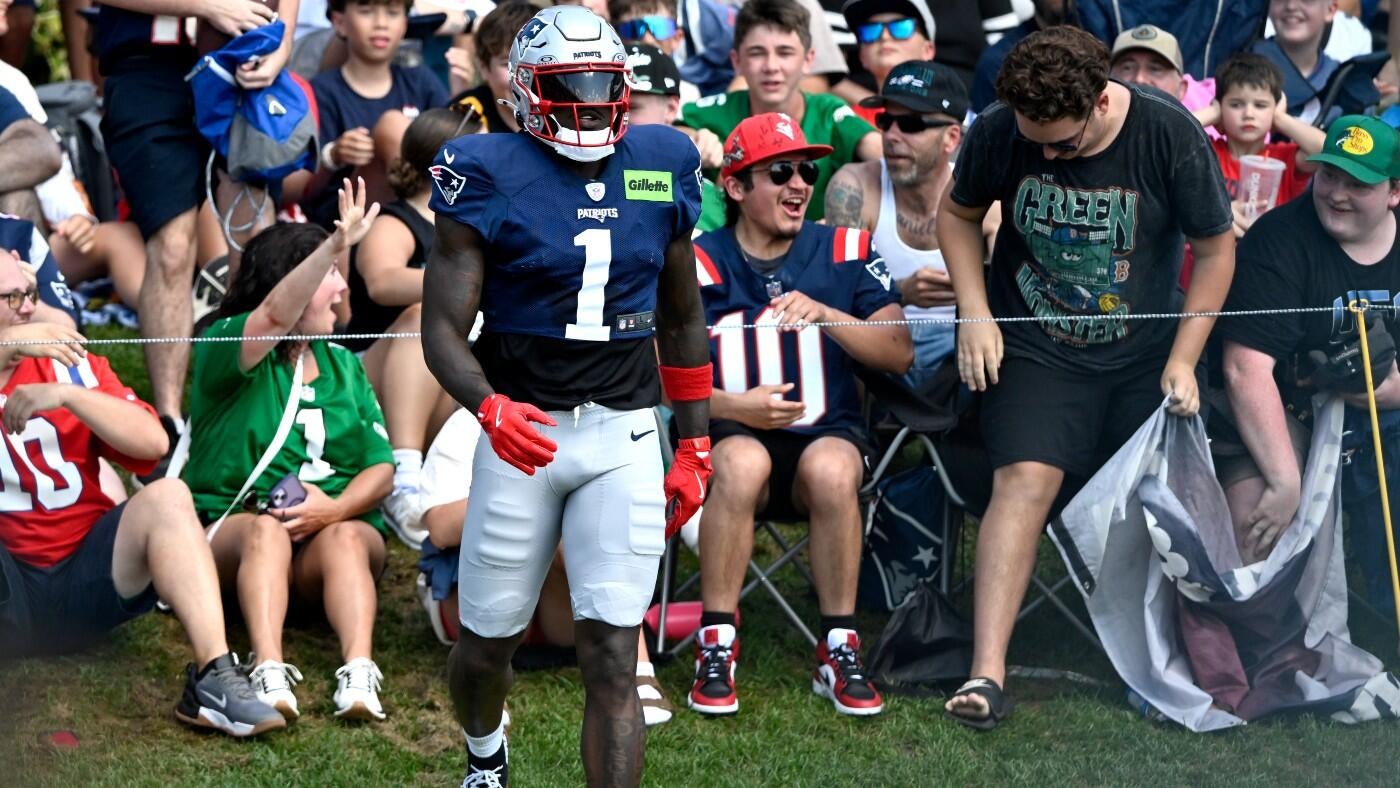
The Boston Celtics agreed on 1 July 2026 to trade Jaylen Brown to the Philadelphia 76ers in exchange for Paul George, two first-round picks and two second-round picks, ESPN's Shams Charania reported on Wednesday afternoon. The deal, struck one day after the new NBA league year opened, removes Boston's longest-tenured starter and resets the franchise's competitive timetable. Hours later, the same ESPN report cited by the network's insiders indicated that centre Mitchell Robinson had agreed to a three-year, $47.4 million contract with the Celtics after winning a title in New York, a sign Boston intends to remain competitive rather than rebuild by subtraction.
The Brown-for-George swap is, on the ledger, a near-straight exchange of star wings — but the surrounding picks matter more than the principals. Boston, capped out and staring at a punitive second-apron bill under the league's 2023 collective-bargaining framework, uses Brown's outgoing money to absorb a shorter contract. Philadelphia, by contrast, gets the best player in the deal and retools around Joel Embiid and Tyrese Maxey with a wing whose usage rivals anyone in the conference.
What Boston gave up
Brown, the 2024 NBA Finals MVP and the 2023-24 Kia NBA Most Valuable Player, has spent his entire career in Boston. His salary for 2025-26 carried into 2026-27 and 2027-28 at a combined total that placed the Celtics hard against the second apron, the league's harshest roster-construction penalty tier. A team over that line cannot use the mid-level exception, cannot buy out and stretch incoming contracts, cannot trade picks more than seven years out, and faces escalating draft-pick freezes if it remains above the apron in successive seasons.
Trading Brown solves the apron problem overnight. Out goes a maximum-salary wing whose contract runs four more seasons; in comes George, whose 2026-27 pay is lower by design — the final year of a deal negotiated when the league was still digesting the new CBA. Crucially, the picks Boston receives include Philadelphia's 2027 and 2029 first-round selections, the most valuable chip in any 76ers package and a window into a future that, sources note, hinges on Embiid's health and Maxey's next contract.
Boston's second move — bringing in Robinson on a three-year, $47.4 million contract, per ESPN — is the tell. The Celtics did not clear the apron to bottom out. They cleared it to keep winning. Robinson, fresh off a championship run at Madison Square Garden, gives Boston a true roll-man behind the arc of their offence and a top-five defensive centre whose contract fits neatly inside the space Brown's departure opened.
What Philadelphia is buying
The 76ers have spent most of the post-Process era searching for a second creator to pair with Embiid. They tried Jimmy Butler and lost him to Miami in free agency. They tried James Harden and watched the relationship curdle. They tried Tobias Harris and grudgingly accepted the limits of that fit.
Brown is the cleanest answer the front office has ever assembled. He is a 27-year-old wing who can initiate his own offence from a standstill, score at all three levels, and defend guards and forwards without scheme help. His 2025-26 usage rate and on-off splits — both top-ten at his position across the league — make him the highest-volume secondary scorer Embiid has played beside. Maxey, freed from the burden of running a team's offence through pick-and-rolls alone, becomes a downhill spacer in a way that suits his athletic profile.
The cost is real. Two first-round picks and two second-round picks, in a draft that ESPN and other outlets have rated as deep at the wing and centre positions, is a meaningful subtraction. George's departure also clears the books for Philadelphia in 2027-28, when Brown's deal will still have three seasons remaining. That gap, between Brown's contract length and Philadelphia's existing cap commitments, is the trade's structural risk: it concentrates more than $200 million of guaranteed money on three players — Embiid, Maxey and Brown — and forces the front office to spend the 2027 and 2029 picks as bargaining chips rather than developmental assets.
Counter-frame
The sceptical read is straightforward. Boston is not so much rebuilding as it is admitting it cannot carry a roster built for a 2024 championship into the second-apron era without sacrificing the depth that wins playoff series in May and June. Robinson is a useful player; he is not Jayson Tatum's pick-and-roll partner.
Philadelphia's view runs in the other direction. The trade is a bet that Brown at 27 is a more durable bet than Embiid at 32, and that the 2026-28 championship window is the only window in which Embiid, Maxey and Brown can be healthy together. The first-round picks, in that framing, are a sunk cost against a transition that the front office has spent five years chasing.
Neither side is fooling itself about the stakes. Boston is trading certainty for optionality; Philadelphia is trading optionality for certainty. The Conference's power map, on the morning of 2 July 2026, is no longer anchored by a single contender.
Stakes and the calendar
The next twelve months will define whether Boston's gamble paid off. Robinson is on a short-term contract by today's NBA standard, and the two first-round picks acquired from Philadelphia are tradeable assets in a league where stars change addresses more often than dynasties do. If the Celtics retool around Tatum and Robinson and reach another Eastern Conference Finals, the criticism will look premature.
The 76ers face a tighter clock. Embiid's game logs over the past three seasons have been a study in managed minutes and conditioning protocols; Brown and Maxey will need to win playoff games in January and May, not just in April. Draft-pick liquidity, three title-or-bust cycles, and a $47 million centre on a competing roster in the same division — those are the margins the trade has redrawn.
One detail still unsettled: the full pick protections on Philadelphia's 2027 and 2029 first-rounders, and whether the second-rounders are top-55 or unprotected. ESPN's report did not specify either, and the league's trade-wire confirmation typically follows 48 hours after a verbal agreement. Until that wire is published, the Boston-Philadelphia trade is the league's worst-kept rumour rather than a completed transaction.
Monexus read this against the wire window: both ESPN items above surfaced inside a six-hour stretch from the same reporter's reporting, which is the only public ledger on the picks and the Robinson terms at the time of publication.
Wire provenance
This editorial synthesis draws on the following public wire/social posts:
- https://en.wikipedia.org/wiki/Jaylen_Brown
- https://en.wikipedia.org/wiki/2023_NBA_Finals
- https://en.wikipedia.org/wiki/National_Basketball_Association%27s_salary_cap