After half a century of silence, the FAA opens the door to civilian supersonic flight over land
A draft rule published on 1 July 2026 would replace the Concorde-era ban with a noise-based test, and the harder question is who actually has a plane to fly through it.
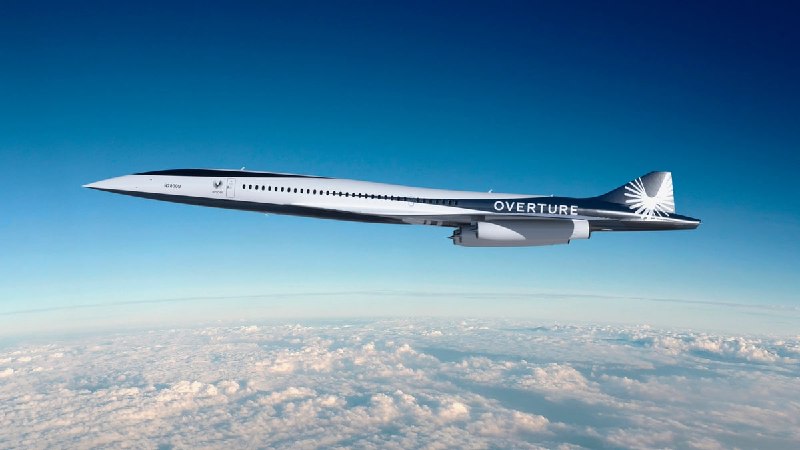
On 1 July 2026 the US Federal Aviation Administration took its first formal step toward unwinding a half-century-old prohibition on supersonic civil flight over land. The agency filed a notice of proposed rulemaking that would scrap the absolute speed limit and substitute a noise-based standard, opening a path — in principle — for a new generation of faster-than-sound passenger aircraft to cross the continental United States without the old sonic-boom carve-out that effectively corralled the Concorde to the transatlantic ocean route. The proposal, distributed via US regulatory channels and amplified by Epoch Times' wire on 1 July 2026 at 12:34 UTC, is the most concrete deregulatory signal the agency has issued on supersonic aviation in a generation.
The rule does not, on its own, put a single new plane in the sky. What it does is remove a regulatory ceiling that has been in place since 1973, the year the FAA first restricted civil supersonic operations over land to spare communities the crack of a sonic boom. Replacing that flat prohibition with a measurable noise standard is a procedural shift, not a technological one. The harder question — who has an airframe ready, what it sounds like, and how soon — sits somewhere between NASA flight-test data and the order books at Boom Supersonic in Centennial, Colorado.
What the draft actually changes
The current restriction, embedded in 14 CFR Part 91, treats supersonic flight over US land as presumptively impermissible. Operators who want an exception need a waiver, and waivers have been vanishingly rare. The FAA's proposal, as described in the wire circulated on 1 July 2026, would instead evaluate aircraft on the basis of their measured noise signature at the ground — a standard that, in the agency's framing, an airframe designed for "low-boom" cruise could plausibly meet. The change converts a category ban into a performance standard, and that distinction matters for any manufacturer trying to certify a product. Category bans close markets; performance standards open them with conditions.
The shift also tracks more than a decade of quiet work at NASA, whose Low-Boom Flight Demonstration program produced the X-59 QueSST research aircraft. The X-59 is designed to cruise at supersonic speeds while producing a thump rather than a boom. NASA and partner contractors have accumulated flight-test hours intended, eventually, to give the FAA the acoustic data on which a noise rule can rest. The proposed rulemaking is the regulatory infrastructure for that data to become binding.
Who benefits, and who is lobbying
The short list of credible Western supersonic startups is short. Boom Supersonic is the most visible — its XB-1 demonstrator flew in early 2024 and the company has publicly targeted a 2029 entry into service for a 64- to 80-seat airliner. Spike Aerospace, based in the Boston area, has marketed a smaller business-jet concept but with a quieter public profile in the last two years. Exosonic, which proposed a quiet supersonic trainer for the US Air Force, has had a more uneven trajectory. None of these programs has a type certificate. None of them has the kind of balance sheet that absorbs a decade of certification work without external capital.
Lobbying around the proposed rule has been visible for years. Boom has argued that the overland ban is the binding constraint on its commercial case, since the most lucrative routes — New York to Los Angeles, London to Singapore — are predominantly over land. Without an overland carve-out, the airline's value proposition collapses to the same handful of overwater routes the Concorde once served. The draft rule is, in that sense, a precondition for Boom's business plan rather than a response to it.
Counter-voices have been quieter but persistent. Communities under proposed supersonic corridors have raised the same concerns that ended Concorde service in 2003 — not the iconic boom, but the cumulative acoustic effect of faster, more frequent flights. The FAA's noise-based approach is the agency's attempt to push that debate from a political question (are sonic booms acceptable?) to a technical one (does this airframe meet this decibel level?). That is a real change, but it does not settle the underlying political fight, which will migrate to local airport authorities and to the environmental review process that accompanies any new route.
The structural frame: regulation as industrial policy
The deregulation arrives in a broader policy environment that treats aviation as a strategic industry rather than a neutral consumer market. The same administration has pressed export-credit support for Boeing, restricted Chinese aerospace component flows, and treated engine and avionics supply chains as national-security terrain. Whether or not the FAA drafted this rule with that posture in mind, the rule will land in an ecosystem where faster-than-sound flight is read as industrial capability.
That framing has a Global South counterpoint. Faster point-to-point civil aviation concentrates wealth at the top of the global travel market — the same corporate traveller who pays for a business-class seat at three times the speed is the same traveller who is already flying. There is no obvious development case for a supersonic airliner in sub-Saharan Africa or South Asia, where the binding constraints on air travel are airport infrastructure, fuel access, and visa friction rather than cruise speed. A rule that subsidises, indirectly, a US-led supersonic industry is a rule about who captures the rents of high-end mobility in the next two decades.
It is also a rule about noise externalities, which are not distributed evenly. A decibel standard measured at the ground is enforced against communities that live under flight paths. Those communities in the United States skew lower-income and, historically, more likely to be near legacy airports. The transition from an absolute ban to a measured threshold is a transition from a rule that protected everyone in equal measure to a rule that protects everyone in proportion to how much acoustic insulation, legal capacity, and political voice they can mobilise.
Stakes and what to watch
The comment period that opens with the draft rule will determine how aggressive the eventual standard is. Watch three numbers: the maximum permissible overpressure at the ground, the geographic scope of any phased implementation, and the conditions under which older supersonic airframes — including, conceivably, a refurbished Concorde if such a thing were ever proposed for US certification — could enter service. The first number sets the technical bar. The second determines which US routes open first. The third determines whether the rule is a clean-slate for new designs or a back door for legacy airframes.
The second-order watch is supply chain. A US supersonic industry at any scale needs titanium, advanced composites, and a workforce that can build and certify thermal-management systems for sustained Mach-1-plus cruise. None of that is cheap, and the firms trying to do it are not large. If capital markets tighten in the back half of 2026, the regulatory opening arrives into a financing environment that may not be able to use it.
The honest uncertainty is whether any of this happens at all. The last time the FAA lifted a similar constraint at this scale — the 2004 modification to allow more efficient Part 23 small-aircraft certification — the resulting product cycle took a decade to mature. A supersonic rule in 2026, even a permissive one, is not a 2029 airliner. It is the precondition that makes the 2030s plausible.
This publication treated the FAA's draft rule as a regulatory and industrial-policy event, not a technology story. The wire version on the day centred the noise standard; this piece follows the question the wire did not ask — who actually has the plane.
Wire provenance
This editorial synthesis draws on the following public wire/social posts:
- https://t.me/epochtimes