An ambassador who believes the brief
Mike Huckabee's Herzliya speech fused theology and statecraft in language no sitting US ambassador to Israel has used before. That is the story — not the controversy, but the premise.
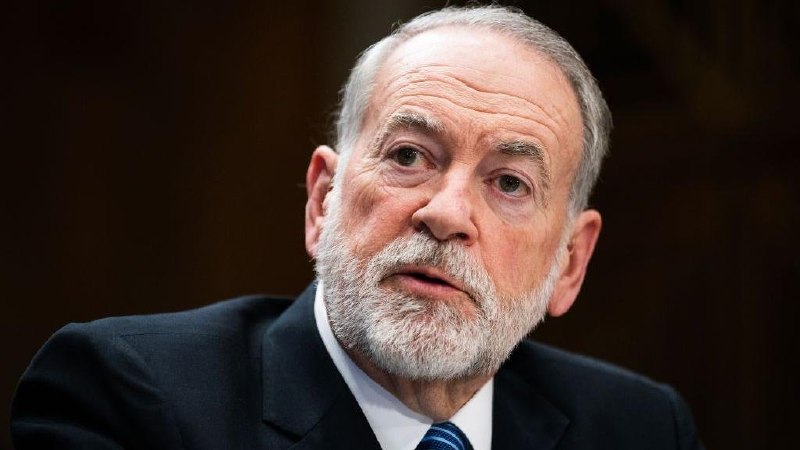
If you want to understand what has changed in the relationship between Washington and Jerusalem, do not look at the press releases. Look at the language. On 1 July 2026, the United States Ambassador to Israel, Mike Huckabee, told an audience at the Herzliya Conference that "without the Jewish people, the United States would not have come into existence at all" — a claim he attributed, in the same remarks, to America's founding fathers. Hours later, the same envoy was on Telegram explaining to a wider Arab-language audience that he could not imagine the US-Israel relationship ending, only ever deepening.
Theatrical? Obviously. But the worth of the moment is not in whether the lines were polished. It is in the category of statement a sitting ambassador now treats as unremarkable. Huckabee is not a maverick freelancer. He speaks for an administration that appointed him precisely so the religious register would not be subtext.
What he actually said
Two clips are doing the work. The first, from the Herzliya Conference, has Huckabee arguing that Jewish covenantal thinking shaped the American constitutional order — that the founders "understood that" and acted accordingly. The second, which circulated in Arabic through channels that aggregate Israeli and Arab public diplomacy, has him insisting that the US-Israel relationship is permanent and unbreakable. In a third remark he volunteered that part of his daily routine as ambassador is checking the US president's social media feed "every day." The clips are short. They are also unusually frank about where Huckabee locates the source of his authority: in scripture and in an executive he treats as providential.
Why this is not just another culture-war flare-up
American ambassadors give speeches all the time. Most of them are forgettable. Huckabee's remarks are not in that category because the premises embedded in them — about covenant, about permanence, about the constitutional character of the American republic — have direct policy consequences. An ambassador who reads his country's founding as derivative of a particular religious tradition does not, on the margins of an emergency, suddenly adopt secular neutrality. He will consistently favour the political theology he believes produced his country in the first place. That is the part to watch, not the applause line.
The structural shift is this. For decades the US-Israel relationship was defended in the language of liberal internationalism — shared values, democratic institutions, strategic convergence, intelligence cooperation. Huckabee's framing pre-dates and post-dates all of that. It treats the bond as older than the republic and older than the alliance system. Once that is the operative premise, the standard cost-benefit calculations of mid-career diplomats — what does Israel cost us in Cairo, in Ankara, in the Gulf — become heresy to argue against, not orthodoxies to weigh.
The counter-read, taken seriously
A defender of the speech will say this is no different from any other ambassador articulating a shared civilisational narrative. Irish and Polish ambassadors speak of Catholic heritage. Egyptian envoys invoke Pharaonic continuity. By that measure Huckabee is guilty of nothing more than meeting a regional expectation: in a part of the world where every country dresses its modern statecraft in ancestral robes, the American ambassador has finally done likewise. There is real content here. The Middle East does treat antiquity as a live political argument, and an envoy who only speaks the language of Cold War strategic doctrine often sounds flat in the room.
The counter to that counter-read is that Huckabee's premise is not aesthetic. He is not invoking heritage to add colour. He is invoking it to remove the political question. If the bond is covenantal rather than strategic, then asking whether a particular Israeli government action serves US interests in Jordan or Qatar is, by definition, the wrong question. That is a much larger doctrinal move than adjusting one's rhetoric to local convention.
What this forecloses
The concrete stakes are narrower than the theology suggests, but they are not negligible. Within the State Department, a cadre of career officers still works the file in strategic terms — Israeli operations in the West Bank, the tempo of settlement expansion, the management of Gulf relationships, the choreography with Cairo and Amman. An ambassador who believes the bond is theological cannot easily be the one who delivers an awkward White House message about restraint. He has already pre-emptively disqualified the category. Over months and years that compounds. The channel that used to carry the friction softens; the channel that carries encouragement hardens; and the regional partners who used to read Washington through its hesitations now have a harder time finding the signal.
There is also a domestic cost the speech imports. American political culture is not Middle Eastern, and the constitutional premise Huckabee sketches — a republic that owes its existence to a particular community's religious self-understanding — is contested on its face. Subsequent administrations of either party will have to either continue the register or visibly walk it back, and walking it back has its own price.
What remains uncertain
The clips circulating on 1 July are not a transcript. They are fragments from two events — a conference stage and a televised or recorded interview — cut together by aggregators whose incentives run toward provocation. It is possible that fuller context softens the provocation; it is also possible that fuller context hardens it. The sources do not specify the exact duration of the Herzliya address, the composition of the audience beyond a general diplomatic profile, or whether the remarks on the presidential social media habit were offered as a self-deprecating aside or as a doctrinal aside. Monexus flags that uncertainty rather than papering over it.
What is not uncertain is the genre. A sitting US ambassador to Israel told a Herzlian audience in 2026 that the United States exists because of the Jewish people, and told an Arabic-speaking audience the bond is unbreakable, and volunteered that his day begins with the president's feed. Theater of this kind is a policy choice. It tells you how the relationship will be defended the next time defending it costs something.
This publication notes that the dominant wire framing on 1 July framed Huckabee's remarks as a fresh provocation. The structural question — what an ambassador operating from religious-premise rather than strategic-premise authority implies for the file he runs — is what this piece foregrounds instead.
Wire provenance
This editorial synthesis draws on the following public wire/social posts:
- https://t.me/englishabuali
- https://t.me/englishabuali
- https://t.me/osintlive
- https://t.me/osintlive
- https://t.me/osintlive