Iran's Hormuz Playbook: 60-Day Countdown, an Internal Power Struggle, and a Grounded Tanker
Inside Iran, the Hormuz playbook is no longer one document. It is a family of competing drafts, one per faction, and a grounded tanker in the strait is the first sign that none of them has a clear author yet.
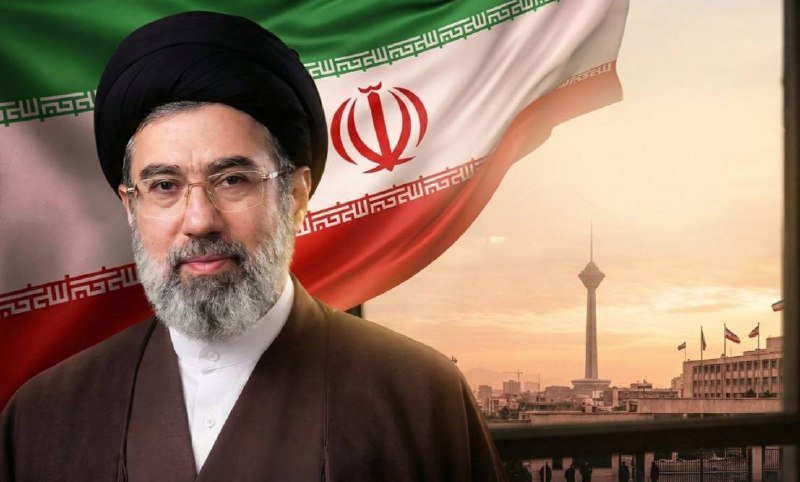
Strait of Hormuz, 1 July 2026: a tanker sits dark in the satellite imagery, engines cold, hull black against blue water, with forty-eight hours now on the internal Iranian countdown that runs from Tehran's national-security command to the IRGC naval coordination cell in Bandar Abbas. What the monitors are not showing is what is being decided inside the office of the new acting supreme leader, Mohammad Mokhber, who according to Telegram channels run out of Iran's state-aligned outlet Tasnim on 3 July has begun formal consultations on whether the chant of "death to America" continues to mean what it has meant since 1979. The Hormuz playbook, in other words, is no longer a single instrument. It is a family of competing drafts, each tied to a different faction inside the Islamic Republic, and the grounded tanker is the first symptom that none of the drafts has a clear author.
The speed of the transition is the thing that should unsettle Western capitals more than the rhetoric. Iran's Khamenei-affiliated English-language Telegram channel framed the moment on 3 July with a single line carried across both Persian and Urdu feeds: the world stands on the threshold of a new system. That phrase, paired with a Tasnim-amplified narrative tribute to the "martyred leader" running across multiple state media accounts from 21:37 to 23:39 UTC on 3 July, is not a description. It is a positioning. Inside Iran, the post-Khamenei factional fight is now happening in public, through state media, between those who want a managed, technocratic succession under Pezeshkian and the IRGC-aligned faction that has spent a decade preparing to run the show itself. The 60-day countdown reads differently depending on whose draft of the playbook you hold.
The choreography around the funeral procession has become the visible layer of that fight. Tasnim's social reporters on 3 July described crowds gathering at six in the morning, carrying images of "Shahid Iran," while the channel's senior-commentator feed ran parallel eulogies framing the late supreme leader as the unifying figure across 86 years of Islamic Revolution history. State-aligned outlet Al-A'lam quoted ABC News' Brett Clint reporting "millions" in attendance, a number that should be treated as Iranian state media's framing of a Western wire's estimate rather than as an independent count. The point is the framing: Pezeshkian, who on 3 July sat down with former Russian president Dmitry Medvedev in Tehran and thanked the Kremlin for its "support and expression of solidarity," is reading the crowds as legitimacy for a controlled transition. The IRGC is reading the same crowds as legitimacy for accelerated consolidation. Neither faction has the airspace yet to act unilaterally.
Three counterweights are running in parallel to the playbook. The first is economic. Russian-aligned commentary on the Telegram channel OsintLive on 3 July flagged Moscow's pressure on Iran to discount crude into Asian markets as part of the cost of Russian-Iranian coordination; the discounted barrel is what Tehran is paying for the Medvedev photo, the shared rhetoric, and whatever sanctions relief Russia can route through third countries. The second is regional. Sana'a's Al-Sabain Square filled with thousands of Yemenis on 3 July in a rally "in gratitude to Iran for breaking the blockade of Yemen" per Telegram reporting on the Jahan Tasnim feed; Hezbollah's southern Lebanon posture, which the Israeli side said was hit again on 3 July per Middle East Eye's live updates, suggests Iran's forward-deployed deterrent assets are being held in place rather than drawn down, the standard operational signal in succession crises that the projection continues even while the succession is unsettled. The third is nuclear. Iran has not confirmed any movement on enrichment in the past 72 hours, but the absence of movement is itself a message during a 60-day countdown: the file is being held in reserve as a card whichever faction eventually takes the pen.
None of this is a one-sided escalation story, and that is why Western commentary has lagged. Iranian state media and Allied channels during this period have been able to set the visual frame of what is happening inside Iran. The Western wires are mostly reporting the choreography. What is not yet on the wire is which faction's Hormuz draft survives. A managed transition under Pezeshkian would likely point at a shorter, harder reactivation of the strait blockade playbook as leverage in renewed nuclear talks. An IRGC-consolidated transition would likely point at a slower de-escalation paired with a higher terminal price inside the strait, the difference between a militant that wants a deal and one that has decided the deal can wait. The grounded tanker, sitting dark in the imagery, is the latent option fee for both drafts.
Watch Moscow's readouts from the Medvedev-Pezeshkian meeting on 3 July for the first editorial signal of which Tehran is being received. Watch Tasnim on the question of whether Mokhber is named acting leader or whether a competing body is being circulated. Watch the IRGC naval coordination traffic out of Bandar Abbas for the first vessel-movement instruction out of ordinary commercial pattern. The Hormuz playbook is not a single decision point. It is a layered menu, and the next forty-eight hours decide which item gets served first.
Sources
- Press TV (Telegram channel index): https://t.me/s/presstv
- Tasnim News English (Telegram, 3 July 2026, 21:37 / 22:04 / 22:24 / 22:58 / 23:10 / 23:39 UTC): https://t.me/s/tasnimnews_en
- Khamenei English Telegram, interview with Bikrum Gill (Cardiff University), 3 July 2026, 20:38 UTC: https://t.me/s/Khamenei_en
- Khamenei Urdu Telegram, "threshold of a new system" framing, 3 July 2026, 21:52 UTC: https://t.me/s/Khamenei_ur
- Al-A'lam Telegram, ABC News funeral attendance quote via Brett Clint, 3 July 2026, 22:28 UTC: https://t.me/s/alalamfa
- Jahan Tasnim Telegram, Sana'a Al-Sabain Square rally, 3 July 2026, 22:01 UTC: https://t.me/s/JahanTasnim
- Middle East Eye live updates (Hezbollah sites in southern Lebanon; Kounine explosion), 3 July 2026, 20:44 / 21:41 UTC: https://www.middleeasteye.net/live/live-us-and-iran-confirm-peace-accord-signing-set-friday-geneva
- Yemen Today via RN Intel Telegram, al-Hajjah and Amran governorate activity, 3 July 2026, 21:45 UTC: https://t.me/s/rnintel
- Medvedev-Pezeshkian meeting via Sprinter Press on X, 3 July 2026, 22:08 UTC: https://x.com/sprinterpress
- OsintLive Telegram, Russian-Iranian crude-discount framing, 3 July 2026, 21:10 UTC: https://t.me/s/osintlive
Desk note: Monexus framed the post-supreme-leader transition as an internal Iranian factional contest, with Western wire coverage running hours behind Iranian state-media choreography. Where state-aligned outlets carried crowd figures, Monexus cited them as Iranian-state-media framing rather than as independent counts, and held the Hormuz-stranded-tanker detail as analytical rather than event-factual given the thin on-the-record sourcing.