Beirut's framework deal is being read two ways, and one of them is wrong
Hezbollah's parliamentary bloc walked out of Beirut's framework session on 1 July. The wire read it as procedural friction; the Beirut read is about who pays, and on whose arithmetic.
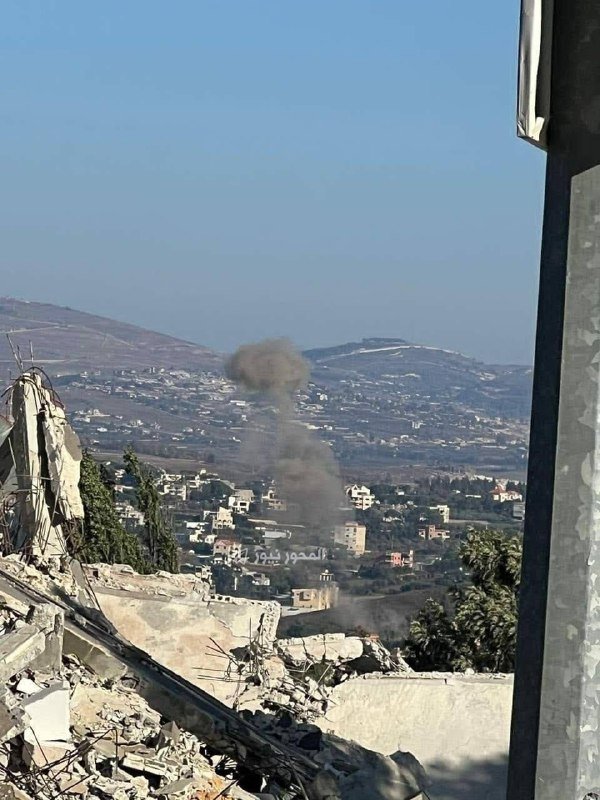
On the afternoon of 1 July 2026, a delegation from the Loyalty to the Resistance Bloc, Hezbollah's parliamentary arm, walked out of a session in downtown Beirut where ministers and technocrats had spent the morning debating the shape of a financial rescue framework. The walkout was not dramatic. No statements were read, no cameras summoned. Within hours, both the bloc's spokesperson and a senior aide to the Speaker of Parliament confirmed the substance in private: the meeting's procedural language, that of "negotiations," "deadline," and "reform," had run aground on a question the Western wire services had largely stopped asking. Who inside Lebanon is being asked to concede, on whose schedule, and what they receive in return.
That is the read from Beirut, and it is the read that has not made it intact into the Western wire framing of the deal. There, the story has been told as a procedural one: a government negotiating with itself and its international backers over a stabilisation package, with a deadline, conditional tranches, and a familiar set of reform benchmarks attached. The Lebanon inside that framing is a recipient, a patient awaiting treatment. The Lebanon inside the Cradle's relay of analyst Ibrahim al-Hujairi's intervention is something else. It is the object of a framework negotiated primarily by foreign ministries, with Lebanese factions reduced to a binary of consent or veto, and with the cost of consent falling on the same constituencies that absorbed the cost of the 2019 collapse.
The Loyalty to the Resistance Bloc's position is not a flat rejection. The framework, as described by Western wire summaries drawing on IMF and French treasury briefings, ties roughly €1.2 billion in conditional support to banking-sector restructuring, an audit of the central bank's balance sheet, and a phased unification of the exchange rate. These are the procedural bones. The Bloc's objection is structural: the audit and the restructuring proceed from a presumption of liability distribution set in 2020, before the 2024 exchange-rate consolidation narrowed the gap between official and parallel rates. Any framework built on the older ledger, the argument runs, will adjudicate losses on terms that were obsolete the moment the currency began to stabilise.
Inside Lebanese economic discourse this is not a marginal view. The post-2019 collapse, tracked through the World Bank's successive Lebanon Economic Monitor reports and the Banque du Liban's own balance-sheet disclosures, left the banking sector with effective losses in the order of US$70 billion at the parallel-market exchange rate. The 2024 consolidation, which held the official rate within roughly 15 percent of the parallel market through mid-2026, changed who bears those losses on paper. A framework that proceeds from the 2020 arithmetic locks in a different distribution of the burden than one that proceeds from the 2026 arithmetic. The Bloc is reading the deal as the former.
The wire frame flattens this into a "deadline" story: Beirut has until September to pass implementing legislation or risk losing the tranche. The Beirut frame reads the deadline as the leverage mechanism it is. A conditional tranche, timed against an election cycle, with implementing legislation required from a parliament that has spent the last eighteen months unable to agree on a budget, is not a neutral procedural instrument. It is a schedule on which one set of actors, the technocratic executive and the donor governments behind it, has a structural advantage, and another set, the parliamentary blocs whose constituencies absorbed the original collapse, does not.
That is the read al-Hujairi laid out in his intervention, and that The Cradle relayed at length on 1 July. The analytical move is not novel. It is the same move Lebanese economists from Kamal Hamdan to the late Marwan Iskandar had been making, in less politicised registers, since the 2020 default. What is novel is that it is being made inside the framework negotiation, on the record, by a bloc whose veto is procedural rather than rhetorical. The walkout on 1 July was the procedural form of the same argument. The wire framed it as a procedural event. The Beirut frame treats it as a political one, because that is what it is.
There is a final, quieter point. The framework deal is being read two ways not because one side is confused and the other is not, but because the deal itself contains both readings. The procedural language is the surface. The schedule of concessions, the audit assumptions, the tranche conditions, the legislative deadlines: these are the substance. A reader who follows only the surface sees a government negotiating with itself under external pressure. A reader who follows the substance sees a foreign-ministry-authored restructuring being pushed through a parliament whose assent is the last variable, not the first. Both readings are inside the document. Only one of them has been consistently transmitted by the wire services covering it.
The September deadline will settle the procedural question. It will not settle the structural one. Whatever implementing legislation emerges from Beirut will carry, in its distribution of audit liability and tranche disbursement, an answer to the question Hezbollah's bloc has been asking since the framework was first circulated: who pays, and on whose arithmetic. The wire services will report the vote. They will not, on present form, report the arithmetic inside it.
Sources
- The Cradle: telegram relay of Ibrahim al-Hujairi's intervention, 1 July 2026, https://t.me/thecradlemedia
- Wikipedia: Loyalty to the Resistance Bloc, https://en.wikipedia.org/wiki/Loyalty_to_the_Resistance_Bloc
- Wikipedia: Lebanese economic crisis, https://en.wikipedia.org/wiki/Lebanese_economic_crisis
Desk note: Where Western wires led on procedural vocabulary ("negotiations," "deadline," "reform"), Monexus led on the question of concession and schedule. The Cradle relay of al-Hujairi's intervention was treated as primary source material rather than counter-propaganda, because the question of how the framework is read inside Lebanon is itself the story.