Mamdani's $323M cultural budget is a bet that New York can still afford the arts
NYC Mayor Mamdani has signed a $323 million cultural budget and a new Cultural Stability Fund. The line items are large; the political read is bigger.
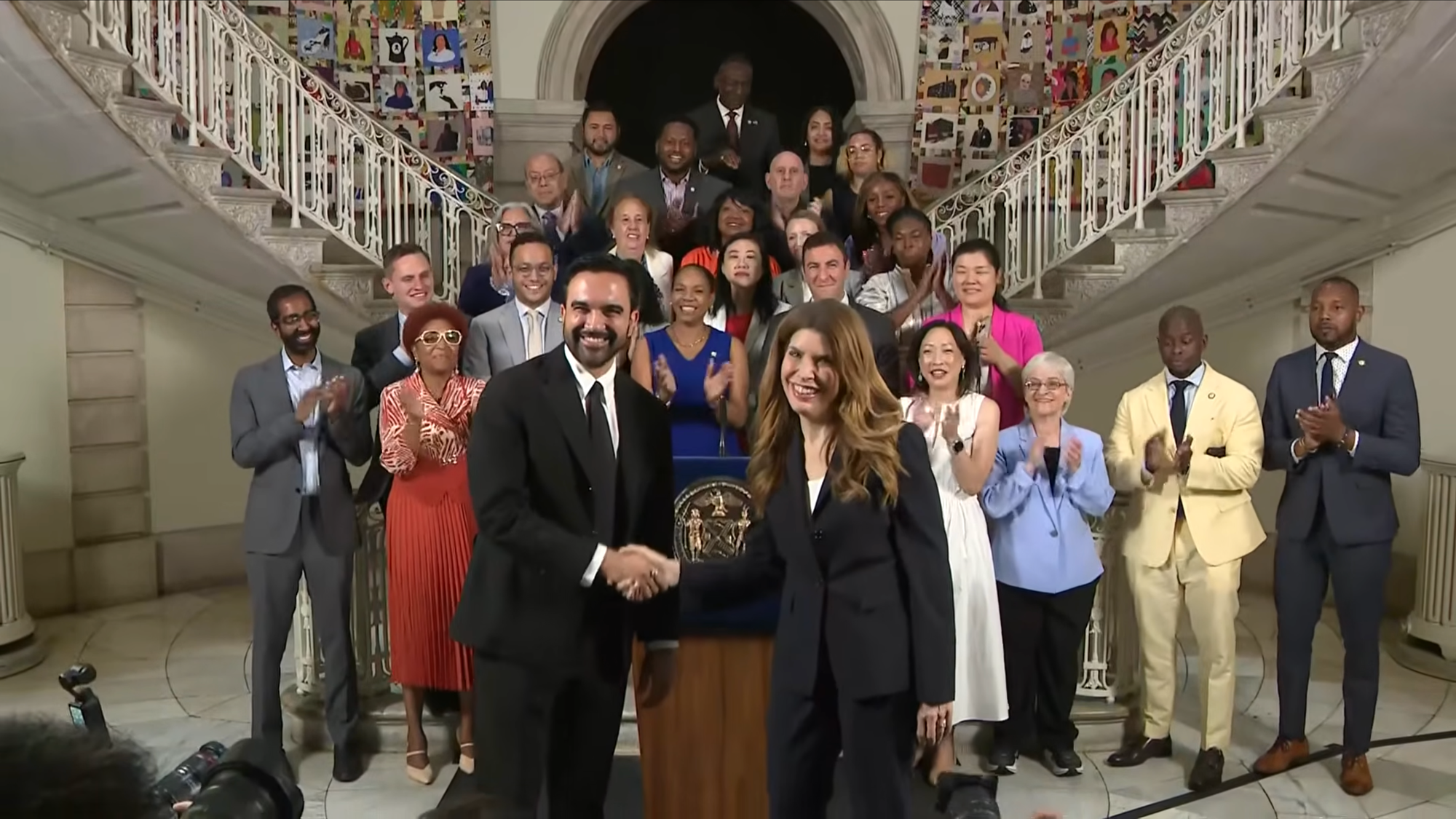
New York City's fiscal year 2027 budget, signed by Mayor Mamdani on the eve of July, devotes a record $323 million to the Department of Cultural Affairs and creates a "Cultural Stability Fund" for arts organisations under acute financial strain. Hyperallergic reported the figure and the new fund on 30 June 2026, framing the package as the largest single commitment to culture in the city's modern budgeting history. The headline number is large; the more telling number is what sits behind it — a structural subsidy for institutions that have spent the post-pandemic years running on ticket revenue that no longer arrives.
The city's wager is straightforward: arts groups that survived the 2020 closures have since survived the slow recovery, but their reserves are exhausted and their earned income has not returned to pre-pandemic levels. A dedicated stability fund, distinct from the annual grant cycle, signals that the administration views cultural infrastructure as a public utility rather than a discretionary line — closer in spirit to the way the city treats libraries and public housing than the way it treats cultural tourism or marquee festivals.
What $323 million actually buys
The headline figure is the Department of Cultural Affairs' total operating allocation for FY27. Cultural Affairs is the conduit through which the city funds the Cultural Institutions Group — the zoos, museums, botanical gardens, performing-arts centres and historical societies that occupy city-owned buildings and depend on municipal support for heat, light, security and a share of programming. The department also administers the city's grants to roughly 1,000 smaller non-profit arts organisations across the five boroughs through the Cultural Development Fund.
In practical terms, the $323 million underwrites both. The Cultural Stability Fund, separately capitalised, is the new instrument. According to Hyperallergic's reporting, it is designed to catch institutions that fall between the cracks of the annual grant cycle — organisations that are solvent in a normal year but vulnerable to a single bad season, a collapsed capital campaign, or the loss of a major donor. The fund's existence acknowledges what cultural administrators have argued for two decades: that arts funding calibrated to the calendar cannot respond to the actual rhythm of institutional crisis, which is seasonal and uneven.
The scale matters because it is large relative to peer cities. London's Arts Council distributes on a similar order of magnitude in pounds sterling, but per capita New York's commitment now exceeds several Western European capitals that have historically claimed cultural leadership. The comparison is useful but partial — peer-city funding is delivered through different institutional architectures, and the dollar figure alone does not capture leverage over private philanthropy or earned income.
Who benefits, and who pays attention
The Cultural Institutions Group is the visible beneficiary — the Met, the Brooklyn Museum, the New York Public Library's research branches, the Lincoln Center complex, Wave Hill. These institutions have political constituencies: trustees, donors, neighbourhood associations, borough presidents. They are also the city's tourism product. Their continued operation is a precondition for the visitor economy that the city's economic-development agencies spend hundreds of millions annually to attract.
The Cultural Stability Fund targets the smaller end of the ecosystem. Mid-sized theatres in the outer boroughs, community dance companies, immigrant literary presses, performance spaces that survive on sublet income — these are the institutions that disappeared during the pandemic and never reopened, and that have continued to disappear, quietly, since. Their absence is not a story the wire services cover, because it happens one organisation at a time. The fund is, in effect, a public acknowledgement that the attrition is real, measurable and politically tolerable only up to a point.
The countervailing read is that $323 million is still a small line in a city budget measured in tens of billions, and that the Cultural Stability Fund risks becoming a triage instrument — patching failures the city could have prevented with steadier baseline support. Critics of the existing architecture have long argued that the city's cultural spending oscillates with mayoral priorities and election cycles; a stability fund is a hedge against that oscillation, but it does not retire the underlying volatility.
A structural read of the politics
The Mamdani administration's cultural commitment sits inside a broader pattern visible in left-leaning municipal governments in North America and Western Europe: the explicit reclassification of cultural funding as infrastructure. The argument, made most cleanly by municipal fiscal analysts and by organisations like the National Assembly of State Arts Agencies, is that the boundary between "discretionary spending" and "essential public service" has been drawn in the wrong place. Libraries, parks and schools crossed that line decades ago. Cultural institutions have not.
New York's bet is that, by moving the line, the city locks in political protection for the sector across future budget cycles. Once a fund is capitalised and a constituency organised around it, defunding it carries visible political cost. The structural risk is that the fund becomes a substitute for sustained baseline support — that organisations negotiate with the city for stability aid instead of building durable revenue.
The deeper structural question is whether municipal-level subsidy can hold against the deeper pressures on the sector: rising real-estate costs in the boroughs where small organisations have historically clustered, the consolidation of philanthropy around a smaller number of marquee institutions, and the slow displacement of working artists from the city altogether. None of these are solved by a single line item, however large.
Stakes and uncertainties
If the fund works as intended, the cultural map of the city in 2030 will look closer to its 2010 shape than the present trajectory suggests. If it fails, the visible artefacts of a diverse cultural ecology — small theatres, neighbourhood presses, mid-budget dance and music organisations — will continue to disappear, and the city will retain its marquee institutions while losing the surrounding fabric that gives them meaning.
The sources do not specify the fund's capitalisation figure, the eligibility criteria for grantees, or the governance structure that will administer disbursements. Hyperallergic's reporting identifies the policy as adopted and the headline budget as approved, but the operational details — what counts as a qualifying crisis, who decides, on what timeline — are not yet in the public record. That gap is the next thing to watch.
This publication framed the Mamdani cultural budget as a structural wager on arts infrastructure rather than a triumphal headline, and resisted the gravitational pull of the round number in favour of the smaller, less-quoted instrument — the Cultural Stability Fund — where the actual policy lives.
Wire provenance
This editorial synthesis draws on the following public wire/social posts:
- https://www.nyc.gov/site/dcla/index.page
- https://en.wikipedia.org/wiki/New_York_City_Department_of_Cultural_Affairs