Zelensky's July 1 Warning: Ukraine Prepares for a Massive Russian Strike as the War of Attrition Tilts
On the evening of 1 July 2026, President Zelensky warned Ukrainians of an imminent, large-scale Russian missile and drone barrage — part of a wider pattern in which Moscow's only remaining leverage is destruction.
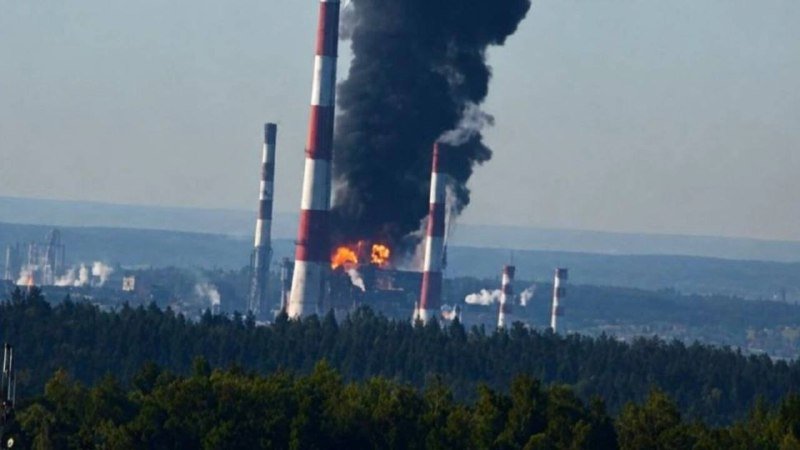
At 17:39 UTC on 1 July 2026, President Volodymyr Zelensky warned Ukrainians to be especially careful overnight, telling citizens that Russia had been "preparing a massive strike" and urging them to use shelters and protect their families and children. Within the next forty minutes, via the Telegram channel ClashReport, he sharpened the message into something closer to a political diagnosis: "Right now, Russia can do only one thing: kill. Russia no longer has a strong economy. Russia can no longer save face." A second message followed at 18:17 UTC: "Russia may not see peace as its priority today. We will make them."
Read together, the three statements sketch the strategic argument Kyiv is now selling to its own population and to its Western backers: that Moscow's remaining instrument is destruction, that the Russian economy can no longer sustain a positive-sum contest, and that the diplomatic balance must be shifted by force. Whether that argument is correct, or merely useful, is the question this publication is watching.
What Zelensky is actually claiming
Strip the rhetoric and three concrete claims emerge. First, that a large combined missile-and-drone strike on Ukrainian infrastructure was imminent on the night of 1 July; the air-raid warning is consistent with a pattern seen repeatedly since the autumn of 2022, when Russia began using Iranian-designed Shahed-type loitering munitions alongside cruise and ballistic missiles to attack the electricity grid, rail nodes, and — increasingly — civilian population centres. Second, that Russia's economic position has weakened to the point where it cannot out-produce or out-finance Ukraine's Western backers; this is the line Zelensky's office has been pushing into European capitals for months, and it aligns with reporting on the impact of sanctions, the cost of war on the Russian federal budget, and the strain on industrial capacity. Third, that the absence of a Russian diplomatic opening — the "may not see peace as its priority" formulation — should be read as a signal that pressure, not engagement, is the path forward.
The counter-narrative from Moscow's side
To be fair, the Russian framing of the same events is structurally different. Moscow describes strikes on Ukrainian energy infrastructure as legitimate pressure on the war-making capacity of a state it calls the Kyiv regime, and points to Western-supplied long-range strikes on Russian territory as the escalatory factor. Russian-aligned channels routinely frame Zelensky's evening addresses as performance aimed at sustaining Western aid rather than at informing Ukrainian citizens. This publication finds that framing incomplete: the immediate, verifiable warning to take shelter is the kind of instruction that only makes sense if civilians are the audience and the threat is real. But the broader claim — that Zelensky is selling a story as much as reporting facts — is not wrong, and Western readers should hear it.
The structural picture, in plain terms
What the war has become is a grinding contest in which the side with the deeper bench — industrial capacity, allied reserves, demographic staying power — wins by default if the other side cannot break the equilibrium. Russia retains the ability to launch large barrages; what is genuinely contested is whether those barrages change anything beyond the immediate human cost. Ukraine retains the ability to strike back deep into Russian territory with domestically produced and Western-supplied weapons; what is contested is whether the cumulative effect degrades Russian will faster than the Russian barrages degrade Ukrainian will. In a contest between great powers with no supranational arbiter, the rational move for each side is to maximise relative strength and minimise the other's — and that is precisely what both Kyiv and Moscow are doing. The tragic arithmetic is that the equilibrium is maintained, when it is, by destruction on both sides.
What is at stake over the next weeks
If Zelensky is right about the weakening of the Russian economy and the erosion of the political case for the war in Moscow, the trajectory bends toward a Ukrainian negotiating position from relative strength. If he is wrong — or if Western aid continues to arrive in instalments rather than as a credible long-term commitment — the equilibrium holds, the strikes continue, and the cost is paid in Ukrainian civilians, Ukrainian energy workers, and the slow grinding-down of a society that has shown more resilience than most outsiders predicted. The plausible alternative reading is that Zelensky is overstating Russian weakness to lock in aid before political attention in Washington and several European capitals drifts elsewhere. The two readings are not mutually exclusive; both can be true, and a sober assessment has to hold them at once.
What remains genuinely uncertain, on the evidence available to this publication, is the scale and target of the strike Zelensky warned of on the night of 1 July. Telegram-channel reporting is not, on its own, a substitute for the morning-after assessment from the Ukrainian Air Force, the energy ministry, or independent OSINT trackers. Until those figures are public, the warning itself is the story — and the political reading each side places on it is the argument that will run through the rest of the summer.
This publication frames Russia's full-scale invasion as the established baseline; Ukrainian strikes inside Russian territory are reported as legitimate responses to an aggressor, not as escalations symmetrical to Russian strikes on Ukrainian cities.
Wire provenance
This editorial synthesis draws on the following public wire/social posts:
- https://t.me/Kyivpost_official
- https://t.me/ClashReport
- https://t.me/ClashReport