Fire, fun and farewell: My Chemical Romance bring The Black Parade to Anfield
My Chemical Romance turned Anfield into a pyrotechnic theatre for their anniversary reprise of The Black Parade, proving the songs have outgrown the costumes that birthed them.
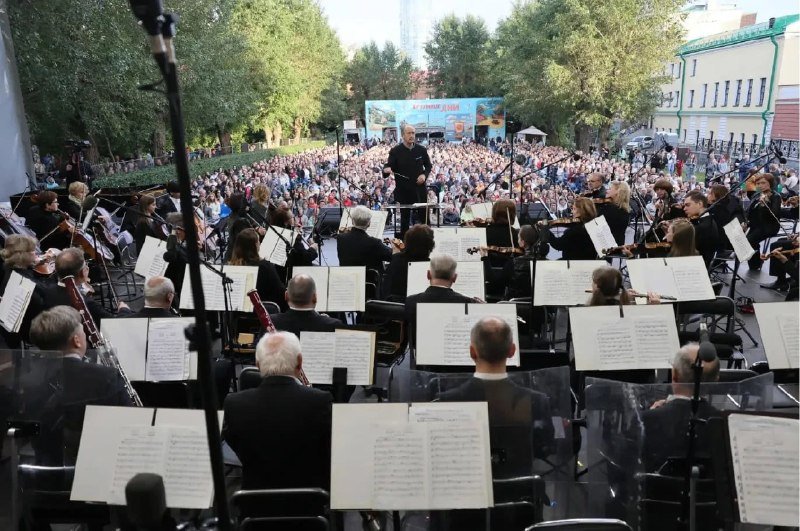
On the evening of 1 July 2026, Gerard Way walked onto the Anfield stage in a black marching-band uniform, tipped a feathered bicorne to a stadium of several thousand, and proceeded to set fire to most of Merseyside. The conceit — a full-stadium reprisal of The Black Parade, the New Jersey band's 2006 operatic-goth concept album about a dying soldier — has spent the last eighteen months touring North America and the European mainland. Its Liverpool stop, the first of two nights at the home of Liverpool Football Club, was the spectacle at full stretch: confetti cannons, a flaming tank, a parade of killer pierrots, a battalion of dancers in whiteface, a tinny marching-band brass section, and enough dry ice to register with the Met Office.
This is stadium rock at its most monumentally madcap, and the question worth asking is not whether it works as theatre — it does, almost excessively — but whether it still works as music. The answer, on the evidence of two hours and roughly twenty songs, is yes. The spectacle is now an alibi for songcraft that has aged into something weightier than the eyeliner and the rifle-sling pose once suggested.
A concept album built for a different scale
The Black Parade was conceived as a Hollywood-set concept piece about a terminal cancer patient named The Patient, and on record it toggles between Broadway pastiche, punk snarl, Queen-style stack-harmony bombast and a kind of mariachi-goth that did not exist as a genre until Way invented it for one chorus. The new staging keeps the narrative scaffolding — the band enter in mourning dress, a faux-doctor figure presides, video interludes sketch the protagonist's descent — but strips the claustrophobia. The songs are presented at Anfield's scale rather than the record's: bigger choruses, slower tempos, longer instrumental breaks.
That trade-off cuts both ways. "Welcome to the Black Parade," the title track and obvious thesis statement, loses something in the expansion: the studio version's chamber-strings give way to a full brass arrangement that is stirring but less haunted. The song's central image — a marching band that turns out to be leading its own members to the grave — needs the queasy minor-key suspension of the original to land. By contrast, "Teenagers," a song that on record plays like a sneering provocation, becomes something closer to communal relief when sixty thousand voices sing its chorus back into the Liverpool night.
The setlist, as documented by The Guardian's 1 July 2026 review, leans heavily on the 2006 record but pulls forward a fistful of pre-Parade cuts — "Helena," "I'm Not Okay (I Promise)" — that work as scene-setting rather than disruption. Three new pieces, reportedly previewed under working titles, suggest the band are testing material that picks up the Black Parade's theatrical vocabulary without re-staging its storyline.
The counter-reading
The obvious objection is that this is a nostalgia operation. The Black Parade is nineteen years old; the average Anfield attendee in 2026 was not yet ten when the album came out. The band themselves are in their late thirties and early forties, and the costumes that read as transgressive in 2006 now read, on a man in a frock coat and white makeup, as essentially theatrical. There is a defensible read of the evening as a heritage act cashing in on its strongest hand.
The response, on the night, was empirical. The audience was not the nostalgic demographic. The Guardian's reviewer notes a crowd skewing young — late teens, early twenties — most of whom were not alive when The Black Parade was released. They sang every word. The costuming is no longer the point; the song structures are. "Dead!," "House of Wolves," "Mama" — these have migrated, through a decade and a half of Tumblr and TikTok inheritance, from a subcultural artefact into the shared repertoire of a generation that encountered them sideways, through covers, soundtracks, and the long afterlife of the record online.
What the spectacle is doing now
The fire and the pierrots are no longer essential to the songs; they have become a permission structure. The album's themes — terminal illness, the failure of institutions, the tenderness underneath teenage rage, the dignity of small-town American losers — are heavy. Playing them straight, in front of a stadium, would risk earnestness at a scale that no rock band can sustain. The costume theatre, the prop tank, the cartoon-military pageantry give the songs somewhere to go that is not sincerity. The audience is given a frame for catharsis that does not require them to perform vulnerability. That is a real piece of dramaturgical work, and it is the reason The Black Parade touring has outlasted the moment that produced it.
It also explains the set's structural choices. The biggest audience response comes not at the ballad "Cancer" — which is played, pointedly, almost straight — but at the snarky "Teenagers" and the absurdist "Na Na Na." The band have learned, over two years on the road, that the songs the audience needs to shout along to are the ones that license them to shout. The slow, brutal material does its work by being allowed to.
Stakes, and what to watch for
The commercial question — whether a band built on a 2006 concept album can carry a stadium tour in 2026 — has been answered at the box office. Anfield is two nights, with a second show scheduled, and dates in Manchester, Glasgow and Dublin follow. The artistic question is more interesting. Three previewed new songs suggest the band are working on a successor record that treats The Black Parade as a language to be extended rather than a monument to be revisited.
There is also a generational point worth making without too much fanfare. The Black Parade's original commercial moment coincided with the rise of MySpace, of emo's mainstream crossover, of a particular American suburban grievance that dominated mid-2000s guitar music. None of that infrastructure exists any more. What is left, on the evidence of Anfield, is a body of songs that have detached cleanly from the era that produced them — which is the test that almost no concept album passes.
The remaining uncertainty is whether the new material, when it eventually surfaces in recorded form, will justify the touring apparatus the band have built around it. The Guardian's review treats the previewed songs as promising rather than conclusive; the band themselves have not announced a release date or a title. For now, the Anfield spectacle is a working argument that the songs can survive being dressed up. Whether they can survive being dressed down, and being released without the tank and the pierrots, is the question that the next twelve months will answer.
Monexus framed this as a live-review with structural stakes — what the staging does for songs that have aged past their costumes — rather than as a fan-press recap. The Guardian's review was the primary wire; the Anfield booking and second-night date were treated as data points about the tour's commercial standing, not as a marketing line.