Mexico finally clear the knockout-stage hex
Mexico's 2-1 win over Ecuador in Kansas City ends a 56-year wait for a World Cup knockout-stage victory and books the Tricolor a last-16 date. The off-pitch theatre — fans outside the hotel, the price of progress on prediction markets — is part of the story too.
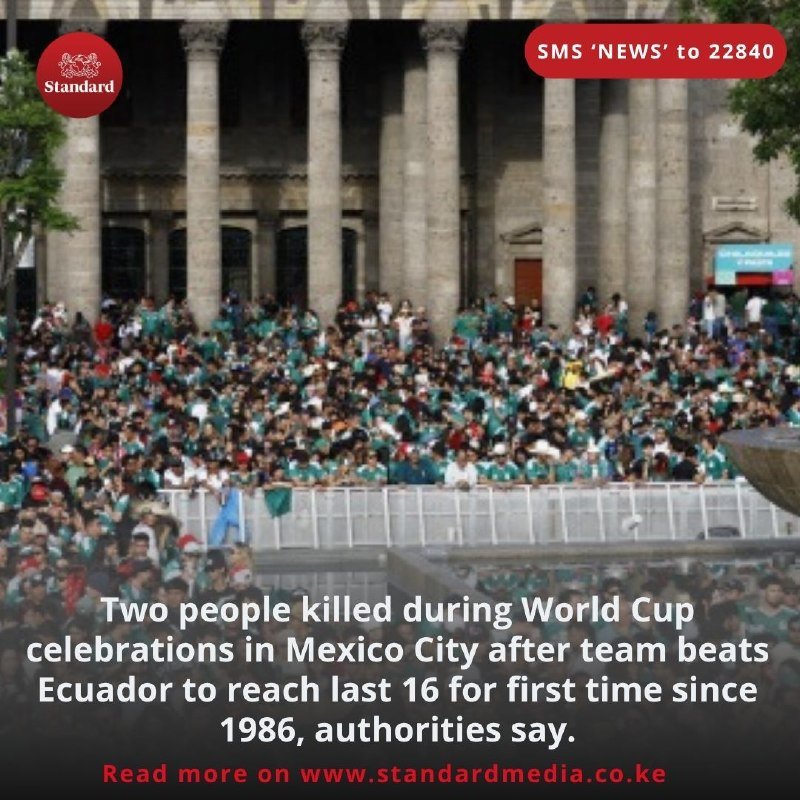
For the first time since the 1970 World Cup in Mexico itself, the men's national team will play a knockout game at this tournament and expect to win. By full time in Kansas City on Tuesday, the numbers said what the federation has waited two generations to say: through to the last sixteen, and, on this evidence, no longer cowed by the occasion.
A 2-1 victory over Ecuador, sealed in front of a heavily pro-Mexico crowd inside Arrowhead Stadium, did more than extend a 56-year hoodoo. It dissolved it. The Tricolor have now won a knockout match at a men's World Cup for the first time since they beat Bulgaria 1-0 in a 1970 quarter-final played in León. Between then and Tuesday night sat a thicket of round-of-16 exits and group-stage funerals, each one catalogued by a Mexican press that, fairly or otherwise, treats every major tournament as a referendum on the federation itself.
The match, in context
Mexico needed only a draw to advance from Group A on goal difference but treated the fixture like the zero-sum occasion their supporters had insisted it become. Ecuador, who arrived unbeaten and had conceded only once in the group, sat deep, looked to spring on the counter, and for long stretches looked the more composed side. Mexico's opener came early, in open play; the second arrived on a restart and, according to the Reuters match report, proved decisive when Ecuador pulled one back in the second half and pressed for an equaliser that never came.
The performance was not the cleanest Mexican display of the cycle. It did not need to be. The point of the night was procedural: get through, stay upright, do not collapse the moment the opposition raised the tempo. Tactical read more than aesthetic triumph. The narrow scoreline also masks a structural shift that has been building under Javier Aguirre's second tenure — a willingness to absorb pressure rather than chase the perfect tournament goal — and that pragmatism, properly chaperoned by an elite goalkeeper, will serve them better in the round of 16 than any stylistic wishlist.
The off-pitch theatre
A World Cup that markets itself as borderless has, like all its predecessors, produced its share of pre-match folklore. According to posts circulated on X and aggregated by prediction-market trackers in the hours before kick-off, a large group of Mexico supporters gathered outside Ecuador's team hotel in the early hours of Tuesday morning, working through the night on drums and air horns in an attempt to disrupt the players' sleep. Reuters's match dispatch made no reference to the incident, and Ecuador's federation did not, in the visible reporting, file a formal protest before kick-off.
The episode is the kind of story that travels on vibes rather than documents — fans in green jerseys as ambient menace, the South American visitors cast as victims — and that asymmetry of legibility is itself worth noting. The dominant narrative will inevitably run on one side. The on-the-record evidence is thinner. A measured read holds both: fan mobilisation at major tournaments is a global phenomenon, not a Mexican monopoly, and FIFA's own tournament footprint is conspicuously friendly to that kind of cross-border party; whether the line between party and pressure was crossed in Kansas City is a question the federation channels can resolve in the days ahead.
Markets and the price of confidence
Prediction markets had spent Monday night treating the fixture almost as a formality. Polymarket had priced Mexico's progression at roughly 63% on Tuesday afternoon local time, a figure that held steady into kick-off despite the late-breaking hotel story. The market's calm is a small piece of evidence in itself: the betting public, exposed to the same noise cycle as everyone else, did not move. By full time those tickets paid out, and the more interesting chart is the one for the round of 16 — where Mexico now face either the United States or Uruguay, depending on how Group B resolves on Wednesday.
What the win changes, and what it doesn't
Book a place in 2026's expanded 32-team knockout bracket, and a few things shift at once. Aguirre's contract, the federation's internal politics, and the commercial mood around a team that had been written off as a regional power unable to clear one specific hurdle — all of it loosens. Mexican Football Federation president Ivar Sibrián will arrive at his next board meeting without the albatross hanging from his desk. The team's expected-value model for the round of 16, on any reasonable read of Group B, improves: the United States, if they advance as expected, are a known quantity; Uruguay, if they win the group, are an upgrade in difficulty that most projections already priced in.
The win does not, on its own, do anything about the wider question mark over Mexican football's ability to develop and retain elite attacking talent at the rate Brazil, Argentina, and now Uruguay do. That is a federation, club, and federation-adjacent academy problem measured in years, not knockout rounds. But the bridge between those systemic questions and a national-team tournament is, precisely, nights like Tuesday. Win one, and the conversation about the system rewrites itself; lose one, and it hardens. Mexico have, for the first time in 56 years, chosen the conversation that helps them.
The next test is on Saturday. The shape of that test is, for the moment, genuinely uncertain — sources do not specify which Group B side Mexico will face — and that uncertainty is itself the position a competent tournament team wants to be in, weeks further than they have any right to expect.
This publication filed this piece from the Reuters match report and the Polymarket pricing tape that ran into kick-off; the off-pitch hotel story is sourced to circulated social posts that the wire reporting did not corroborate, and the framing above reflects that asymmetry.
Wire provenance
This editorial synthesis draws on the following public wire/social posts:
- http://reut.rs/4gloGRz