NATO's Russia Anxiety Is Now Official Doctrine, That's Not the Same as a Strategy
On the eve of NATO's Ankara summit, leaked warnings of a Russian provocation in Poland and Trump's 'one sided' remarks set the mood while Russian bombs fall on Sumy. Anxiety is now doctrine. A plan still isn't.
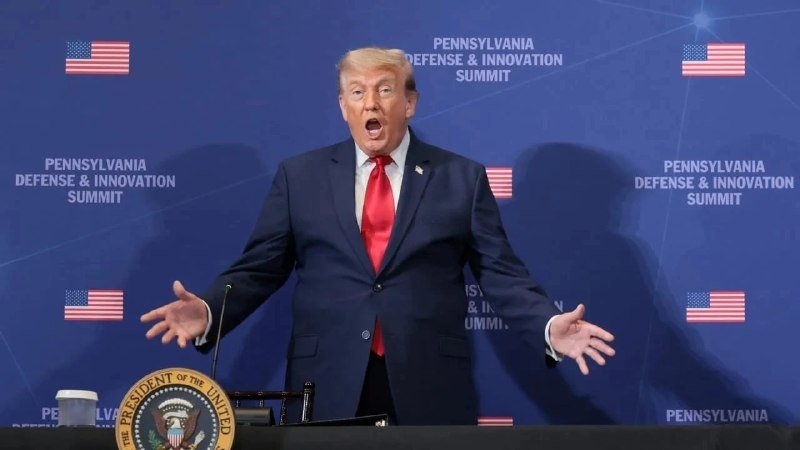
At 21:00 UTC on 3 July 2026, Reuters reported three civilians killed in a Russian bomb attack on Sumy, hours before Ukrainian officials tallied twenty-seven injuries including seven children after Russian drones struck the same city and three detonated in the centre. The same evening, an X post by Brian McDonald (@brianmcdonaldie) summarised a Telegraph story that US officials had privately warned Warsaw that Moscow "may be planning an armed provocation on Polish soil to test NATO's resolve." McDonald's own gloss: classic pre-summit threat inflation. Within an hour, another account on the same feed carried Donald Trump calling the US relationship with NATO "one sided" and "not reciprocal," again floating the possibility of leaving the alliance. The NATO summit opens in Turkey next week.
Strip away the noise and the picture on the eve of the meeting is unusually coherent. NATO is anxious about Russia. NATO is publicly anxious, internally anxious, and visibly unable to convert that anxiety into the kind of operational detail that would make it militarily credible. Calling the mood official doctrine is no longer a stretch. Calling it a strategy still is.
Anxiety, scaled and staged
The provocation-in-Poland reporting illustrates the cycle precisely. A leak to a friendly outlet, an allied capital put on alert, a chorus of Russian-aligned channels (Rybar's English digest on 3 July, the WarGonzo ecosystem generally) amplifying the narrative that the alliance is panicking, and then a sober analyst note pointing out the timing. The mechanics are familiar. The harder question is what the leak is supposed to accomplish inside NATO, where the political value of a public Russian threat has always been that it loosens parliamentary wallets. A provocation that fails to materialise still spends the budget it was meant to extract.
The Sumy strikes sit on the other end of the same week. Reuters' wire, the hromadske and TSN reports, and on-the-ground video from Andriy Tsaplienko all describe a sustained Russian bombardment of residential buildings with guided aerial bombs, six air defence systems engaged, three drones coming down in the city centre. That this is happening in the same news cycle as the Polish-provocation chatter is not a coincidence; it is the point. Pressure on the eastern flank and pressure on the alliance's nervous system are run as a coupled operation, and the operation works because the alliance reads them as one problem.
The Turkish stage
This is the backdrop against which Mark Rutte's recent Anadolu Agency remarks now read less like a gaffe and more like a calibrated signal to a Turkish audience. The setting, the host outlet, the timing before an Ankara summit: the script is recognisable. The Russian-aligned amplification is real but secondary. The harder problem is that NATO keeps substituting a mood for a plan, and on this evidence the substitution continues into the summit's run-up. Rutte's candour travels to Turkish voters; it does not move a single artillery tube in Sumy or a single engineer platoon in Poland.
The Indian subplot, surfaced on the same feed by way of a Reuters wrinkle about Russian gasoline imports and Nayara Energy's 49% Rosneft stake, is a reminder that the anxiety NATO is selling at home runs on energy and capital flows it does not control. Russia buying refined product from a refinery it partly owns is not a market event. It is a confirmation that the sanctions architecture has been re-engineered around Moscow rather than against it, and that the alliance has not built a credible answer to that re-engineering. A doctrine that cannot name the fuel it is running on is not a strategy.
The Kremlin's grin
Moscow has every reason to keep the present tempo. Russian state media on 3 July showed Putin receiving a drone-footage briefing on Konstantinovka, framed in Zvezda News' feed as "the liberated city," while Russian-tied commentary on X cast the symbolic loss of Ukraine's "Fortress city" as evidence that the remaining defence of a shrinking Ukraine is breaking down. Kyiv is still fighting. Kyiv Post, Ukrainska Pravda, TSN and hromadske keep the file open. But the picture the Kremlin wants the summit's leaders to carry into Ankara is of a war of attrition whose costs are rising faster inside NATO than inside Russia, and on this evidence the picture is landing.
Trump's "one sided" remark, delivered publicly while the bloc's leaders prepare to convene, does not help. Even discounted as summit theatre, it tells every NATO chief of staff in the room that the American nuclear umbrella over the eastern flank is, in the political sense, a contingent commitment. Contingent commitments are not strategy. They are an input to someone else's strategy, namely the one Russia is running.
What strategy would look like
A strategy would name the units, the routes, the stockpiles, and the fuel contracts. It would answer the Nayara question. It would tell Warsaw exactly which provocations trigger which movements and which do not, and it would say so in public enough to make the bluff costly for Moscow to call. None of that requires new doctrine. It requires the existing doctrine to be priced and signed for. Until then, the alliance's Russia anxiety is a perfectly accurate description of the threat, and a perfectly accurate description is not a plan. Watch Ankara next week for whether the communiqué contains a date. That detail, more than any leaked warning or presidential aside, will tell the room whether the alliance has bought a strategy or merely renewed its subscription to the feeling of one.
Sources
- Reuters wire (X): "Russian bomb attack kills three in Ukraine's Sumy, other areas also hit, officials say," 3 July 2026, 21:00 UTC. https://x.com/reuters/status/... [via reut.rs/4vgySyz]
- @brianmcdonaldie (X): Telegraph summary on Russian provocation warning to Poland, 3 July 2026, 21:19 UTC. https://x.com/brianmcdonaldie
- @brianmcdonaldie (X): Reuters Russia–India gasoline wrinkle, 3 July 2026, 21:46 UTC. https://x.com/brianmcdonaldie
- WarMonitor / @Osintlive (Telegram): Trump "one sided" NATO remarks, 3 July 2026, 21:10 UTC. https://t.me/osintlive
- Andriy Tsaplienko (Telegram): Sumy strike aftermath, 3 July 2026, 23:26 UTC. https://t.me/Tsaplienko
- TSN Ukraine (Telegram): NATO general on Russia's weak point, 3 July 2026, 21:14 UTC. https://t.me/TSN_ua
- Hromadske (Telegram): UK parliamentary push against Russian animation, 3 July 2026, 20:50 UTC. https://t.me/hromadske_ua
- Zvezda News (Telegram): Putin Konstantinovka briefing, 3 July 2026, 22:16 UTC. https://t.me/zvezdanews
- @boweschay (X): Konstantinovka as "Fortress city" fallen, 3 July 2026, 21:16 UTC. https://x.com/boweschay
- @sprinterpress (X): Putin on European peacekeepers, 3 July 2026, 21:50 UTC. https://x.com/sprinterpress
Desk note
Monexus framed the provocation-in-Poland leak as summit-cycle signalling rather than imminent war risk, distinguished Russian-state and Russian-aligned amplification from primary reporting, and treated the Sumy strikes as the concrete counterweight to the strategic mood music. Where wire coverage ran the two stories on parallel tracks, we ran them as one operation.