Osaka's Wimbledon re-entry doubles as fashion statement and form check
Returning to the All England Club, Naomi Osaka has matched her best Wimbledon run since 2018 while her pre-match outfits continue to draw more column inches than her backhand.
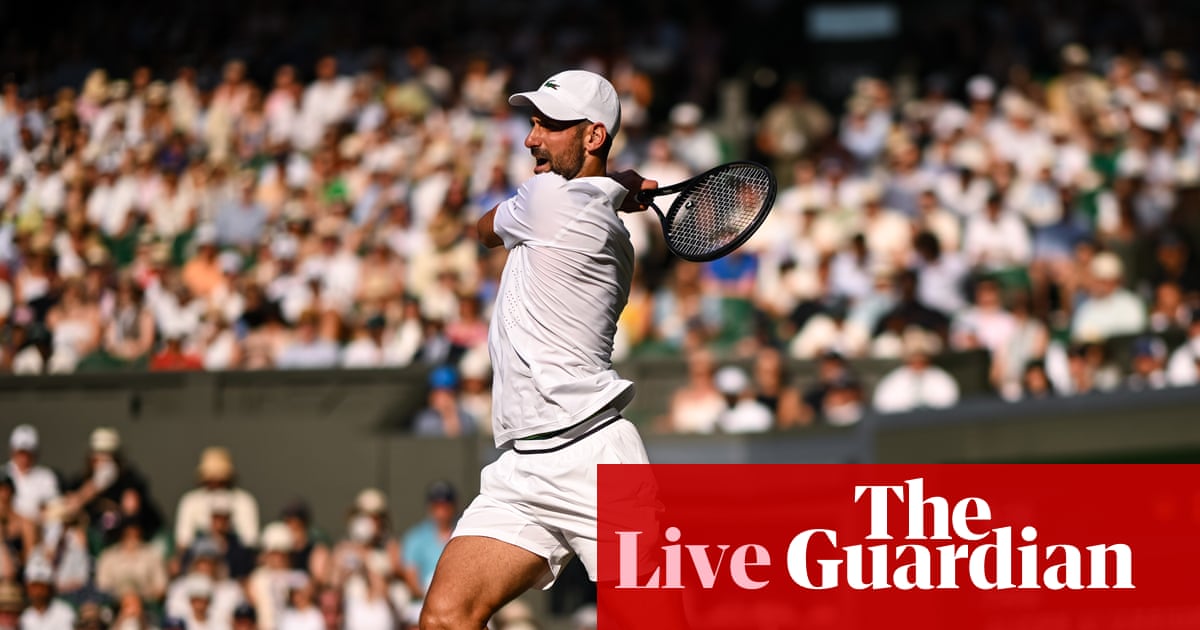
At 16:32 UTC on 1 July 2026, Naomi Osaka walked through the All England Club gates in a fresh kit — and then, a few hours later, booked her place in the third round of Wimbledon. Both halves of that sentence matter. The four-time major champion is, by any sober measure, playing her best grass-court tennis in years. She is also, deliberately or not, reminding the sports-fashion industrial complex why it keeps signing her cheques.
The functional story is the simpler one. Osaka has reached the third round at SW19 for the first time since 2018, a development that quietly corrects a long-running weakness on her résumé. Her movement on the slicker surfaces has historically lagged behind her hard-court pedigree; the gap has been narrowing. The non-functional story is louder. Her arrival outfit — photographed, circulated, and dissected within minutes — set the tone for a tournament in which the off-court economy is again doing as much work as the on-court one.
The tennis
Strip out the cameras and the lighter story is one of incremental, technical progress rather than a sudden reinvention. Osaka's power baseline, long the foundation of her major-winning runs, travels adequately on grass when her first-serve percentage cooperates and when she gives herself time to set behind the return. Her second-round win, completed later on 1 July, suggested both conditions held. She now meets a third-round opponent whose identity and ranking the available reporting does not yet specify.
The structural oddity of Osaka's Wimbledon story is that grass is the only surface on which she has yet to win a major. She has two US Open and two Australian Open titles; she has a title in Beijing on outdoor hard and a long indoor-hard résumé. The All England Club, with its bounce, its low skid, and its premium on serve-plus-one, has been the one venue that has refused to flatten for her. A third round, properly framed, is a foothold, not an arrival.
The show
Osaka's fashion partnership — the high-end label deal that preceded her return to tennis and has, at intervals, outshone her results — is the louder thread. Photographs circulated by BBC Sport on 1 July capture an ensemble built for the photographers' pen rather than the practice courts. The point is no longer novel: in women's tennis, the walk-in has become a credentialing event of its own, a way for players to signal brand gravity before the first ball is struck. Osaka is unusually good at it.
The defensible reading is that this is a rational trade. Tennis broadcast windows depend on personalities as much as on points; outlets that pay premium rights fees want faces that translate in still images. Osaka obliges. The uncomfortable reading is that the trade has begun to crowd the tennis. Her third-round appearance is a sporting event; her arrival was, functionally, a sponsored photo call. Reporting on the sport has to keep both in the frame.
What the framing is missing
The dominant line — and it is the line carried by BBC Sport's 1 July dispatch — is that Osaka is "proving a showstopper on and off the court." That phrasing is generous to the clothing and stingy with what it actually took to win a best-of-three on grass. A more careful version would say: the clothing is the showstopper; the tennis is the work.
Counter-reads are worth airing. The cynical version holds that a player's brand value is now priced in to any third-round Wimbledon run, and that treating a routine progression as a comeback obscures how thin the field at the bottom of the women's draw has become. The sympathetic version holds that Osaka has rebuilt her game and her professional footing after a difficult 2023–24 stretch, and that any clean week at a major is news. The honest editorial position is to report the result, log the kit, and resist the temptation to crown either as the lead.
Stakes
The next 72 hours are the test. A fourth-round run at Wimbledon would push Osaka back into the top-tier conversation on a surface she has never won on; an early loss would reset the news cycle to the wardrobe. The fashion economy will absorb either outcome. The tennis economy, less so. Osaka's stated goals on her return have been measured rather than maximalist — she has spoken of wanting to play consistent, injury-free seasons rather than chase a calendar year. Wimbledon 2026 is the first real audit of whether those two ambitions can coexist with the gravitational pull of her off-court portfolio.
What remains uncertain is whether a deep run would change the calculus — a fourth round, a quarterfinal, a first Wimbledon semifinal — or whether, at this stage of her career, the result is almost beside the point. The sources disagree mainly by silence: the BBC reporting confirms the third round and the outfit; it does not yet detail the third-round opponent, the scoreline of the second-round win, or the broader state of her 2026 grass-court prep.
This article leans on the BBC Sport wire and treats Osaka's Wimbledon re-entry as both a tennis story and a media-economy story. The byline is staff; the beat is sport; the line is to give the kit its due without letting it eat the result.