Square kilometres and stomach punches: what the war-of-attrition arithmetic really says
The Telegram cartographers are right that Russian territorial momentum has slowed. The error is in treating that as the metric that matters.
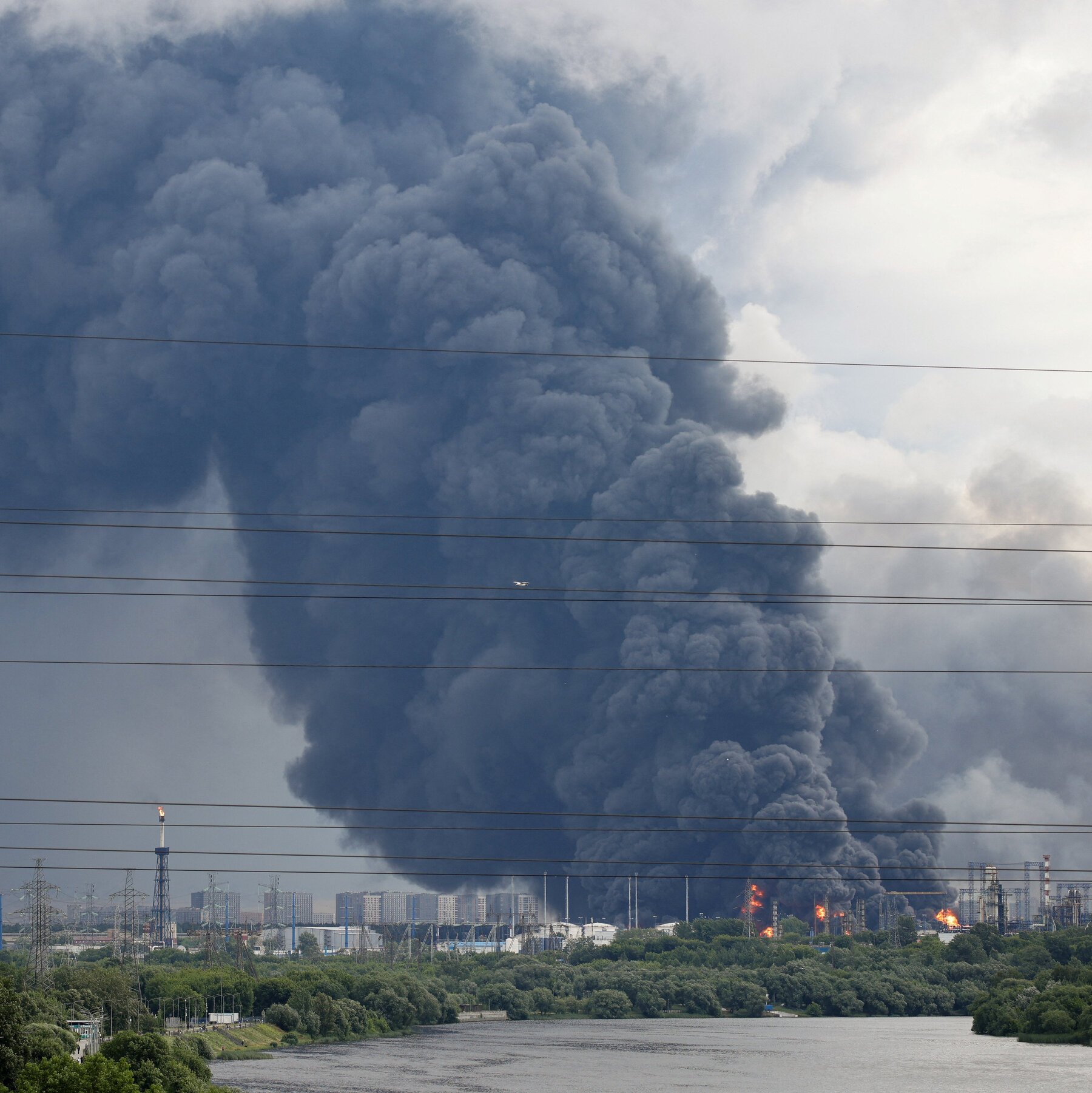
Every few weeks the open-source mapping channels running the Russo-Ukrainian front publish their daily delta — the small block of new red or blue shading along a salient nobody outside the milblogger ecosystem can place on a map. On 30 June 2026 the cartographers at AMK Mapping delivered a verdict that has become routine: tactical momentum on the ground has slowed significantly for Russia, and the square-kilometre figures, taken in isolation, are not flattering to Moscow.
The mistake is to stop reading there. Square kilometres are a weather vane, not a thermometer. They register which flag is planted on which patch of dirt on a given Tuesday. They do not register the slower trades the Russian high command is making — manpower bled in return for ground that costs Ukraine a hundred shells to retake; defensive lines stretched thinner to free up assault formations for one more push before the autumn mud. The arithmetic of attrition runs on people, tubes of propellant, and the patience of donor governments. It does not run on hectares.
What the cartographers actually wrote
In a Tuesday-night exchange on Telegram, AMK Mapping made the point explicitly: "Km^2 figures DO provide insight into tactical battlefield momentum, which has certainly slowed significantly for Russia." The follow-up carried the real argument — that Russia could keep losing territory every month and still be winning the trade that matters, the one measured in Ukrainian irreplaceable losses and Western resupply rates. The framing is not pro-Russian. It is the standard realism of a cartographer who has watched enough red and blue inchwork to know that the front line is a lagging indicator.
The counter-narrative the wires push
Western coverage tends to compress this story into a football score — kilometres gained this week, kilometres lost this week — because that is the unit the audience has been trained on. The pitch feels legible: more blue, Ukraine is winning; more red, Russia is winning. The problem with the football-score frame is that it inherits the assumption that the side running up the score is the side prevailing. In a war of attrition, the side that denies the other side a decision is the side prevailing. Either army can lose ground for months and still be grinding the other into the ground they are standing on.
What the structural picture shows
Strip the kilometre fetish away and a duller, truer picture emerges. Russia is trading time for Ukrainian equipment and personnel at a rate the West has not yet matched in throughput. Ukraine is trading space and trained formations for the diplomatic breathing room needed to keep F-16 pipelines, ATACMS resupply, and air-defence interceptors flowing. Neither side is winning in the unit their partisans like to cite. Both sides are optimising inside a budget they did not choose. This is what attritional wars look like when neither party can deliver a decisive blow: a long, ugly ledger in which the column that matters is total cumulative cost relative to the column of total cumulative capacity to bear it.
The corollary is uncomfortable for both sides. For Kyiv, it means that the political case for continued Western support has to be made on the grounds of long-run European security rather than on the grounds of imminent triumph. For Moscow, it means that the territorial gains of 2024 and 2025 are operating costs that have to be defended indefinitely, with a manpower base that is no longer growing demographically and an industrial base running hot under sanctions. The kilometres tell you who held which patch of dirt last Tuesday. They do not tell you whether either side can keep holding anything by next winter.
What remains genuinely uncertain
The honest caveats deserve a paragraph of their own. Open-source mappers are working from commercial satellite imagery and a stream of geolocated combat footage; their deltas are reliable to within roughly a hundred metres on most salients, but the rate of Ukrainian and Russian operational-tempo claims is high enough that any single weekly number is closer to a snapshot of the press cycle than to the front line itself. The deeper indicator — casualties, ammunition expenditure, mobilisation replenish rates — is visible only in fragments: Russian milbloggers complaining about infantry shortages, Ukrainian brigade commanders rotating units off the line after a fortnight instead of the customary three weeks. None of that is clean enough to publish as a number. It is clean enough to know that the football-score frame is the wrong one to watch.
The temptation, especially in a slow summer news week, is to treat each map update as a verdict. It is not. It is a weather report. The only verdict that matters — which side is winning the trade-off between what they are spending and what the other side is spending — will be visible only in retrospect, when the budgets are open and the dead can be counted.
Desk note: Western wires tend to lead territorial-war stories with the kilometre delta, which makes the front legible but obscures the attritional trade-off that is actually driving the front. Monexus frames the same numbers inside the slower arithmetic they sit inside.
Wire provenance
This editorial synthesis draws on the following public wire/social posts:
- https://t.me/AMK_Mapping
- https://t.me/s/AMK_Mapping