Rutte's sleepless nights and the architecture of an alliance on alert
NATO's Secretary General tells Turkish media that Russia is what keeps him awake. The remark lands at a moment when the alliance is recalibrating its threat assessment, and the language chosen matters more than the words.
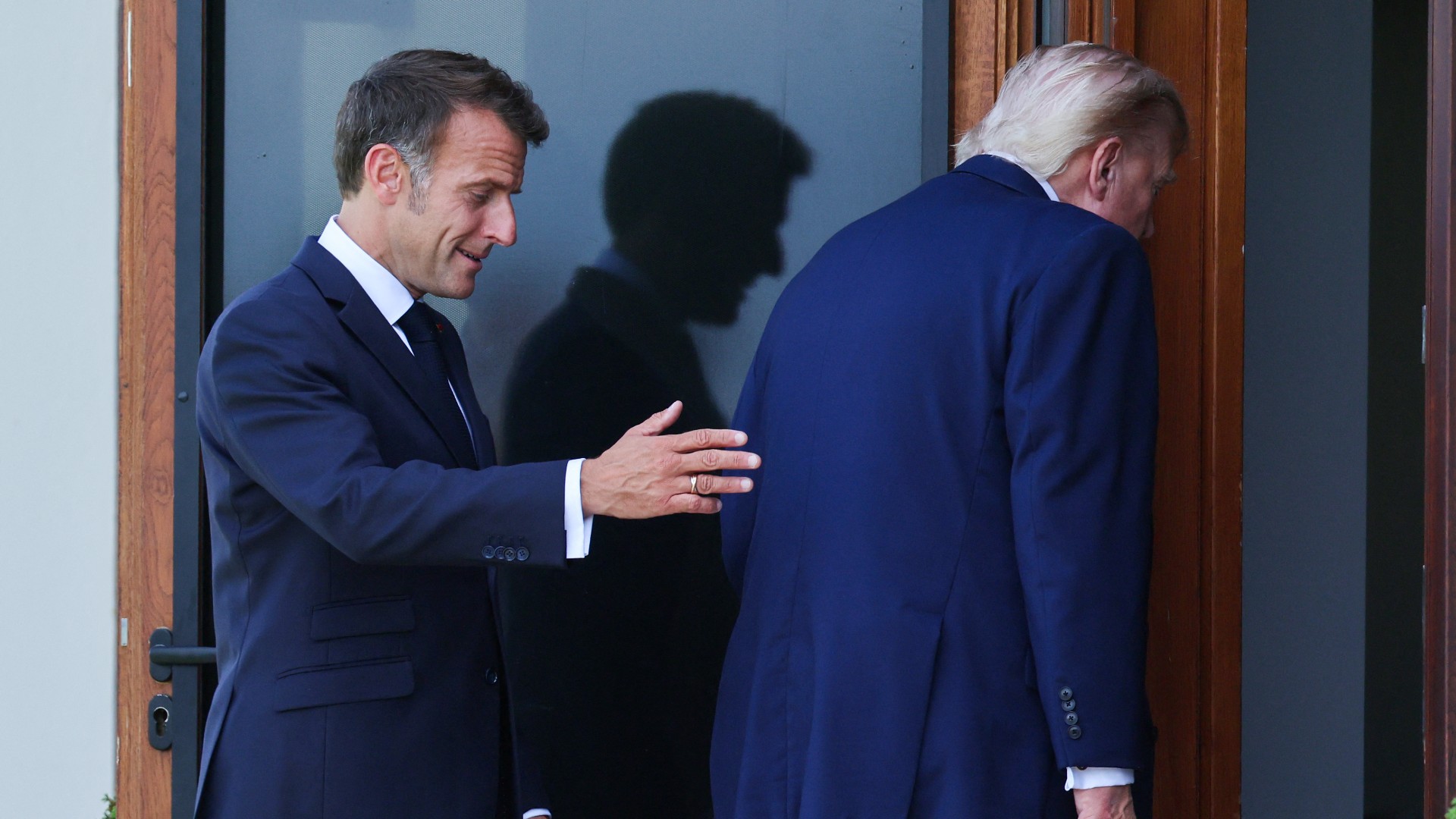
On 1 July 2026, NATO Secretary General Mark Rutte sat down with Turkish media and offered a line that travelled further than the interview deserved. "Normally I try to sleep," he said. "But if there's something that keeps me awake, it's Russia." The phrase was clipped and reposted within hours by outlets monitoring the alliance's mood music, including Turkish state wire Anadolu Agency and Western-aligned channels reporting from the alliance's Brussels headquarters. By midday UTC, the quote had become a small set piece in a much larger narrative about how NATO is choosing to describe the threat environment as it enters the second half of the decade.
The line matters less for what it reveals about the Secretary General's sleep patterns than for what it confirms about the alliance's posture. NATO officials have spent the past several years edging away from euphemism when describing Moscow's behaviour, and Rutte's plain-spoken framing — Russia as the thing that interrupts sleep — is the rhetorical endpoint of that drift. It is also a calibrated message to a Turkish public that has historically been sceptical of the alliance's direction, and to a Turkish government whose relationship with Moscow runs on parallel tracks: a NATO ally, a regional power, and a partner in Black Sea security arrangements that complicate any single sentence about threat.
A quote, and what it actually says
The interview, distributed in Turkish by Anadolu Agency and picked up by Telegram channels covering NATO and the Russia file, contains a single sentence that does most of the work. Rutte frames Russia as the alliance's principal preoccupation — not its only one, but the one that survives the qualifier. The delivery is deliberately informal. A Secretary General who chooses bedtime imagery is making a choice about register: he is signalling that the institutional assessment can be stated in the language of an ordinary citizen rather than the language of threat assessments and intelligence summaries.
That register choice has a tactical dimension. Across NATO's southern members, public fatigue with abstract threat language has been a persistent feature of opinion research. Ankara in particular has demanded that the alliance show its working on Russia — both because Turkey's own exposure to the war in Ukraine is direct (the Black Sea, drone exports, energy routing) and because Turkish domestic politics reads grand alliance statements through a national-interest lens first. Speaking plainly to a Turkish outlet is not the same thing as speaking plainly in Brussels.
The counter-narrative, voiced in Russian state-adjacent commentary, frames the remark as proof that the alliance has militarised its rhetoric in order to justify continued expansion and defence spending increases. That reading is not new, but Rutte's wording gives it fresh material. The honest assessment sits between the two: the threat description is consistent with NATO's publicly stated posture for several years, and the choice to describe it in personal terms is a communications strategy, not a doctrinal shift.
Russia as the principal preoccupation
Within NATO's public framing, the hierarchy of threats has been stable for some time. Russia sits at the top of the list, followed by the long tail of challenges — terrorism, cyber operations, the disruptive effects of strategic competition, the resilience of critical infrastructure. Rutte's sleep line collapses that hierarchy into a single image. It is useful because it is unambiguous; it is dangerous because it narrows the alliance's public vocabulary at a moment when its members are arguing, often loudly, about what the threat picture actually looks like.
Several NATO members would prefer the threat description to be more textured. Turkey has consistently asked for the alliance's southern flank — the Eastern Mediterranean, the Caucasus, the Black Sea — to receive the same rhetorical weight as the Baltic. The Baltic states and Poland, by contrast, see any dilution of the Russia-first framing as a concession they cannot afford. Romania, Finland, and the Nordic members have invested heavily in the eastern posture and have a domestic stake in keeping the language pointed.
Rutte's job, in that environment, is to hold a coalition together without breaking the threat description. The interview does the holding. It says: the alliance sees the same principal threat its most exposed members see, and the Secretary General is willing to say so in a register that travels. That is not nothing. It is also not everything.
Counter-narratives, near and far
Two counter-reads deserve airtime. The first is the Russian state-adjacent framing: the line is being read in Moscow as confirmation that the alliance is preparing public opinion for an escalatory posture, and that defence-spending commitments made at successive summits are best understood as preparation for a confrontation that NATO wants rather than one it fears. That reading is selectively accurate — NATO has indeed rebuilt capabilities it had drawn down after the Cold War — but it overstates the alliance's unity on what those capabilities are for.
The second counter-read is more interesting and less often heard. A line of commentary from analysts in non-aligned European states, echoed by some Turkish and Balkan commentators, argues that the personalisation of threat language — the Secretary General's sleepless nights, leaders' emotional registers — is itself a soft form of mobilisation. It narrows the space for the diplomacy that would in fact reduce the threat, and it ties the alliance's public mood to the assessment of one office. In this reading, the bedroom metaphor is the opposite of what it appears: it is a way of saying that the institutional answer is already decided.
A third, quieter reading is that the line is simply true. Officials at NATO headquarters do spend a disproportionate share of their week on the Russia file. The Secretary General saying so is not in itself inflammatory. The question is what comes after the quote — what capabilities are committed, what consultations are intensified, what diplomatic tracks are kept open or quietly closed.
Structural frame: an alliance that talks more about itself than about the threat
What is striking about the present moment is not that NATO describes Russia as the principal threat; that description has been stable for years. What is striking is the volume of airtime given to the description itself. The alliance's communications operation now spends a substantial share of its bandwidth on framing — choosing words, picking registers, deciding which threat gets which adjective. That is partly a function of the information environment in which NATO operates, where a single interview clip will circulate for days and where Russian state media will read the same clip through a different lens.
It is also a function of an alliance that has, in practice, settled its principal strategic questions and is now in the long phase of implementation and reassurance. Deterrence posture in the Baltic and the High North has been rebuilt. Defence spending commitments have been raised and re-raised. The question of what to do about Ukraine's long-term relationship to the alliance has been kicked down the road in several directions. Once those questions are answered, the daily work of the headquarters is to communicate that the answers still hold, and the way to do that is to keep describing the threat in language that travels.
That is the structural frame: an institution in its reassurance phase, using language as a substitute for the strategic debate it has already had. The reassurance is necessary — alliance members need to know the threat picture is shared, and publics need to know that their governments are not improvising. But reassurance carried too far becomes ritual, and ritual carried further becomes background noise. The risk for NATO is that a quote like Rutte's, useful as it is on the day, becomes one of dozens of similar quotes that, taken together, produce a public accustomed to the description rather than informed about the policy.
Stakes and the next twelve months
The immediate stakes are small but real. NATO's deterrence posture is built on credibility, and credibility is built on consistency. A Secretary General who says Russia keeps him awake, and then conducts the alliance's routine business in the register of crisis management, will reassure exposed members. A Secretary General who says the same thing but reaches for diplomacy where diplomacy is possible will reassure the alliance's southern flank and the wider non-aligned European audience.
Over a twelve-month horizon, the more consequential variable is not the Secretary General's adjectives. It is the operational tempo in the Baltic, the Black Sea, and the High North; the state of the alliance's support for Ukraine; the trajectory of defence-spending commitments in member-state budgets; and the ability of NATO's southern members to see the alliance as something more than a Russia-management vehicle. The interview does not move any of those variables directly, but it sets the rhetorical baseline against which subsequent decisions will be read.
The remaining uncertainty is whether the quote ages as a simple statement of priorities or as a marker of an inflection point. The evidence in the source material is consistent with the simpler reading: the threat description is stable, the register has shifted, and the alliance is doing what it has been doing for several years. The evidence does not support a sharp break. It does support the conclusion that NATO's public language is now tightly choreographed, and that every senior statement will be read in two directions at once.
This article draws on the Anadolu Agency interview distributed to Turkish media and on Telegram channels monitoring the NATO and Russia files. Monexus frames the Secretary General's remarks as a communications moment within an established posture rather than as a doctrinal shift.
Wire provenance
This editorial synthesis draws on the following public wire/social posts:
- https://t.me/sprinterpress
- https://t.me/intelslava
- https://t.me/DDGeopolitics
- https://t.me/s/intelslava