The Supreme Court Handed MAGA Two Defeats and a Conspiracy Theory
On 30 June 2026 the Supreme Court struck down Trump's birthright-citizenship executive order and upheld state bans on transgender athletes in girls' and women's school sports — twin rulings that have triggered a multi-vector conservative backlash and a sudden DOJ pivot toward "birth tourism" enforcement.
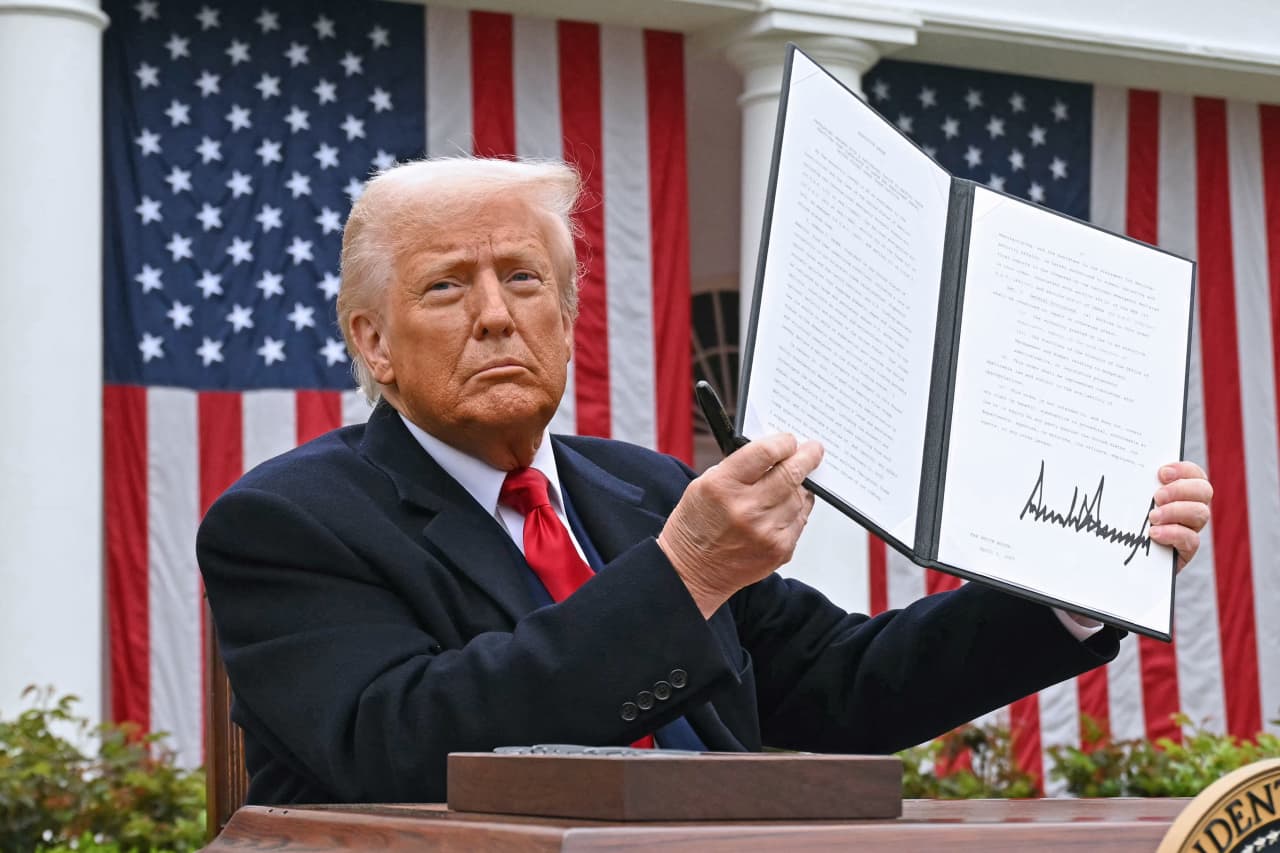
On the morning of 30 June 2026, the Supreme Court handed down two of the most politically combustible decisions of its term: a 6-3 ruling that the Fourteenth Amendment guarantees birthright citizenship to every child born on U.S. soil, and a separate decision upholding state laws that bar transgender girls and women from competing on female sports teams in publicly funded schools. Within hours, the conservative ecosystem had absorbed both rulings as a single grievance. By the close of the day, prediction markets had repriced the chance of a Supreme Court vacancy before the end of 2026 to roughly 61 percent, and the Department of Justice had ordered a widening of "birth tourism" investigations — an enforcement pivot that, on its face, has nothing to do with either ruling but conveniently allows the administration to keep the underlying political quarrel alive.
The twin decisions did not arrive in a vacuum, and they will not stay inside it. Taken together they expose a fault line that runs through the modern American right: the gap between a populist movement that believes the constitutional text says what it plainly says, and an executive branch that has spent eighteen months trying to rewrite that text by fiat. That gap is now a political asset for both sides, and the contest over what happens next will shape not only the mid-term cycle but the institutional balance of the judiciary itself.
The rulings, in plain terms
The birthright decision was the bigger of the two by historical measure. The Court held that the Citizenship Clause of the Fourteenth Amendment — "all persons born or naturalized in the United States, and subject to the jurisdiction thereof" — applies on its face to children born to undocumented parents, and that the President's executive order attempting to exclude that class was inconsistent with the constitutional text. The majority opinion, as reported across wire services and on Polymarket's breaking-news feed at 14:40 UTC, treated the question as settled since 1898 and the plaintiffs' challenge as meriting no novel exception. The three liberal justices joined the three conservative justices in the majority, producing a cross-ideological coalition that has since become the focal point of conservative fury.
The transgender-athletes ruling, reported on Unusual Whales at 16:17 UTC and confirmed by Polymarket at 14:14 UTC, took the opposite political valence. There the Court upheld state statutes that exclude transgender girls and women from female-designated school sports teams. The majority treated the question as one of competitive equity and of state discretion over publicly funded athletics, deferring to legislative judgments about physiological difference. The two rulings together are the kind of split-the-baby outcome that satisfies almost no one — and that, precisely, is why the political reaction has been so loud.
Why MAGA is in meltdown
Al Jazeera English's reporting on the day framed the conservative response as something more structured than the usual court-watchers' disappointment. The piece, flagged on the network's Telegram channel at 11:40 UTC on 1 July 2026, argued that the birthright ruling in particular has produced an intra-right crisis because it exposed how thin the legal case for the executive order always was. A movement that built itself on the proposition that the Constitution means what its readers think it means has been told, by a majority that included two of its own justices, that the text is harder to bend than the campaign rhetoric suggested.
The second front of the backlash is more procedural. Prediction markets moved quickly: Polymarket's market on a Supreme Court vacancy in 2026 sat at roughly 61 percent on 30 June, a number consistent with a base-rate of one retirement or death per term but elevated by an unusually loud post-ruling rhetoric about impeaching justices, packing the bench, or refusing to enforce the ruling. None of those mechanisms is realistically available. None of them needs to be available to matter politically. The mere volume of the threat is itself a campaign asset: it mobilises a base, it forces nominees in future administrations to commit to constitutional revisionism, and it keeps the issue alive for 2028.
The "birth tourism" pivot
Less than twelve hours after the ruling, the Department of Justice ordered a crackdown on "birth tourism" investigations — the practice of foreign nationals travelling to the United States specifically to give birth, securing citizenship for the child as a downstream benefit. As Polymarket reported at 01:22 UTC on 1 July, the directive landed without a formal press conference and without a published memo, a pattern this administration has used before to create policy through enforcement signalling rather than through rule-making.
The pivot is structurally revealing. Birth tourism is a real phenomenon, long prosecuted as a civil-document-fraud matter, but it is also a tiny subset of the immigration system. Directing enforcement resources there does nothing to reverse the constitutional holding. What it does is preserve the political frame: the administration can continue to claim, in front of cameras, that it is acting against an immigration practice it considers abusive, while the underlying constitutional question — who is a citizen at birth — is settled against it. The frame works because it lets sympathetic media outlets tell a story that does not require admitting the legal loss.
The structural pattern
Read together, the rulings and the enforcement pivot sit inside a familiar pattern: an executive branch that loses in court, redirects political energy to an adjacent enforcement front, and uses prediction-market chatter and cable-news amplification to keep the underlying grievance at a rolling boil. It is the same playbook visible in earlier fights over travel-ban litigation, over the border-wall emergency declarations, and over the various attempts to condition federal funding on immigration-enforcement cooperation. Each time the courts draw a line, the administration does not surrender the argument; it relocates it.
What is different this time is the breadth of the political coalition that is now treating the Supreme Court as an adversary. The 6-3 birthright ruling means two Trump-appointed justices joined the majority. The administration's allies cannot plausibly describe the Court as a captured institution acting in bad faith; they have to describe it as institutionally corrupt in some deeper sense. That kind of framing, once normalised, ages poorly — but it is useful for the next eighteen months of mobilisation.
Stakes, and what remains contested
The forward stakes are concrete. If the administration follows through on threats to ignore, partially comply with, or seek legislative reversal of the birthright ruling, it will trigger one of the first genuine constitutional crises of the post-2000 period — the kind of standoff the federal judiciary has not faced since the integration era. The DOJ's "birth tourism" pivot is the lower-risk path: it concedes the constitutional point in court while keeping the political fight on television. The middle path — open defiance — is the one the rhetoric hints at and the institutional reality discourages.
Several things remain genuinely uncertain. The sources do not specify the precise scope of the DOJ's birth-tourism directive — whether it targets operators, parents, hospitals, or all three, and what penalty schedule applies. The 61 percent prediction-market price on a Supreme Court vacancy in 2026 reflects trader sentiment, not a probability in any rigorous sense, and it conflates voluntary retirement with the more dramatic scenarios floated in conservative media. And the transgender-athletes ruling, while upheld on the specific question of state-funded school sports, leaves open the harder questions about college athletics, private leagues, and federal civil-rights statutes — questions that will return to the Court within two terms.
What is not in doubt is the political geometry. A ruling that the Constitution means what it says, paired with a ruling that policy discretion belongs to the states, has produced a conservative base that feels betrayed on both fronts and an executive branch that has already begun the work of re-routing the argument into a different enforcement channel. The Court's authority survives the day intact. The political argument around it does not.
— Monexus framed this as a story about institutional pressure rather than a court-watchers' recap: the news is not the rulings themselves, which were widely forecast, but the speed with which the administration moved to convert a legal loss into an adjacent enforcement front, and the price the prediction market now puts on a near-term vacancy.
Wire provenance
This editorial synthesis draws on the following public wire/social posts:
- https://t.me/aljazeeraglobal
- https://x.com/polymarket/status/1
- https://x.com/polymarket/status/2
- https://poly.market/SSuZ3jK
- https://x.com/unusual_whales/status/3
- https://x.com/polymarket/status/4
- https://x.com/polymarket/status/5
- https://x.com/polymarket/status/6