A Syrian actress takes her seat in Damascus: the politics of a symbolic appointment
Ahmad al-Sharaa's appointment of actress Rouzaina Amer al-Ladhiqani to Syria's 210-member transitional People's Assembly is small in personnel terms and large in symbolic ones — a Damascus cultural establishment being folded into the new order.
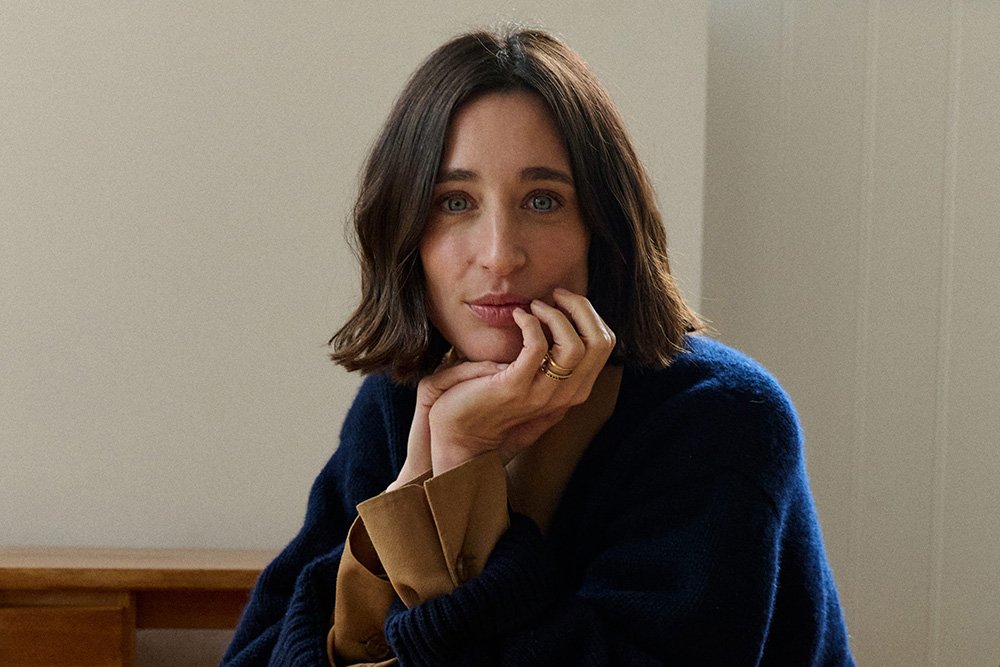
On 1 July 2026, Syrian President Ahmad al-Sharaa appointed the actress Rouzaina Amer al-Ladhiqani to Syria's 210-member transitional People's Assembly, the interim legislature sitting in Damascus during the country's post-Assad transition. The move was announced via the president's office and propagated through Syrian-aligned outlets and the Polymarket news wire within hours, with the new member pledging, in her own words relayed by Telegram coverage: "God willing, I will live up to expectations."
The appointment is a single name on a 210-person list, but the choice is more revealing than the arithmetic. In a transitional moment still negotiating who counts as legitimate — security figures, technocrats, exiles, tribal representatives, the displaced — Damascus has chosen to slot a working cultural figure into the body that will, in some form, ratify whatever constitutional order emerges next.
What al-Sharaa is signalling
Ahmad al-Sharaa, who led the offensive that toppled Bashar al-Assad in December 2024 and has since consolidated authority as president during the transitional period, has spent much of 2025 and 2026 building out a civilian-adjacent political architecture. The People's Assembly itself is the most visible piece of that work: a body designed to be recognisably legislative, with a roster drawn from sectors of Syrian life that the previous regime either co-opted or silenced.
Inserting a screen actress into that body reads as a deliberate counter-image to two older Syrias. The first is the Assad-era cultural-political compact, in which favoured artists were celebrated and dissenting ones disappeared. The second is the image of a transition dominated entirely by men with insurgent biographies. By naming al-Ladhiqani, the presidency is gesturing at a public-square Syria in which the screen and the stage are no longer arms of the security services — and in which the assembly is not a chamber of field commanders.
For al-Sharaa, the politics of optics matter at a specific juncture. His government is simultaneously negotiating the lifting of Western sanctions, courting Gulf reconstruction money, and absorbing millions of returning refugees. Each of those conversations runs more easily with a transitional legislature that photographs as plural rather than monochrome.
The actress as institution
Al-Ladhiqani is not a marginal cultural figure. Across more than two decades in Syrian television and cinema she has played roles that crossed registers from historical drama to contemporary social portraiture, accumulating a name recognition that, within Syria's compressed cultural market, places her in a recognisable public tier. Telegram coverage of her appointment carried her statement that she would "live up to expectations," a formula that is itself notable: it is the language of service rather than celebrity.
This matters for how the appointment will be read inside Syria. For a viewing public exhausted by twelve months of political theatre, the move frames the assembly as a place where people with recognisable faces and prior lives are asked to take on civic work. That framing is softer than the alternative — a transitional chamber composed entirely of engineers of the insurgency and their technocratic allies — but it is also politically useful. It widens the tent without surrendering the centre of gravity.
The structural frame: culture as transitional currency
Across the wider Middle East, transitional moments have routinely recruited cultural figures to do political work that soldiers and clerics cannot. The same logic animated Lebanon's post-civil-war arrangements, Tunisia's post-Ben Ali legislature, and Iraq's 2005 National Assembly, where seats were distributed to artists, tribal leaders, and union chiefs as a way of signalling return to normal politics. The pattern is consistent: when the institutions of the old order have collapsed and the new order has not yet hardened, cultural recognition substitutes for party machinery.
In Syria's case the substitution carries extra weight because the cultural field was so thoroughly captured under Assad. Theatre, television, and cinema were the showcase of regime-tolerated Syrian-ness; their representatives carried the regime's image both at home and across the Arab world. Replacing that mechanism with one that includes a working artist who is not the regime's creature is a quiet but real reorientation. It tells the diaspora, the Gulf donors, and the European sanctions reviewers that Damascus is prepared to spend political capital on symbolic pluralism rather than confining itself to a security-first roster.
It also tells the cultural field itself something. An actor in the assembly is a permission slip to other actors, directors, and writers: the screen is no longer a probationary space between the security services and the audience.
What remains contested
The substantive question is whether the appointment translates into legislative weight or remains decorative. A 210-member chamber in which one actress is one of one is, in personnel terms, vanishingly small. The People's Assembly's actual powers during the transitional period — what it can ratify, what it can block, who writes the agenda — are not specified in the coverage announcing al-Ladhiqani's appointment and remain, as of 1 July, a live constitutional question. Critics both inside and outside Syria will read the appointment as window-dressing unless the chamber is given a recognisable role in the next constitutional draft.
A second uncertainty concerns the selection mechanism itself. The wire coverage does not specify how names were submitted, vetted, or balanced across Syria's communities — Alawite, Druze, Christian, Kurdish, and the Sunni Arab majority whose dominance in the new security order is itself a sensitive matter. Until that selection architecture is made public, the cultural symbolism will read differently to constituencies that did not see one of their own placed on the list.
A third, quieter question is what the appointment does to the cultural field itself. State-recognition for a working actress is welcome for her; it is also a small tilt of the field's centre of gravity, however slightly, back toward the state. The pattern across the region is that legislatures absorb artists more easily than they return them, and the boundary between public service and political instrument is rarely clarified after the gesture.
Stakes
If the appointment is read as the first move in a wider co-optation of the cultural sector, it will harden scepticism at home and abroad about whether Damascus's transition is widening civic space or merely redecorating it. If it is read, more charitably, as an early signal that the new order intends to treat cultural production as legitimate civic work rather than regime property, it becomes one of the more legible data points of the transition. The next appointments — and the first time al-Ladhiqani or any of her colleagues actually votes on a consequential text — will determine which reading prevails.
Desk note: Monexus treated this as a personnel story with structural weight rather than a celebrity item. The wire coverage is dominated by the announcement itself; this piece reads the choice of name against the longer regional pattern of recruiting cultural figures into transitional legislatures and against Syria's specific history of a captured cultural field.
Wire provenance
This editorial synthesis draws on the following public wire/social posts:
- https://t.me/ClashReport