Trump weighs return to 'all-out war' with Iran as diplomatic track wobbles
Reporting from The Cradle and The Indian Express suggests the US president privately weighed resuming full-scale strikes on Iran, then settled on continued diplomacy.
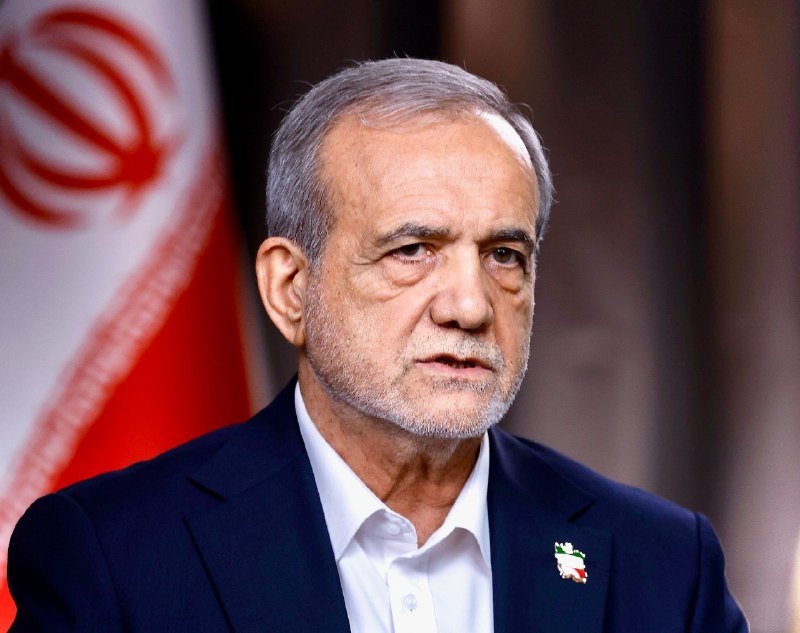
Reporting published on 1 July 2026 indicates that US President Donald Trump privately weighed returning to "full-blown war" with Iran before settling, at least for now, on continued diplomacy. The framing — first circulated by The Cradle Media at 12:26 UTC and echoed the same morning by The Indian Express at 11:52 UTC — restates a familiar pattern of escalation, partial pullback, and renewed negotiation that has defined the US-Iran track since the memorandum of understanding (MoU) was reached.
The available reporting describes a White House that has repeatedly struck Iranian assets since the MoU was concluded, and a Tehran that has retaliated against US positions across the Gulf. The choice reportedly before Trump was not whether to escalate, but how far: a return to comprehensive strikes, or the diplomatic holding pattern that has, in fits and starts, kept the channel open. The decision recorded on 1 July is for diplomacy, with the threat of renewed war kept explicitly on the table.
What the reporting actually says
Both Telegram-distributed items — from The Cradle and from The Indian Express — share a common spine: Washington has attacked Iran on multiple occasions since the MoU was signed, prompting Iranian retaliation against US assets in the Gulf. Trump, per the reporting, weighed returning to "all-out war," then chose diplomacy "for now."
The phrasing matters. "For now" is the load-bearing qualifier. It signals that the diplomatic posture is conditional, contingent on Iranian behaviour, and reversible at presidential discretion. It also signals that the escalatory ladder has not been kicked away — only paused. In a region where Gulf states host US forward bases, where shipping through the Strait of Hormuz accounts for a meaningful share of seaborne energy flows, and where Iranian-aligned groups retain the capacity to pressure US partners from Iraq to Yemen, the distinction between "active war" and "suspended war" is operational rather than semantic.
The reporting does not specify which particular Iranian actions triggered the latest round of internal White House deliberation, nor does it name the specific US assets struck or retaliated against. The Indian Express item is a short pointer to its own reporting; The Cradle's framing is consistent with its longstanding editorial line, which treats US-Iran friction as a structural feature of the regional order rather than a passing dispute.
The counter-narrative from Tehran
The Iranian framing — circulated via outlets aligned with the Islamic Republic and worth treating on its own terms rather than dismissed — holds that Washington has been the principal violator of the MoU's spirit. From that vantage, repeated US strikes on Iranian soil, assets, or proxies constitute the breach, and Iranian retaliation is a defensive response within the framework of an unsigned but understood arrangement. The Cradle's own coverage sits inside this counter-narrative: the burden of escalation lies with Washington, and "diplomacy for now" reads, from Tehran, as a tactical pause rather than a strategic reversal.
The Western wire line, where it has engaged with the same material, tends to invert the framing — Iranian proxy activity, enrichment posture, or support for regional armed groups as the precipitating cause, US action as calibrated response. Both readings are internally coherent. Neither can be dismissed without evidence, and the available reporting on 1 July does not adjudicate between them. The honest editorial position is to present both, mark them as such, and note where the burden of proof currently sits.
Why the diplomatic track keeps surviving
The persistence of the diplomatic track — through multiple rounds of strike-and-retaliate, through public threats of "all-out war," through Iranian enrichment advances and US sanctions tightening — is itself the story. Three structural reasons tend to keep it alive.
First, the cost calculus. A full-scale US campaign against Iran would not resemble the air campaigns of the previous two decades. Iran possesses a layered deterrent: ballistic missile forces, the asymmetric reach of allied militias, the capacity to threaten Gulf shipping lanes, and the political depth of a state that has absorbed sanctions pressure for decades. The expectation inside the policy literature, including analyses circulating in US think tanks that the present sources do not directly cite, is that a comprehensive US-Iran war would be regionally destabilising in ways that the post-2003 Iraq experience makes electorally difficult to repeat.
Second, the Gulf states. Saudi Arabia, the United Arab Emirates, and Qatar have a direct stake in not becoming the airspace over a US-Iran war. Their public posture favours de-escalation; their quiet diplomacy has historically operated as a stabilising back-channel. Their willingness to host expanded US basing is not unlimited, and the political space for a wider conflict narrows as Gulf capitals insist on the diplomatic track.
Third, the MoU itself. Whatever the disagreements about its meaning and its enforcement, an unsigned or partly signed understanding between two governments creates a focal point. Each round of escalation is followed, in the pattern reported on 1 July, by a return to the framework. The framework is fragile, but it exists, and it is easier to return to than to construct a new one mid-crisis.
What remains contested and unverified
The 1 July reporting does not specify the date or location of the most recent US strike on Iranian targets, nor the specific Iranian retaliation against "US assets across the Gulf." The sources do not name which Gulf facilities were involved, whether any casualties resulted, or how the latest exchange compares in scale to earlier rounds. The Cradle's framing, in particular, is editorial in character: it tells the reader what the strategic picture looks like, but it does not provide the kind of operational granularity that an independent wire reporter on the ground would be expected to produce.
The Indian Express item, similarly, is a dispatch about a report rather than the report itself. The underlying Axios-style reporting — given the Indian Express's sourcing in this kind of story — likely traces back to a Washington-based correspondent with access to administration figures. The original piece, with its named officials and dated events, would resolve several of the present ambiguities. Until that upstream reporting is available in full, the reader is working from second-order characterisations.
What this publication can say with confidence is narrower than the headlines suggest. The US president has, at minimum, publicly held out the option of renewed large-scale strikes on Iran. The diplomatic track has, at minimum, survived another round of internal White House deliberation. Whether the latest "for now" lasts weeks, months, or only until the next incident in the Gulf is the question the available sources do not answer.
Stakes over the next quarter
If the diplomatic track holds, the operative questions become: enforcement of the MoU on both sides; the trajectory of Iranian enrichment; the behaviour of Iran-aligned armed groups in Iraq, Syria, Lebanon, and Yemen; and the disposition of US sanctions architecture. Each of these is a moving part, and the MoU is the only framework in which all four are being negotiated simultaneously.
If the track breaks, the regional shock-absorbers — Gulf diplomacy, back-channels through Oman and Qatar, the residual weight of the MoU's existence — are tested in ways they have not been since 2019. The costs of that test would land first on Gulf shipping, on the price of energy, on the political space available to Iran's regional partners, and on US forces deployed across the theatre. The reporting of 1 July 2026 records the moment before that test. What follows depends on choices not yet disclosed.
This publication treats the 1 July reports as initial characterisations. Where The Cradle and The Indian Express diverge in emphasis, both readings have been preserved; the underlying primary-source reporting — likely Axios, given the Indian Express's wire path — would resolve several open questions, and this desk will update as that material becomes available.
Wire provenance
This editorial synthesis draws on the following public wire/social posts:
- https://t.me/TheCradleMedia
- https://t.me/thecradlemedia