A $100 million hole and what it tells us about who runs humanitarian aid
On 1 July 2026, Antonio Guterres asked UN member states to plug a $100 million shortfall at UNRWA. The scramble says more about Western donors than about the agency itself.
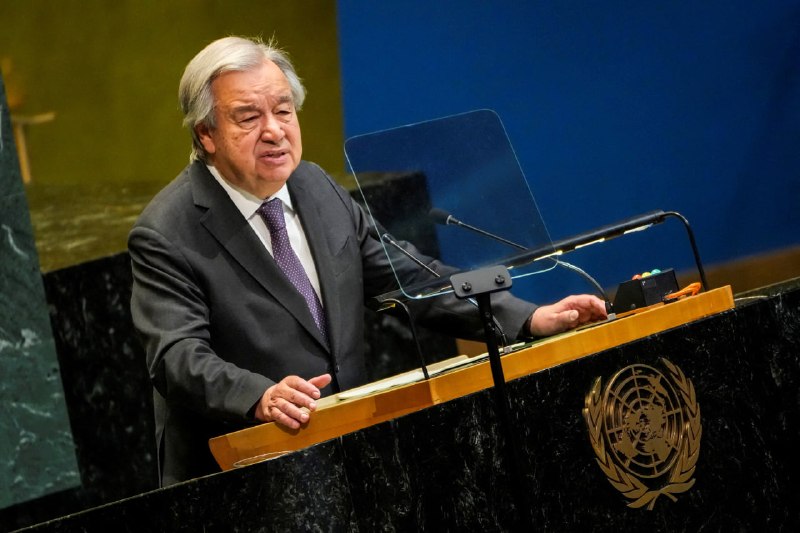
On 1 July 2026, at 08:42 UTC, the Telegram channel of The Cradle Media carried a single line out of UN headquarters: Secretary-General Antonio Guterres is asking member states to close a $100 million funding shortfall at the United Nations Relief and Works Agency for Palestinian Refugees, the body better known as UNRWA. The figure is small by the standards of modern humanitarian appeals. The politics around it are not.
A $100 million hole at an agency that runs schools, clinics and food distribution for millions of registered Palestinian refugees is not, in itself, a story about refugee welfare. It is a story about who gets to decide which UN institutions survive a political winter in Washington and the European Union, and which are slowly starved of cash until they shrink into irrelevance. Guterres's appeal is, in effect, a public signal that the political weather has turned.
The numbers that are not in the headline
UNRWA's budget runs into the high hundreds of millions a year. A $100 million gap is large enough to force real cuts — programme suspensions, delayed salary payments to teachers and medics, ration adjustments — but small enough that any one of roughly a dozen Western donor governments could close it with a single supplementary line item. The Cradle's wire did not specify which UN programmes the shortfall touches first, or which donor governments have already withheld contributions. Those details matter; the public framing of the appeal does not, by accident, dwell on them.
The pattern is familiar. A UN agency finds itself in political crosshairs in a handful of donor capitals. Contributions are paused, often on the stated grounds of administrative reform or "verification". Months later, the agency's own leadership is forced into a public begging-bowl tour to make up the difference, while the underlying political dispute is treated as background noise. The agency takes the reputational hit. The donor governments keep their leverage.
What changed to make the appeal necessary
UNRWA has been under sustained Western political pressure since 2024, when several major donors froze funding after Israeli allegations that a small number of agency staff were involved in the 7 October 2023 attacks. The UN's own internal review, conducted by Catherine Colonna's independent panel, found that Israel had not yet provided evidence to support its broader claims against the agency's workforce, and that UNRWA had put in place a series of neutrality safeguards. The political response in donor capitals, however, was decoupled from the review's findings.
The funding question is, in this sense, not really a forensic one. It is a test of how much pressure a UN body can absorb when the governments that write the cheques want it shrunk. The $100 million gap is the visible scar of that test.
The structural frame, in plain language
Humanitarian aid has become a foreign-policy instrument. Money flows when an agency is politically useful to its donors and slows when it is not, regardless of need on the ground. UNRWA's particular crime, in the framing of its loudest critics, is institutional permanence: it serves a refugee population whose political resolution is deliberately left on the shelf. An agency that helps a problem endure is, for that reason, treated as part of the problem.
This logic has a wider application. Across the UN system, agencies that touch the Israeli–Palestinian file are operating in an environment where donor patience is conditional and political. When Guterres stands up at the podium and asks for $100 million, he is not just addressing a budgetary gap. He is asking whether the multilateral order he nominally heads still has room for institutions that some of its most powerful members would rather see wound down.
What is still genuinely uncertain
The Cradle's 1 July wire does not specify the timeline of the shortfall, which donor governments have already withheld or reduced contributions, or which UNRWA programmes face the deepest cuts. It does not say whether the appeal has produced any firm pledges by the time of writing. Those are the questions a reader needs answered before treating the $100 million figure as anything more than a political signal. The reporting that follows — from UN briefings, from donor capitals, and from UNRWA's own country offices — will determine whether this is a near-death scare or the start of a longer managed decline.
For now, the headline is enough. The Secretary-General of the United Nations is, on the first day of July 2026, publicly asking the world to keep one of its oldest humanitarian institutions alive. That he has to ask at all is the story.
Desk note: Western wires have largely framed the UNRWA funding story around Israeli allegations and donor "verification" processes. Monexus treats the $100 million gap as what it structurally is: a political instrument, wielded by donor capitals, against an agency whose continued existence is inconvenient to a particular resolution of the Palestinian question.
Wire provenance
This editorial synthesis draws on the following public wire/social posts:
- https://t.me/thecradlemedia
- https://t.me/TheCradleMedia