Vance's "Persian negotiating tactic" line lands as US-Iran back-channel opens in Doha
A senior US vice-presidential comment deriding Iranian diplomacy as a "Persian negotiating tactic" coincided with the first indirect US-Iran contact in Qatar, exposing the gap between Washington's public posture and its private track.
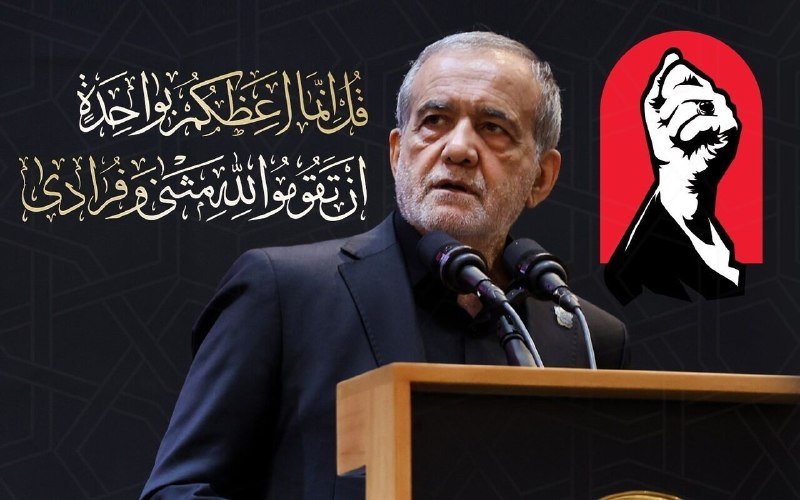
On 1 July 2026, a US vice-presidential remark dismissing Iranian diplomacy as a "Persian negotiating tactic" landed within hours of the first confirmed indirect US-Iran contact in Doha, a back-channel that Iranian and Qatari officials framed around implementation of the US-Iran memorandum rather than a new negotiation. The juxtaposition captures the contradictory posture the Trump administration has now held for weeks in public: contemptuous language toward Tehran's negotiating style, paired with quiet diplomacy carried through the Gulf. The contradiction is not incidental; it is the policy.
The vice president's comment, as captured by Telegram channel Clash Report, ran in two parts. On the substance of Iran's nuclear file, the message was that "we are worried about the nuclear issue — we're gonna start talking about that." On Tehran's broader diplomatic posture, the line was sharper: in the Iranian system, the administration sees people who recognize that "the last 47 years of their government has been a mistake," set against a few "still attached to the old ways." Within the same news cycle, Palestine Chronicle reported that the vice president had characterised Iran's broader approach as a "Persian negotiating tactic," even as Tehran and Doha stressed implementation of the existing US-Iran memorandum.
The Doha channel and what is actually being negotiated
The back-channel itself, first reported by South China Morning Post in a piece dated 1 July 2026 citing a diplomat familiar with the arrangement, consists of indirect talks hosted by Qatar. The reported aim is to end the war — language that, on its face, encompasses both the conflict that opened in 2023 and the rolling shadow war that has accompanied it. The indirect format is deliberate: it allows Washington to maintain the line that it is open to de-escalation while avoiding the legitimising effect of a face-to-face encounter with Iranian counterparts.
Iranian officials, on their side, have framed the engagement around the memorandum — the document that set the terms of the most recent ceasefire and the de-escalation steps that followed. Palestine Chronicle's reporting underlines the gap between the two readings. For Washington, Doha is the opening move in a new nuclear conversation. For Tehran, Doha is the place where the existing agreement is finally being implemented.
Why the "Persian negotiating tactic" framing matters
The dismissal of Iran's posture as a "Persian negotiating tactic" is not casual rhetoric. It serves three functions at once. It signals to a domestic audience that Washington is not being taken in. It tells Iranian reformists — the officials the vice president credits with recognising that the "last 47 years have been a mistake" — that the United States can see them, but cannot yet engage them openly. And it reminds Tehran's harder faction that the back-channel is a privilege, not an entitlement, and can be revoked.
That is the standard playbook of coercive diplomacy: public contempt, private contact, a thin line of plausible deniability. The problem with the playbook is that it depends on both sides accepting the fiction that the public and private tracks are separable. In practice, Tehran treats any US slur — "Persian," "regime," or otherwise — as a signal it cannot ignore, and US officials who read Iranian public statements with the same suspicion find their own framework mirrored back at them.
What the sources do not yet confirm
Two material questions remain open as of 1 July 2026. The first is whether the Doha channel has produced any movement on the nuclear file beyond a willingness to keep talking. The vice president's framing — "we're gonna start talking about that" — suggests the nuclear file has not yet been substantively engaged, only scheduled. The second is what "implementation of the US-Iran memorandum" actually requires at this point, given that the original memorandum's de-escalation steps have already been partially overtaken by events on the ground. SCMP's sourcing is a single diplomat familiar with the arrangement; the Palestine Chronicle frame relies on the public US-Iran memorandum read against Tehran's and Doha's public statements.
What is at stake over the next several weeks
The narrow stakes are procedural. If Doha produces a working agenda for the nuclear file, the back-channel becomes the template for follow-on engagement. If it does not, the indirect format will be blamed — both by hawks who want to argue that Tehran is performing negotiation rather than conducting it, and by Iranian officials who want to argue that Washington never intended to engage seriously in the first place.
The broader stakes are regional. A working Doha channel would, over the next quarter, open space for quieter movement on the file of US detainees, on the unfreezing of limited Iranian assets, and on calibration of the proxy networks that have defined the war. A broken Doha channel would harden the lines: Israeli defence planners, who publicly call for a wider negotiation with Tehran, would face a more difficult political case; Gulf states that have invested heavily in hosting the back-channel would take a reputational hit; and the diplomatic "Persia-fluent" wing of the Republican administration would lose its most visible proof of concept.
On the evidence available at 1 July 2026 — a vice-presidential remark, a Telegram-channel report of the same remark, a Doha back-channel confirmed by one Western-wire read, and an Iranian-Qatari framing centred on implementation of an existing memorandum — the administration's public posture and its private track are running in opposite directions. That gap is where the next several weeks of US-Iran diplomacy will be fought out.
Desk note: Monexus framed this piece around the contradiction between the vice president's public comment and the Doha back-channel, on the view that the contradiction is itself the policy. Coverage that takes only the public remark, or only the Doha channel, will miss the architecture. Sources are limited to what the thread context provides; downstream reporting should add direct Iranian MFA sourcing and on-record confirmation from the Qatari ministry of foreign affairs.
Wire provenance
This editorial synthesis draws on the following public wire/social posts:
- https://t.me/ClashReport