WhatsApp's username rollout meets a parallel wave of CEO-impersonation fraud
As WhatsApp rolls out a username feature it bills as a privacy upgrade, a separate surge of CEO-impersonation email and WhatsApp lures is targeting senior executives — two stories that, taken together, sketch the contested terrain of digital identity in 2026.
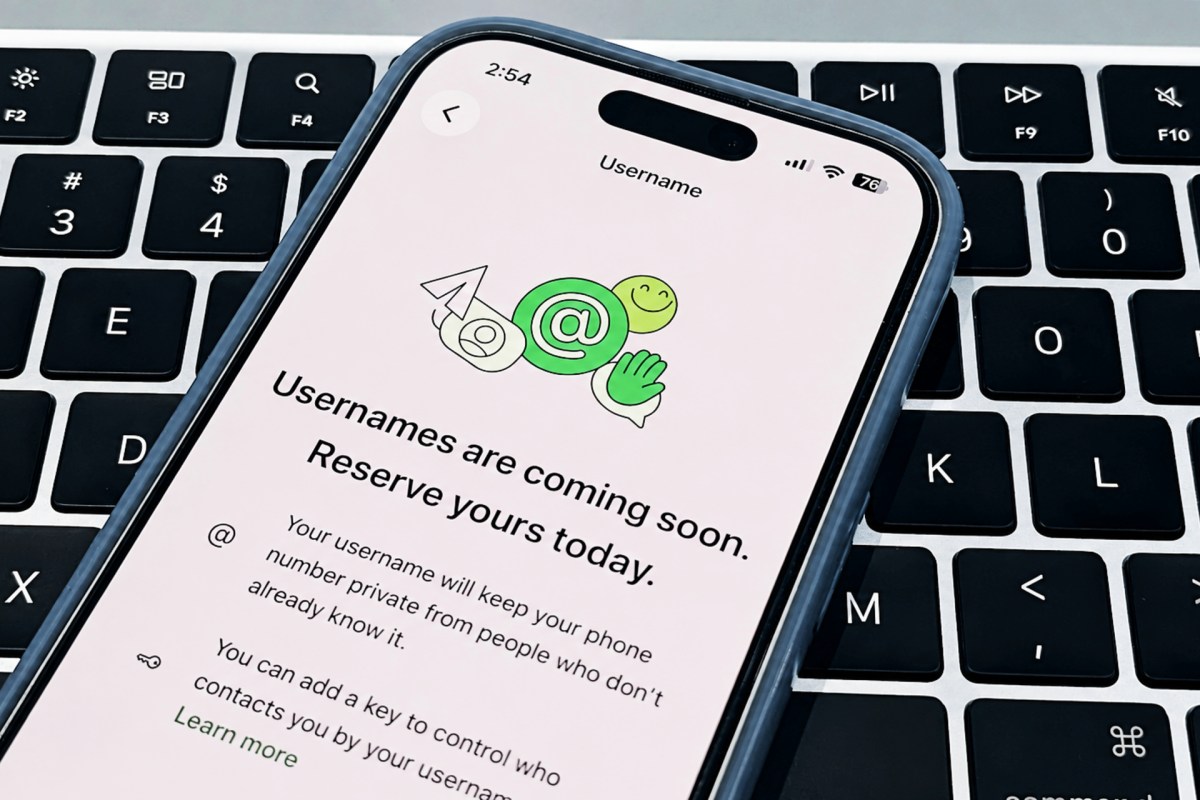
On 30 June 2026, WhatsApp publicly framed its newly rolling-out username feature as a privacy-first design choice — a way for users to be reached without surrendering their phone numbers, with no public directory and no autocomplete suggestions to help attackers enumerate accounts. The pitch landed the same week that ThePrint reported a separate, fast-spreading pattern: cybercriminals targeting senior executives and high-ranking officials with malicious archives delivered through email or WhatsApp, urging urgent regulatory compliance and using the impersonation of CEOs as the social-engineering hook. Two product moves, one trust problem.
The thesis this publication will defend over the next several pages is straightforward. A platform that sells itself as privacy infrastructure is making a deliberate identity-layer change at exactly the moment when business-process compromise fraud — fraud that piggybacks on the authority of named executives — is scaling across inboxes and chat apps. Neither story is, on its own, novel. Together, they describe a structural feature of digital commerce in 2026: identity is the asset, and the platforms and the criminals are both redesigning around it.
The privacy pitch, narrowly scoped
WhatsApp's framing, as relayed by Unusual Whales on 30 June 2026, is that usernames function as a privacy-preserving alias: there is no public directory, no autocomplete to discover accounts by name, and the addressability surface is therefore narrower than a phone-number-by-default model. The implicit argument is that, by giving ordinary users an alternative to handing out their number, the platform reduces the blast radius of a leaked contact — a real benefit, particularly for journalists, activists, and small-business operators whose phone numbers function as durable identifiers across the open web.
That argument holds within its narrow scope. It does not, however, speak to the parallel change already in motion: the migration of fraud into the same channels WhatsApp is reorganising. A privacy story about who can find you tells you very little about who can pretend to be you.
The fraud picture, in operating detail
ThePrint's 1 July 2026 dispatch on CEO-impersonation fraud describes a recognisable attack chain with a recognisable payload. Senior staff — finance controllers, compliance officers, executive assistants — receive an email or a WhatsApp message that appears to originate from the CEO or another C-suite figure. The message attaches an archive (a ZIP, an ISO, an LZH) framed as a document the executive needs reviewed urgently: a regulatory filing, an audit response, a board memo. The urgency pressure is the social-engineering lever; the archive is the technical lever. Once extracted and executed, the contents typically install an information-stealer or a remote-access tool, after which the attacker pivots into the finance function to authorise payments.
Two structural features of this campaign deserve more attention than they have received. First, the channel choice — email or WhatsApp, sometimes both in sequence — exploits the fact that executives in 2026 do their work across both, and that WhatsApp in particular carries a perceived intimacy that lowers the recipient's defences. Second, the use of the archive as a container is not incidental. Most modern mail gateways will block an executable by default; an archive, by contrast, is treated as inert until a human double-clicks, and that human, in the heat of a fabricated urgency window, is the weak link.
The pattern is not unique to any one jurisdiction. Indian outlets have given it sustained coverage because Indian conglomerates and listed-company finance teams have been disproportionately targeted in the last 18 months; but the underlying technique is the same one that has hit European and North American firms under the labels "business email compromise" and "CEO fraud."
What we verified, and what we could not
This publication's evidentiary position is conservative. From the thread material, we can verify the following:
- WhatsApp has rolled out, or is rolling out, a username feature described by the company itself as a privacy enhancement with no public directory and no autocomplete. The company line was relayed by Unusual Whales on 30 June 2026.
- A pattern of CEO-impersonation fraud targeting senior executives, using malicious archives delivered via email or WhatsApp and framed as urgent regulatory compliance, was reported by ThePrint on 1 July 2026.
We could not verify, from the thread material alone, and we will not assert:
- Specific named victims of the current impersonation wave. The thread does not name them.
- A specific dollar loss figure tied to the latest campaign. The thread does not provide one.
- Any attribution to a specific threat actor, criminal marketplace, or state-aligned group. The thread does not name one.
- A direct causal link between WhatsApp's username rollout and any spike in impersonation fraud. The two stories are concurrent, not, on the available evidence, causally connected.
This ledger matters. The temptation in any piece on cyber-fraud is to weld two adjacent stories into a single arc. The honest framing is that they are running on parallel tracks, and that the platform-governance question and the fraud-control question are best understood as two distinct policy problems that happen to share a substrate.
The structural frame, in plain prose
What we are watching is a slow-motion re-platforming of business trust. For most of the last two decades, the email address was the dominant identifier in commercial life; phone numbers were the dominant identifier in personal life. The platforms have, in the same window, been quietly pushing both populations toward unified messaging identities that blur the personal–professional boundary. That re-platforming delivers real convenience. It also consolidates the attack surface.
In a system where identity is the asset, three actors compete to control it: the platform that issues the identifier, the user who carries it, and the criminal who wants to counterfeit it. WhatsApp's username move is, in this frame, an attempt by the platform to widen the user's options without surrendering its own issuance role. The CEO-impersonation wave is, in the same frame, the predictable response from the counterfeiters: if the platform builds a thicker wall around phone numbers, find a thinner wall somewhere else — the executive's authority, the urgency of a compliance deadline, the recipient's deference to a senior name. The two stories are not in dialogue with each other. They are both reading the same underlying terrain.
A note on the Global South dimension. Indian coverage of this pattern is, structurally, ahead of Western coverage, because the victim population is ahead. Indian conglomerates have been the testing ground for several distinct CEO-fraud playbooks over the last three years; the lessons are travelling outward, not inward, into European and North American finance functions. That inversion — the periphery documenting a pattern before the centre notices it — is itself part of the structural story.
Stakes
If the trajectory holds, three things follow. First, executive identity becomes a regulated asset class: firms will be obliged, by insurance terms if not by statute, to bind payments to out-of-band verification, and CEOs will be obliged to manage their personal digital surface as a security perimeter. Second, the messaging platforms themselves will face a sharper question — whether they are infrastructure on which commerce happens, or merely conduits. The distinction is consequential: infrastructure implies duty of care; conduits do not. Third, the username privacy upgrade, if it succeeds at scale, will raise a follow-on question of whether the alias feature itself becomes the next fraud surface — usernames as impersonation handles, usernames as phishing lures, usernames as the new autocomplete target. The platform has not, in the thread material, addressed that follow-on. The honest answer is that nobody can, until the feature has been in market long enough to be measured.
The piece that follows this one, in a week or two, is the one that will tell us whether the username layer has, in fact, been weaponised. For now, the responsible framing is the one we have given above: two stories, two different problems, one shared substrate, and a verification ledger that does not overreach.
Desk note: Monexus read this as two adjacent stories on digital identity rather than as a single causal narrative. Western wires have largely framed the WhatsApp username rollout as a privacy win in isolation; Indian outlets have framed the CEO-impersonation wave as a fraud story in isolation. The synthesis — that the platform's identity-layer changes and the criminal counterfeiters are redesigning around the same terrain — is this publication's, and is offered with explicit caveats on what the sources do and do not support.
Wire provenance
This editorial synthesis draws on the following public wire/social posts:
- https://t.me/thePrintIndia
- https://t.me/ThePrintIndia
- https://en.wikipedia.org/wiki/Business_email_compromise