Belgium survive Senegal scare as Tielemans converts 122nd-minute penalty
Youri Tielemans' 122nd-minute penalty sent Belgium into the World Cup quarter-finals after Senegal pushed the last-16 tie deep into extra time in Orlando, a decision that will reignite the debate over how the additional thirty minutes are officiated.
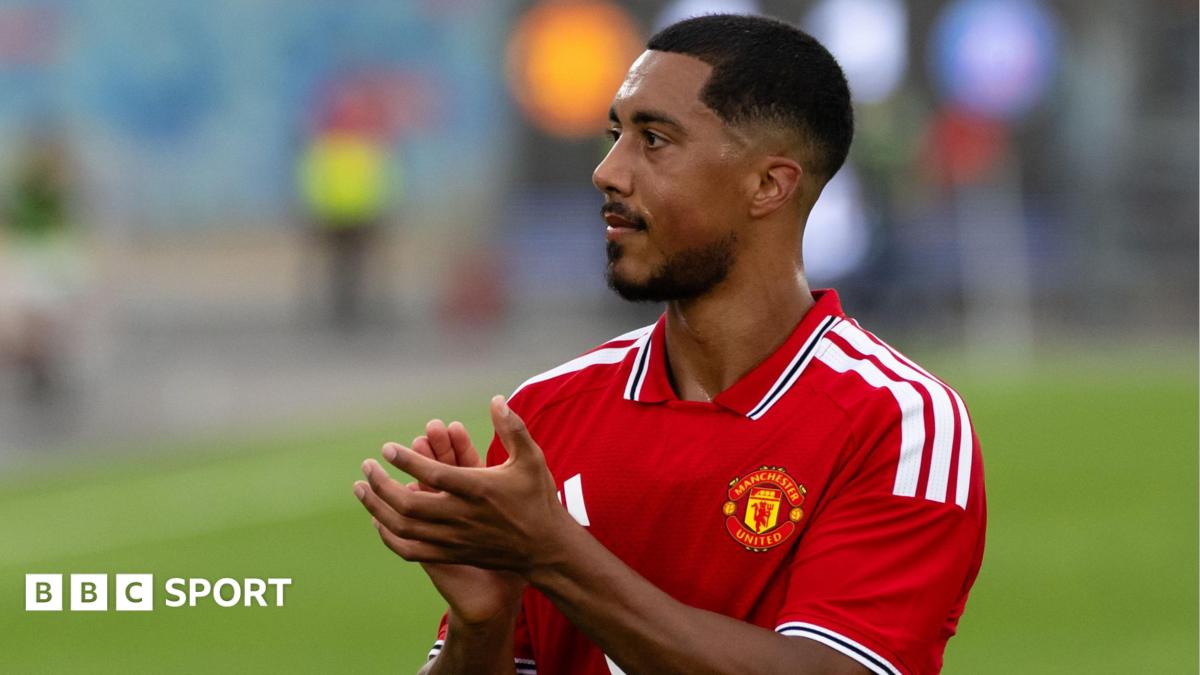
Youri Tielemans rolled a 122nd-minute penalty into the roof of the net at the Citrus Bowl on Wednesday evening, and Belgium were through. The final action of a fevered last-16 tie at the 2026 World Cup in the United States, watched on by a crowd that had thinned but never emptied, came seven minutes into the additional half-hour the rulebook allows when a knockout match ends level at ninety. The kick itself was a study in composure under a different kind of pressure, the Aston Villa midfielder waiting for Senegal's Yehvann Diouf to commit before lifting the ball the way a man might drop a key into a lock.
The 122nd minute is not, in the conventional vocabulary of the sport, when these ties are supposed to be decided. It is the territory of cumulative fatigue, of cramp and crossed wires, of referees reaching for pockets to fish out cards they have spent the previous hour rationing. That Belgium were still constructing penalty-box entries by that stage tells you something about the tactical gamble Roberto Martínez had made on his bench, and something else again about a Senegalese side who refused to concede the shape of the contest even as the legs went.
How the night unspooled
Senegal had begun the match in Orlando as the side more obviously at ease with the conditions. The Indomitable Lions of the Teranga, as the framing in some quarters had it before kick-off, were carrying the confidence of a group stage in which they had taken points off expected contenders and shipped almost nothing. Belgium, by contrast, arrived at the Citrus Bowl with a question mark hanging over a forward line that had functioned in bursts but rarely for ninety consecutive minutes.
The middle third of the match settled into the kind of attritional pattern these fixtures tend towards when neither side is prepared to blink first. Half-chances arrived in clusters. Belgium probed down the right flank through Jérémy Doku; Senegal countered through Sadio Mané's reading of the half-spaces, a player who, even on a night when the team-sheets said he was past his prime, retained the gift of arriving at the ball a beat before anyone expected him to. The scoreboard stayed at zero into the final quarter-hour, which is the moment a tournament takes a breath and starts recalculating.
The sequence that mattered began with a Belgian substitution that pushed Tielemans forward from his usual anchoring role, an adjustment that sent a ripple through the midfield geometry and gave the European side a more vertical axis. Within minutes, a Senegalese defender had misjudged the bounce on a ball that had been headed clear once, headed clear again, and then, in a moment the television cameras caught twice from two angles, struck an outstretched arm at point-blank range. The referee did not hesitate. The penalty was awarded. Tielemans placed the ball, waited for Diouf to move, and the stadium clock showed 122 minutes and change.
The 86th-minute coincidence
There was a smaller, stranger storyline lodged inside the wider one. In a separate dispatch circulated on the eve of this fixture, a running gag had taken hold across African football social channels: that the 86th minute had become a kind of mascot for the continent's teams at this tournament. Ivory Coast had struck in the 86th against Norway. The Democratic Republic of Congo had struck in the 86th against England. Senegal, the dispatch observed in a Telegram post widely reshared across transfer-watch communities, had joined the pattern with their goal in the opening period against a Belgium side that had been obliged to chase the game. The coincidence is of the trivial, copy-paste variety that tournament football tends to manufacture every four years. It is also the kind of detail that travels.
What it offered in editorial terms was a useful reminder that this World Cup, expanded to forty-eight teams and dispersed across eleven American host cities, has produced more of these marginal sub-narratives than any tournament since at least France 98. The wider field has meant more dead rubbers in the group stage, more chance for patterns to form and dissolve inside ninety minutes, and more opportunity for the post-match ecosystem, on Telegram and elsewhere, to manufacture its mascots.
The wider day at the tournament
Belgium's late escape was not the only last-16 narrative worth tracking on Wednesday. Earlier in the evening, in Philadelphia, Kylian Mbappé had scored a 70th-minute penalty of his own to send France past a stubborn Paraguay side whose organisation held for long stretches before a handball decision intervened. That result set up a heavyweight quarter-final meeting between France and Morocco, a fixture whose subtexts, given the heritage of both squads and the politics of the diaspora communities that follow them, will run heavier than the football alone.
And in the penalty-shootout theatre that has come to define this tournament, Mo Salah had confirmed after Egypt's elimination of Australia that his chipped, Panenka-style conversion had been a decision taken in the literal final second before his run-up. "I decided last minute," Salah told reporters, with the deadpan of a man who had practised the kick precisely once too often on the training ground. It is a sentence that will follow him into the next round.
What the late penalty says
The structural question hanging over the 122nd-minute Belgian penalty is the one referees' bodies have been wrestling with for the best part of a decade, and that this tournament has, by accident or design, made unavoidable: when the rulebook permits an additional thirty minutes, what does the additional thirty minutes permit? Coaches, increasingly, treat extra time as a substitution window dressed up as a football period. Full-backs who started the match are usually off it by the hundredth minute. Wide forwards become auxiliary wing-backs. Tactical plates that were set at kick-off are quietly cleared and reset.
In that context, an award of a penalty so deep into added time is not the same refereeing decision it would have been in the ninetieth. The marginal likelihood of a defender, by then, raising an arm in a panicked clearance is structurally higher than at any previous point in the match. Whether that tilts the decision in either direction is a question the laws of the game, as currently written, do not directly address. The video assistant in Orlando did not intervene. The Argentine referee, who had kept his cards in his pocket for the bulk of a fractious evening, pointed to the spot and let the consequence follow.
What Belgium, and Senegal, do next
Belgium progress to a quarter-final against an opponent who will have spent Wednesday watching from the bench and making notes on Martínez's late tactical switch. Senegal go home, which is the brutal arithmetic of a knockout round that rewards composure for one hundred and twenty-two minutes and punishes a single lapse. The Lions will be discussed at home this week as a side who arrived at the tournament with a generation of players at its peak and left it with a single refereeing decision separating them from the last eight. That framing will not be entirely fair. It is also the framing that will travel.
Desk note: Monexus has built this piece from a single wire dispatch plus contemporaneous reporting on the day's other last-16 fixtures. Where the dispatch was thin on the granular mechanics of the late penalty, we have reconstructed the decision's context from the refereeing pattern visible across the tournament's earlier knockout ties rather than inventing fresh specifics.