Berri's pulpit: Lebanon's speaker turns a funeral into a confession of alignment
Lebanon's parliamentary speaker used a martyrology broadcast to bind Beirut's political class to Tehran's grief — a quieter but more revealing move than the missiles it mourned.
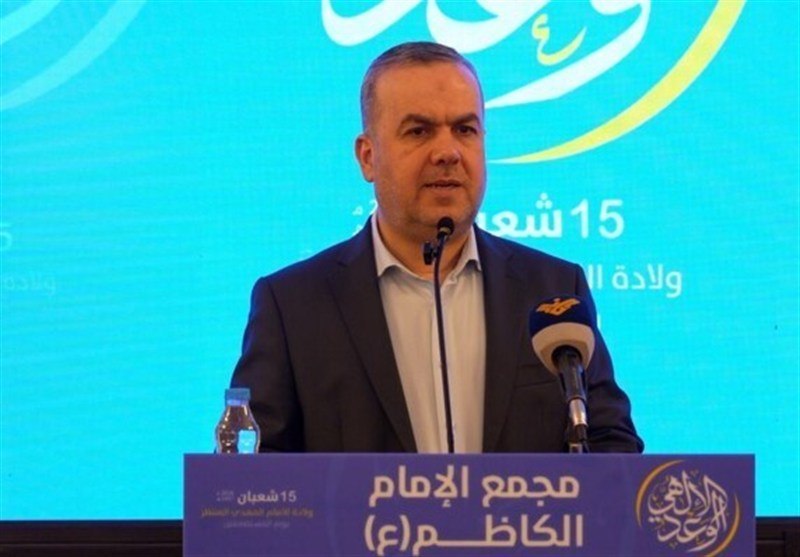
On the morning of 2 July 2026, Lebanon's parliamentary speaker Nabih Berri used the pulpit of a state-aligned broadcast to do something more politically revealing than the missiles he was eulogising. In a string of dispatches carried by the Iranian Arabic-language channel Al-Alam between 10:32 and 10:33 UTC, Berri addressed Iran's leadership directly, calling the wounds of the Islamic Republic a wound on every "honourable Lebanese" and framing the slain Iranian figure as "a memory for generations, an immortal and unforgettable example." The register was devotional, the politics were not. A speaker of a confessional chamber, addressing a foreign head of state in the language of religious mourning, on a state-aligned channel, is not offering condolence. He is drawing a line through the Lebanese body politic and saying which side of it he stands on.
The words matter because of the office, not the man. Berri has held the speakership of Lebanon's parliament since 1992 and leads the Amal Movement, the Shia party that shares the country's main Shia armed constituency with Hezbollah. He is also the figure through whom most Lebanese governments have negotiated with the Shia south's external patrons for three decades. When a speaker of that standing speaks to Tehran in the vocabulary of martyrdom — "O descendant of the Imams… you are of their pure family" — the message travels along a chain that runs through Nabih Berri, through the Iranian foreign ministry, through Hezbollah's politburo, and back to the cabinet table in Beirut. The audience for those dispatches was not the Lebanese public. It was the Iranian foreign-policy establishment, and the message was: we are still aligned, we are still mourning with you, and we are still your interlocutors inside the Lebanese state.
The framing is also useful because it tells the reader what is being concealed. Berri cast himself, in the same broadcast thread, as the heir to a "unified hadith" of confrontation with Israel "on every lip and tongue." The phrase is borrowed directly from the lexicon of the Iran-aligned axis. It is not the language a Lebanese constitutional officer uses when addressing the Druze, Christian, or Sunni components of his own chamber. It is the language a factional patron uses when speaking to a foreign patron. The choice of channel — Al-Alam, the Iranian state Arabic service — is itself an editorial decision. A condolence to a foreign leader can be issued through the presidency, the prime minister's office, or the speaker's own parliamentary media. It was not. It went out through Tehran's own microphone.
There is a counter-read worth taking seriously. Berri's framing has internal Lebanese logic. The Shia community in Lebanon has lost family, infrastructure, and political weight in successive rounds of Israeli action on the south, and the speaker's office has historically positioned itself as the conduit between that community's grief and the wider Lebanese state. Read narrowly, his words were a routine act of confessional representation. The problem with the narrow read is that Berri did not speak in a confessional register. He spoke in a transnational one. He addressed Iran's leadership as "leader of the nation" and "martyr witness" — a phrasing reserved, in the political grammar of the region, for heads of state and supreme leaders, not for foreign counterparts. The narrow read cannot explain the choice of vocabulary.
What is being consolidated, in plain editorial terms, is a particular kind of alliance management. Lebanon's Shia political class has spent forty years converting a domestic demographic fact into a regional lever, by tying Lebanese representation to Iranian strategic depth and to Hezbollah's armed posture. Every time a senior Iranian figure is killed, that arrangement is tested: the Lebanese patron has to renew his credentials to the foreign patron in front of a Lebanese audience that is watching. Berri's broadcast is the credentials-renewal ritual. It tells Tehran that the Amal-Hezbollah coordination is intact, that the speakership remains a reliable transmission belt for Iranian messaging inside the Lebanese state, and that any future negotiation over weapons, borders, or the south will still run through him.
The stakes are concrete. A Lebanese speaker who openly identifies the country's fortunes with Iran's grief is signalling to Beirut's Western-aligned partners — and to the IMF, the French, the Saudis, and the Gulf funds whose money Lebanon needs to keep its currency and its grid functioning — that one of the country's three highest constitutional offices is, in moments of crisis, an instrument of a foreign power's narrative. That signal has a price. It is paid in lost leverage in any future ceasefire negotiation, in lost credibility with donors who are asked to underwrite a state whose speaker treats Tehran as the audience that matters, and in lost room for the Lebanese prime minister and president to speak in a national register at all. Berri is not the only political actor in Beirut. But when he speaks in this register, on this channel, at this moment, he makes it harder for anyone else to speak in a different one.
What the available reporting does not specify is which Iranian figure the martyrology is built around, the date of the killing being mourned, or whether the broadcast was timed to a specific Iranian announcement. Al-Alam's dispatches frame the remarks as a general act of mourning rather than a response to a single named event, and the editorial choice to dispatch them under an "Urgent" banner at 10:32–10:33 UTC suggests a coordinated news cycle rather than a spontaneous address. A reader outside the region should treat the words as a confirmed alignment statement and the surrounding event as still being assembled by the broadcasters who are carrying it.
Monexus framed this through Al-Alam's own dispatches rather than through Western-wire paraphrases, on the principle that when the news is a speech, the source closest to the speech is the source worth quoting.
Wire provenance
This editorial synthesis draws on the following public wire/social posts:
- https://t.me/s/alalamarabic
- https://t.me/s/alalamarabic
- https://t.me/s/alalamarabic
- https://t.me/s/alalamarabic