Germany's third straight early World Cup exit exposes an identity crisis, not a talent shortage
Germany's elimination marks a third consecutive early World Cup departure. The issue, this publication argues, is not the squad's talent or the coach's name but a missing sense of how the team wants to play.
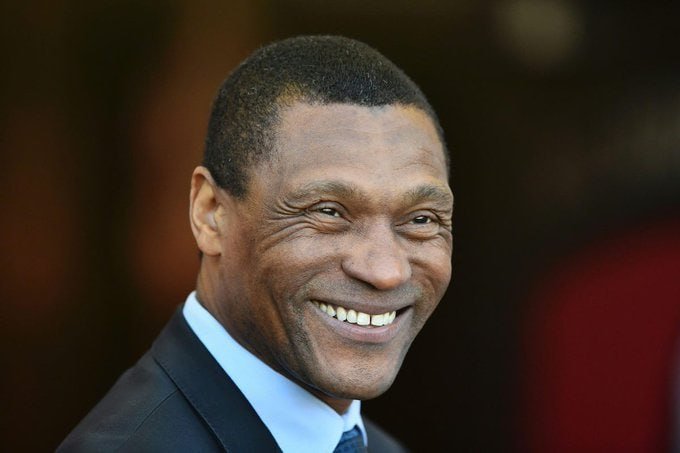
Germany are out of the World Cup. As of 2 July 2026, the Mannschaft have departed at the group stage for the third tournament in succession, a sequence that began with the 2018 debacle in Russia and extended through the 2022 exit in Qatar. Whatever name is on the team sheet in the coming days, the diagnosis that matters is older than any of the players wearing the shirt.
The argument advanced by former Bayern Munich and Germany captain Lothar Matthäus, in a column circulated on 2 July 2026, is unfashionable precisely because it is unflattering. Germany, he wrote, are "no longer a tournament team" and must "reconnect with our own identity." The cause is not a shortage of technical quality, and it is not the identity of the head coach. It is that the national side has stopped knowing what kind of team it wants to be.
From 2014 to 2026 — a twelve-year drift
The reference point still doing the damage is Brazil 2014. Joachim Löw's side dismantled the host nation 7-1 in the semi-final on their way to a fourth world title, a tournament defined by high pressing, positional discipline and a midfield that could pass through any shape. Twelve years on, the DFB has rotated through four permanent head coaches and an interim, won no major trophy, and exited every World Cup before the knockout rounds of any consequence. The 2024 hosting of the European Championship on home soil produced a quarter-final exit to Spain, the eventual champions, a respectable run that nonetheless extended the drought.
The pattern is the problem. Germany retain a deep player pool, the Bundesliga remains the fourth-richest league in Europe by revenue, and the federation's academy infrastructure is among the continent's best. Results have nonetheless drifted. The squad built around the 2014 spine retired; the generation that followed has produced individual brilliance — Florian Wirtz at Bayer Leverkusen, Jamal Musiala at Bayern, the emergence of Florian Müller at Borussia Dortmund — without an organising idea on the international stage.
The identity question, stated plainly
A national team is not a club. It cannot practise a system for 200 days a year. It depends on a shared tactical vocabulary, a set of patterns the players recognise without thinking, and a defensive scheme they can fall back on under tournament pressure. Matthäus's complaint, echoed across German football commentary in the days after the elimination, is that the current staff abandoned that vocabulary in pursuit of flexibility. The 2014 side had a pressing trap; the 2026 side, by all visible accounts, had options.
A side that plays in options is a side that plays without conviction. When a tournament game tilts against you — a red card, a deflected goal, a refereeing decision that does not go your way — the options multiply into hesitation. Germany's exits across the last three World Cups have featured visible moments of that hesitation: a defensive line that does not know whether to step up or drop, a midfield that cannot decide between recycling possession and driving forward, a front line that drifts between pressing the centre-backs and waiting for the press to come to them.
The same problem manifests in recruitment. Germany have spent the last decade selecting the most technically gifted players available rather than the players who fit a defined shape. The two are not the same. A 2014 team could absorb Marco Reus's flair because the shape was already in place. A 2026 team cannot absorb anyone because the shape is up for debate every camp.
The structural argument
German football's institutional model has a built-in bias toward this drift. The DFB is a federation, not a club; it negotiates with Bundesliga clubs for player release, it does not train players day-to-day. The head coach arrives, installs a system, leaves, and the next arrival inherits a squad assembled by his predecessor for a different system. Continuity has to be designed deliberately, and for twelve years it has not been.
The counter-argument — that no major football nation has the institutional coherence of a club and that all of them suffer the same fate — is real, but it does not fully apply. Spain kept a coherent idea across Luis Enrique and Luis de la Fuente by tying the federation's appointment process to a defined football philosophy rooted in La Masia and the technical midfield. France built continuity around the Clairefontaine academy and a recruitment model that identified positional archetypes before players. Argentina rebuilt around a Messi-led generation and a federation that understood what the spine of the team had to do without the ball.
Germany has done none of those things. The federation has chased coaches with strong personalities and let each one build a different squad. The result is a national team that looks, in tournament conditions, like a collection of Bundesliga starters rather than a side.
Stakes for the rebuild
The next head coach, whoever it is, will inherit a problem that does not solve itself. The 2026 squad contains six players aged 23 or under; the average age of the starting XI against the side that eliminated them was 25.4. There is time to build, but only if the federation makes an unusual choice — committing to a single tactical idea across two cycles, accepting short-term results as the cost, and resisting the temptation to fire the architect at the first failure.
The alternative is a fourth consecutive early exit, almost certainly on home soil in 2028 should Germany win the right to host UEFA Euro 2028 jointly, and a generational talent pool that never converts into trophies. The talent is there. The question, as Matthäus put it on 2 July, is whether the federation remembers what kind of team it once wanted to be.
This article is built around a single column by Lothar Matthäus circulated on 2 July 2026. The wider context on Germany's institutional drift and prior tournament exits reflects reporting assembled in real time; readers seeking further wire confirmation of squad selection, group-stage results and federation statements should consult Kicker, Sportbild and the DFB's own newsroom as the post-mortem develops.
Wire provenance
This editorial synthesis draws on the following public wire/social posts:
- https://t.me/monexus_wire/4688