Tehran's double sermon: revenge, Jerusalem, and a closed door on the IAEA
Iran's parliament speaker used a funeral pulpit to fuse revenge rhetoric with a hard line against UN inspectors — a signal aimed as much at Washington as at the street.
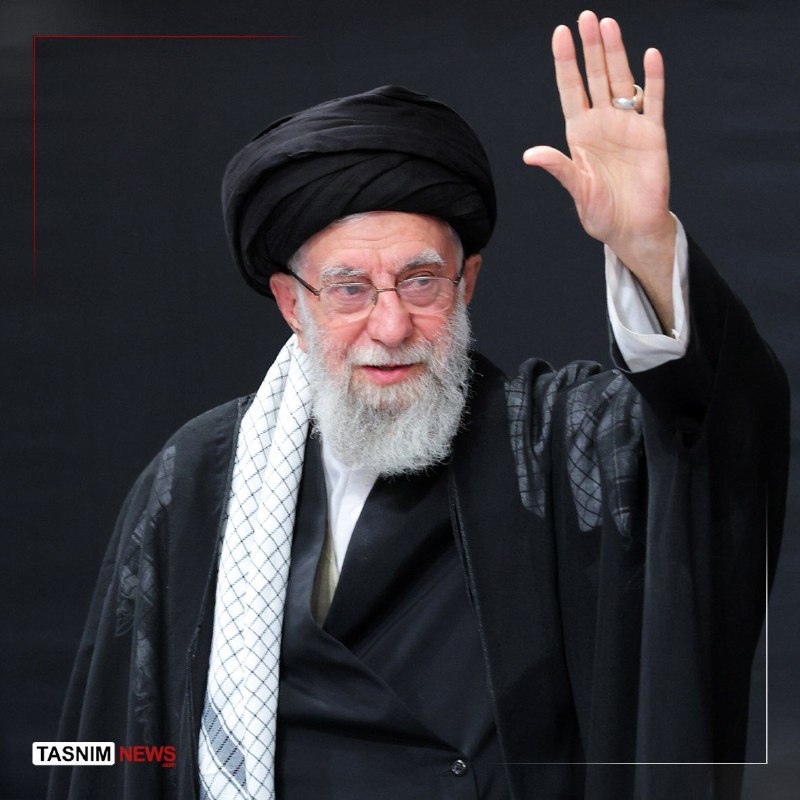
The messages came within a single morning, and they were aimed at the same audience from two different directions. At 08:17 UTC on 2 July 2026, an account run by an Iran-war watcher carried remarks attributed to Mohammad Bagher Ghalibaf — Speaker of the Iranian Parliament and head of Iran's negotiation delegation — addressing the funeral of Ali Khamenei and the question of "revenge." Less than two hours later, at 09:21 UTC, the same monitor pushed a sharper formulation: Ghalibaf declaring that "Khamenei's blood will be avenged by liberating Jerusalem," that Iran "will never allow IAEA access to bombed nuclear sites," and that the recently signed memorandum of understanding "proves America was defeated." By 09:52 UTC, a third circulated excerpt had Ghalibaf broadening the call to "the youth, the families of the martyrs, the war wounded, the brave women and men of this land." Read end to end, the sequence is less a eulogy than a policy platform.
The point worth taking seriously is not the rhetoric — Iran has produced plenty of that — but the bundling. A demand for revenge, a maximalist line on the IAEA, a claim that the MoU with Washington is proof of American defeat, and a Jerusalem frame have been welded together into a single domestic script. For a parliament already dominated by hardliners, Ghalibaf is not freelancing; he is reading the room.
What was actually said
The fragments circulating on the open-source channel Open Source Intel describe Ghalibaf invoking the "war wounded," the families of "martyrs," and the youth, and tying the next phase to the funeral of Ali Khamenei. The Jerusalem formulation is the most consequential: it places the question of retaliation inside a longer ideological horizon rather than a one-off strike. The line on the IAEA is the most operationally consequential. By publicly ruling out inspector access to damaged nuclear sites, Ghalibaf is foreclosing the technical compromise that most Western and Gulf-track diplomats consider the price of any durable deal. The MoU boast is the populist frame — "America was defeated" — designed to make the cost of compromise at the negotiating table feel like surrender at the door of the parliament.
Why the IAEA line matters more than Jerusalem
The Jerusalem framing is loud; the IAEA line is the one that will shape the next quarter. Iran is the only nuclear-armed-adjacent state that has, in the last decade, repeatedly traded limited, time-bound IAEA access for sanctions relief. A flat refusal — delivered in a funeral speech, by a speaker who also leads the negotiating team — narrows the diplomatic space in three ways. It tells IAEA Director General Rafael Grossi's office that technical visits are no longer a quiet back-channel concession but a domestic political impossibility. It tells European negotiators that the rapporteur-style "verification in exchange for unfreezing" template is dead. And it tells Tehran's own negotiating cadre that any future inspector visit will be read as a betrayal of the martyrs, not as a confidence-building measure.
The risk is not that the IAEA walks away — the agency has weathered worse standoffs — but that the standoff becomes the story. A prolonged inspector vacuum is the precise condition under which Israeli and American hardliners argue for kinetic action, and under which Gulf states hedge harder toward their own parallel programmes.
The domestic arithmetic
Ghalibaf is not only a speaker; he is a former IRGC Air Force commander, a two-time presidential candidate, and one of the politicians most closely associated with the post-2024 consolidation around the Supreme National Security Council. His positioning during a leadership transition tells the faction fight in plain language: the camp that wants the file handled in parliament, in front of cameras, at funerals, with maximalist language, has the microphone. That camp is structurally hostile to a quiet, technical deal.
The counter-reading — that this is theatre for the street, while real business continues in back-channels — is plausible but increasingly costly. Every public hardening raises the price of any subsequent climbdown. Ghalibaf's combination of revenge, Jerusalem, and the IAEA refusal is the exact sequence that locks negotiators into a corner of their own making.
Stakes and what to watch
The next ten days are the tell. If Iran's negotiating delegation, which Ghalibaf nominally leads, signals any daylight between the speaker's pulpit and the table's terms, it will mean the regime is preserving optionality. If, instead, the delegation echoes the funeral lines, the IAEA track is effectively over for this round and the sanctions architecture reverts to its punitive baseline — with all the escalatory pressure that follows. The Jerusalem rhetoric, meanwhile, is doing a slower job: it is reframing the conflict in language that no Gulf state, and no Western capital, can quietly ignore.
What remains genuinely uncertain is whether the MoU itself — "proving America was defeated," in Ghalibaf's words — contains provisions that Iran now considers already won. The text of the memorandum has not been made public in the fragments circulated today, and the Iranian and American read-outs continue to diverge in their description of its scope. Until that document is on the table, every claim about who won and who lost is, at best, a forecast.
Desk note: Monexus treats the Ghalibaf statements as primary Iranian political speech and reports them at face value where the wording is verifiable; the rhetorical escalation is taken as the news, not the underlying facts of the strikes themselves, which are not addressed in today's thread.
Wire provenance
This editorial synthesis draws on the following public wire/social posts:
- https://t.me/s/osintlive
- https://t.me/s/osintlive
- https://t.me/s/englishabuali