Iran holds farewell ceremony for Khamenei as foreign dignitaries gather in Tehran
Iran's foreign ministry says officials from more than 100 countries are arriving for the farewell and burial of the longtime supreme leader, with state media broadcasting rolling coverage across the morning of 2 July 2026.
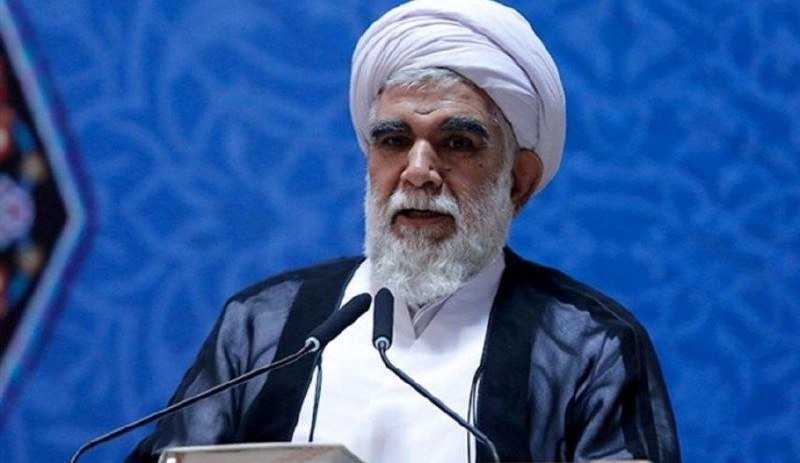
Iran's foreign ministry told state-aligned outlets on the morning of 2 July 2026 that officials from more than 100 countries would travel to Tehran to attend the farewell and burial of the country's longtime supreme leader, a ceremony that begins the public process of closing one political era and opening another. The scale of the foreign turnout — broadcast live across the morning by Mehr News, Tasnim and Fars — is being framed inside Iran as proof that the Islamic Republic retains broad international standing at a moment of acute domestic vulnerability. The same footage, however, is being parsed by outside analysts less as a vote of confidence than as a reading of which governments have an interest in staying on the right side of whoever succeeds him.
The piece below reads the funeral not as a single event but as the first set piece in a succession that will reshape Iran's posture toward the United States, the Gulf monarchies, Russia and China, and toward its own restive population. What the camera shows in Tehran this week is partly grief and partly geometry: which ambassadors stand where in the front row, which presidents send deputies rather than attend in person, and which governments keep their distance entirely.
A ceremony calibrated for the cameras
At 09:57 UTC, Mehr News reported that the foreign ministry spokesperson had confirmed attendance by representatives of more than 100 countries for what Iranian media are calling the farewell and burial of the "martyred leader of the Islamic Revolution." Within minutes, Tasnim and Fars carried parallel readouts of the same briefing, with Fars emphasising the rank of the visiting delegations and Tasnim underscoring the logistical choreography of the body, the procession and the interment. The convergence of the three outlets — state-aligned but editorially distinct — gives the foreign ministry's line a unified broadcast surface in the crucial early hours of the ceremony.
Iranian state media have used such convergence before: in the coverage of major military operations, in the framing of nuclear negotiations, and in the choreographed mourning cycles for senior figures. The pattern is familiar. The unusual element this time is the audience. The foreign guests are not a passive backdrop. They are the message.
What the guest list signals — and what it does not
Iranian outlets have not, in the items available at 09:48–09:57 UTC on 2 July 2026, published a complete roster of which 100-plus countries are sending whom. That matters. In succession politics, the difference between a head of state, a foreign minister, a special envoy and a charge d'affaires is the difference between endorsement, acknowledgement, observation and distance.
Two readings are plausible, and the evidence at this hour supports both. The first, which is the line the foreign ministry is plainly pushing, is that the breadth of attendance demonstrates the diplomatic weight Tehran retains even at a moment of regional war, sanctions pressure and internal unrest. The second, which outside analysts will press in the days ahead, is that the guest list reads as a map of governments that have decided they cannot afford to be absent from the room when Iran's next supreme leader is chosen — regardless of their private view of the Islamic Republic.
The honest answer is that the public list, once published, will not settle the question. A roster of names is a static artefact; the political signal sits in who did not come, and which governments sent their ambassador from a third capital rather than dispatching a minister. The wire items available at 09:57 UTC do not specify those absences, and this publication will revisit the framing once a fuller list is in the public domain.
The structural picture underneath the ceremony
Strip the ceremony away and the underlying question is straightforward: who controls the succession, and how does that answer reshape Iran's external posture? The supreme leader's office sits at the apex of an institutional architecture that includes the Islamic Revolutionary Guard Corps, the regular armed forces, the judiciary, state broadcasting, and the assembly of clerics whose job it is to vet and elevate the next holder of the office. That architecture did not disappear with the man who occupied its top floor.
What changes is the texture of legitimacy. A leader who consolidated power across nearly four decades leaves a system that has known only one occupant at the summit. Every institution below has been staffed, in part, by reference to him. The next supreme leader will inherit a state that is at once institutionally entrenched and personally exposed — institutionally entrenched because the machinery of clerical rule has its own inertia, personally exposed because every minister, commander and provincial governor appointed in the last decade was, in some sense, his choice.
For external powers, this is the moment to read the building. Foreign delegations arriving in Tehran this week are not simply paying respects; they are taking the measure of the men who will greet them in the receiving line. The geometry of the procession is a geometry of alignment.
What the next 72 hours will decide
Three decisions sit on the near horizon. First, the public announcement of the assembly of experts' timetable for confirming a successor. Second, the choice of foreign guests invited onto the dais during the ceremony and the order in which they are seated, which Iranian protocol uses as a quiet instrument of ranking. Third, the language used in the supreme leader's final public communications — read for signals about continuity, rupture, or managed transition.
Each of these is small on its own. Read together, they will set the operating assumptions for negotiations with Washington, for the posture of Iranian-backed armed formations in Lebanon, Iraq, Syria and Yemen, for the calculus of Gulf states that have spent the last decade hedging between Tehran and Washington, and for the inside-the-region contest between Iran and the Gulf monarchies for influence across the wider Middle East. The ceremony is the visible event. The succession is the invisible one. Both are happening this week.
What remains uncertain
Three points of contestation should be flagged plainly. The first is the composition of the foreign delegation: Iranian outlets have given the headline figure of more than 100 countries but, in the items available at 09:48–09:57 UTC on 2 July 2026, have not enumerated them. The second is the identity of the clerics and officials flanking the family during the burial, which will be read by Iranian analysts as a tell about the direction of the succession. The third is the content of any posthumous statement or will attributed to the supreme leader, which has not yet been published in the wire items reviewed here. None of these gaps is unusual for the first morning of a state funeral; all three will be closed, one way or another, before the end of the week.
Desk note: this publication is framing the Tehran farewell as a succession event first and a mourning event second, which is the inverse of how Iranian state media are presenting it. The wire services reviewed at 09:48–09:57 UTC are all Iran-based and state-aligned; readers should treat the figure of 100-plus countries as accurate in number but unverified in composition until a fuller list is published.
Wire provenance
This editorial synthesis draws on the following public wire/social posts:
- https://t.me/mehrnews
- https://t.me/JahanTasnim
- https://t.me/farsna