A funeral in Tehran, a power vacuum in waiting
Pakistani Prime Minister Shehbaz Sharif will travel to Tehran for Ayatollah Ali Khamenei's July 4–9 funeral rites, a gathering that doubles as a staging ground for the regime's most delicate handover in four decades.
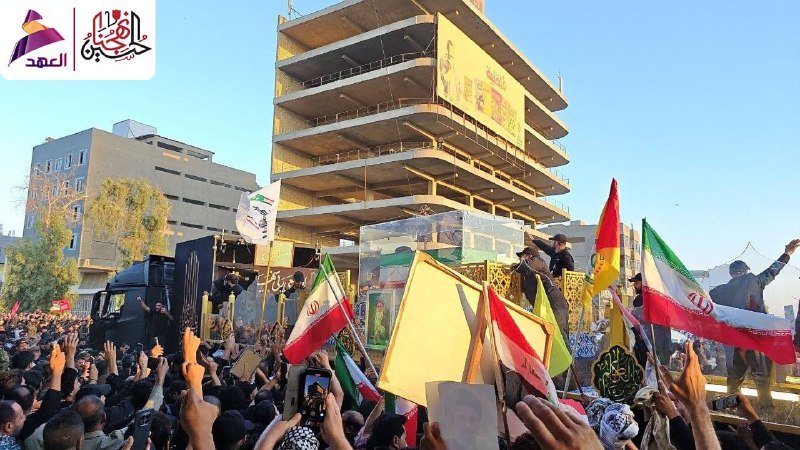
Iran's clerical establishment has spent the last 48 hours doing two things at once: mourning the man who ran the Islamic Republic since 1989, and quietly arranging the choreography of who runs it next. On 2 July 2026, state outlets confirmed that Pakistani Prime Minister Shehbaz Sharif will travel to Tehran to attend the funeral ceremonies of Ayatollah Seyyed Ali Khamenei, with formal rites scheduled for 4–9 July. The decision to send a serving head of government is the clearest signal yet from Islamabad that Pakistan sees the succession not as an internal Iranian affair but as a regional realignment with direct consequences for its western border, its energy imports, and its mediation standing with Washington.
What looks, on the surface, like a protocol visit is something closer to a geopolitical auction. Sharif's itinerary coincides with a separate Pakistani–Qatari diplomatic track aimed at easing tensions between the United States and Iran, according to a 2 July dispatch from the Telegram channel Clash Report. The funeral period, in other words, is being treated by both Sunni-majority neighbours as the rare window in which Iran's senior command is publicly accessible, publicly mourning, and publicly unable to ignore a foreign delegation that has come bearing an off-ramp.
The choreography of grief
Iranian state media has been disciplined about what it has released. A message attributed to the Commander of the Khatam al-Anbiya Central Headquarters, Iran's unified military command, has been circulated through Press TV and echoed by Telegram accounts aligned with the security services. The message frames the funeral as a moment of national mobilisation, calls for broad participation, and — pointedly — warns Israel and the United States against "miscalculation" during the ceremonies. The wording matters. A state funeral for a sitting Supreme Leader is not just a religious occasion; it is a stress test of the chain of command, with the regular army, the Islamic Revolutionary Guard Corps, and the provincial Basij all required to perform in public view for the first time under new political supervision.
The official framing frames Khamenei's death as "martyrdom" — a loaded term in Iranian political theology that signals he died in service to the system, not merely of natural causes. The Press TV bulletins on 2 July repeat that formulation without qualification. Independent confirmation of the circumstances of his death has not been published by any wire service available in this thread; readers should treat the cause-of-death characterisation as the regime's own framing until corroborated elsewhere.
Why Pakistan, why now
Sharif is not the only foreign leader expected in Tehran, but his presence is the most consequential for South Asian security. Pakistan shares a roughly 900-kilometre border with Iran, much of it in Balochistan, where Sunni militant groups have historically operated across the frontier. A succession in Tehran opens an unpredictable window in which Tehran's policy towards those groups — historically a mix of containment and quiet coordination — could harden or soften depending on which faction of the clerical establishment consolidates power around the new Supreme Leader.
The Pakistani–Qatari mediation track adds a second layer. Doha has hosted back-channel talks between Washington and Tehran for years; Islamabad has, more intermittently, offered itself as a conduit for Saudi–Iranian de-escalation. If both are now converging in Tehran during the funeral window, the assumption inside regional foreign ministries is that the visitors are not merely paying respects. They are auditioning for influence with whatever collective leadership emerges from the Assembly of Experts and the Guardian Council in the days and weeks after 9 July.
What the warnings actually mean
The Khatam al-Anbiya message's reference to Israel and the United States is not boilerplate. Funeral periods in the Islamic Republic have, on past precedent, been treated by the security services as windows of heightened alert rather than relaxed guard. The warning is best read as a notice to external actors that any strike, cyber operation, or covert action during the mourning period will be treated as an attack on the state during a moment of vulnerability — and will be answered accordingly. For Israel, which has exchanged direct and indirect fire with Iranian proxies across four fronts in recent years, the operational implication is that the next two weeks carry an elevated risk of miscalculation. For the United States, which maintains a carrier presence in the Gulf and a constellation of bases in neighbouring states, the implication is that the usual de-confliction channels are about to be tested by a leadership cohort that has not yet been fully briefed on them.
The stakes beyond Tehran
A smooth succession preserves the existing equilibrium: a clerical supreme leader, a presidency as the visible executive face, and the IRGC as the ultimate guarantor. A contested one — and there is no public evidence so far that the succession is contested, only that it is opaque — opens space for the IRGC to assert itself more directly, for provincial power centres to bargain harder, and for external actors, including Pakistan, Qatar, Turkey, and the Gulf states, to position themselves with the faction most likely to prevail.
The sources available for this thread do not name a successor. They do not disclose the medical timeline. They do not confirm the identity of the senior clerics currently leading the daily governance of the state. What they confirm is narrower but still consequential: a state funeral is being staged, foreign heads of government are being invited, the military command is publicly on message, and the message is directed as much at foreign capitals as at the Iranian street.
The serious point
A funeral is a script. The interesting question is who wrote it, who is allowed to deviate from it, and what the deviations cost. For now, the script is holding. Sharif's visit, the Qatari channel, and the public warnings to Israel and the United States all sit inside an Iranian narrative of managed transition under siege. The reader should hold two thoughts at once: that the Iranian state has rehearsed this kind of succession ritual before, and that the regional stakes — particularly for Pakistan, which has the most to lose from a destabilised western border — have rarely been higher.
Monexus framed this around the foreign-policy theatre of the funeral, not the internal succession mechanics, because the public sourcing at 2 July 2026 supports the former and not the latter.
Wire provenance
This editorial synthesis draws on the following public wire/social posts:
- https://t.me/presstv/
- https://t.me/ClashReport/
- https://t.me/presstv/
- https://t.me/englishabuali/