Kh-101 cruise missiles strike Kyiv in overnight barrage, Ukrainian air defence reports multiple interceptions
Russian cruise missiles struck residential and administrative districts of Kyiv in a 90-minute overnight barrage starting just after midnight UTC, with Ukrainian air defence intercepting at least two missiles over the eastern approaches.
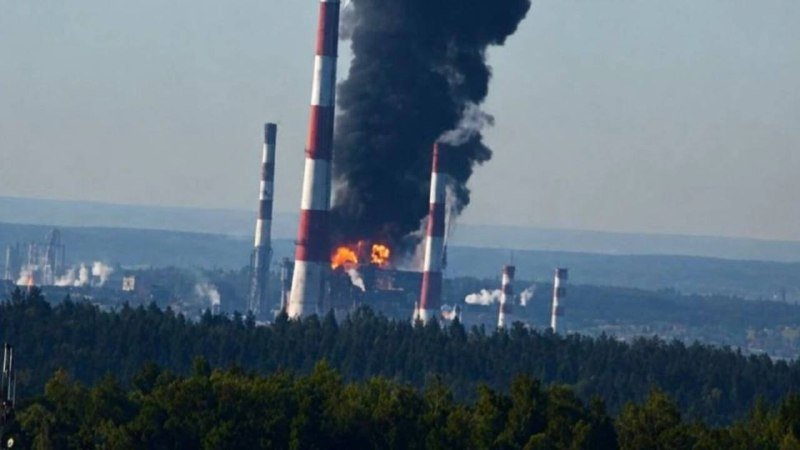
Russia launched a sustained cruise-missile barrage against Kyiv in the early hours of 2 July 2026, with Kh-101 air-launched missiles striking districts across the capital and Ukrainian air defence units reporting interceptions east and north of the city. The attack began just after midnight UTC and continued in waves for roughly ninety minutes, according to open-source intelligence channels tracking the strikes.
The pattern — multiple salvos arriving from the east and northeast, several impacting inside the city limits, and at least two missiles intercepted over the eastern and northern approaches — fits the now-familiar Russian playbook of using long-range air-launched cruise missiles to pressure Ukrainian air defences and probe their coverage of the capital. Kyiv, by some distance the most heavily defended city in the country, has been the test bed for that campaign for more than three years.
The overnight sequence
The first Kh-101 salvo entered the Kyiv area from the northeast at 00:05 UTC on 2 July 2026, with subsequent groups following from the east, according to the OSINT mapping channel AMK_Mapping. By 00:09 UTC several more groups were inbound; by 00:11 UTC at least one Kh-101 had impacted in the southeast of the city. Ukrainian air defence reported an interception east of the capital at 00:06 UTC, and a second interception further east at 00:21 UTC. Kyiv city authorities confirmed a fire near an administrative building shortly after, and a large fire was visible in the capital following the impacts at 00:25 UTC. A separate missile struck near eastern Kyiv at 00:01 UTC before the main salvo.
Later in the salvo, additional Kh-101s approached from the east, with interceptions continuing through the early minutes of the attack. By 00:28 UTC AMK_Mapping reported the remaining missiles heading for northern Kyiv, and the war-monitoring channel war_monitor recorded a strike on the Vinogradar district of the capital at 01:27 UTC. The Telegram channel run by Ukrainian pilot and analyst Nikolaev Vanek (vanek_nikolaev) reported low-altitude cruise-missile runs approaching the city from the direction of Vyshhorod at 02:27 UTC, more than two hours after the first salvo. The channel intelslava carried the consolidated impact ticker.
What the sources show — and what they do not
The reporting on this strike comes almost entirely from open-source intelligence monitors, not from official Ukrainian or Russian statements in the thread. AMK_Mapping, intelslava, war_monitor and vanek_nikolaev are independent Telegram channels that triangulate radar data, audio of impacts, geolocated video and air-traffic chatter to reconstruct attacks in near real time. Their value is granularity; their limit is the absence of corroborating official casualty and damage figures in the material available to this article.
Russia's Ministry of Defence has not, in the source material available, issued a public claim of strike on Kyiv on the morning of 2 July. Ukraine's Air Force and the Kyiv City Military Administration likewise have not been quoted in the source material beyond the brief reference to a fire near an administrative building. The OSINT channels are consistent in describing the weapon as the Kh-101, an air-launched cruise missile with a conventional warhead typically carried by Russian strategic bombers operating well inside Russian airspace. None of the sources report ballistic missiles, Kinzhal aeroballistic missiles, or Shahed-type one-way attack drones in this sequence.
Structural context
The Kh-101 has been a workhorse of the Russian deep-strike campaign against Ukrainian civilian, energy and military infrastructure since at least autumn 2022. Fired from Tu-95 and Tu-160 bombers on standing patrol over the Caspian and the Sea of Azov, the missile follows a subsonic, low-altitude flight profile that makes it cheap to produce and hard to detect at long range — but also gives Ukrainian Patriot, IRIS-T and older Soviet-era surface-to-air systems a usable engagement window. The two interceptions east of the city in this salvo, if confirmed by the Air Force, sit inside the historical intercept-rate envelope for the system.
Two things make this barrage worth watching beyond the immediate damage. First, the pattern of missiles arriving in sequenced groups over more than an hour is consistent with a salvo fired by a single sortie of bombers, not a multi-day campaign — a reminder that even modest Russian air-activity can produce a high-volume night of work for Ukrainian defenders. Second, the low-altitude approach from the direction of Vyshhorod, on the north bank of the Dnipro above Kyiv, suggests a deliberate effort to slip missiles past the densest ring of the capital's air defence, which historically has faced heaviest threat from the south and east. Whether that is a tactical refinement, a one-off routing choice, or simply a function of where the bombers launched from, the sources do not specify.
Stakes and what remains unclear
The human-cost and infrastructure-damage picture is not in the source material. The OSINT channels record impacts and interceptions; they do not, in this thread, carry casualty counts, building addresses hit, or utility outage reports from Kyiv city authorities. Until the Kyiv City Military Administration or the Ukrainian Air Force publishes a consolidated morning assessment, the headline number — how many missiles were launched, how many were intercepted, how many hit, what burned — is provisional.
What is already clear is the broader trajectory. Russia is using air-launched cruise missiles at a tempo that keeps Ukrainian interceptor stocks under continuous pressure, and Ukraine's defenders are expending expensive surface-to-air ammunition against roughly subsonic targets on a near-nightly basis. The economics of that exchange — a cruise missile the Russians can reportedly produce in volume against a Patriot or IRIS-T round that costs more to replace — are central to how the air-war phase of this invasion is being waged. The 2 July strike is one night in a long campaign, but the campaign itself is what determines whether the capital's defenders can keep winning those nights.