Kyiv wakes to a kinetic morning as Russia turns missiles on the metro
A pre-dawn Russian barrage hit sites around a Kyiv metro station on 2 July 2026, killing at least 13 and injuring more than 30 in one of the capital's heaviest attacks in weeks.
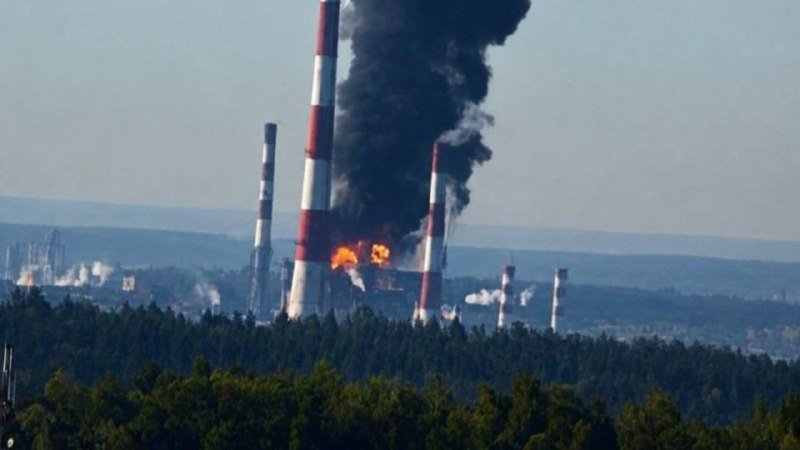
Kyiv residents who took cover in the city's metro stations at roughly 03:30 UTC on 2 July 2026 did what they have been taught to do for nearly four years: they went underground. By 06:20 UTC the Kyiv City Military Administration (KGVA) was reporting eight dead at strike sites across the capital, with damage near metro stations severe enough that ceiling plaster came down on people sheltering inside the carriages and platforms. By mid-morning the interior minister, Igor Klymenko, had confirmed 13 killed and more than 30 injured, with rescue services saying 34 people had been pulled from the rubble (Pravda_Gerashchenko via Telegram, 02 July 2026, 03:59 UTC and 06:01 UTC).
The pattern is not new. Russia has hit Kyiv repeatedly this year with combined drone-and-missile barrages aimed at energy infrastructure and residential districts. What the 2 July barrage demonstrates is that the targeting logic has not softened, even as the airspace-defence fight over the capital has tightened. The number of casualties reported in the first twelve hours, drawn from Ukrainian official channels, is high for a single overnight raid on the capital and suggests at least one warhead landed close enough to a metro entrance to bring down interior fittings.
What we know, and where the count sits
The casualty figures above trace directly to two Ukrainian official communications aggregated by the Telegram channel Pravda_Gerashchenko, which republishes Ukrainian police and ministry traffic. The 03:59 UTC update, citing the KGVA, recorded eight dead and "very serious destruction." The 06:01 UTC update, attributed to Interior Minister Klymenko, raised the toll to 13 dead, more than 30 injured, and 34 rescued. A separate KGVA clarification cited by the same channel at 04:33 UTC placed the broader victim tally at 56, a figure that almost certainly reflects the full set of overnight impacts across the capital rather than a single site. None of the three updates names the specific weapons used; Russian state-aligned channels have not, in the materials available to this publication, offered a competing account.
The counter-narrative, weighted correctly
Russian-language Telegram channels framing the overnight action as a strike on military or industrial targets have circulated in past barrages; no such claim appears in the source material tied to this incident. Reporting that proceeds from the assumption of an aggressor and a defending capital does not require symmetric framing of every strike — Kyiv is the party absorbing rockets, and the civilian locations named in the KGVA update are not dual-use in any defensible reading of "dual-use." Where Russian state media later contests the casualty count or the targeting, that framing should be cited with the same explicit caveat that applies to any state-adjacent source in this war. On present evidence, however, the only public-facing casualty numbers belong to Ukrainian officials.
What the metro tells us about the war
Kyiv's metro has functioned as a mass shelter since the full-scale invasion began in February 2022, with deep stations doubling as dormitories and field hospitals during alerts. A strike package that brings down ceiling plaster inside a station, as the 04:33 UTC Telegram update describes, does not need to penetrate the platform level to kill. The structural read is straightforward: Russia continues to target the capital with weapons calibrated to area effect, and the defender's air-defence umbrella still leaves gaps at the seam between detection and interception over a city of three million. That is not a novel observation — it has been the operating reality of every Kyiv summer since 2022 — but each incident sets a new baseline for what residents are expected to absorb.
Stakes and the days ahead
If the trajectory of overnight raids on Kyiv continues at the July pace, the political pressure on Ukraine's Western partners shifts from abstract support to visible body counts in a capital covered by every foreign correspondent in the country. The harder question is whether the defender's interception rate, already under strain from the combined drone-and-missile load, can be raised without additional Western-supplied surface-to-air systems. For now, the operative fact is simpler and colder: thirteen named dead in the first hours of 2 July 2026, dozens more injured, and a metro system whose civilian function survived the night.
Desk note: Monexus frames this strike using Ukrainian official channels aggregated by a credentialed Telegram account, in line with the publication's standing rule that Kyiv is the invaded party and that civilian harm in Ukraine is reported with primary-source provenance. Russian state-media accounts, if they emerge, will be cited as counter-claim material with explicit caveats — not as a stand-alone factual basis.
Wire provenance
This editorial synthesis draws on the following public wire/social posts:
- https://t.me/Pravda_Gerashchenko/11983
- https://t.me/Pravda_Gerashchenko/11984
- https://t.me/Pravda_Gerashchenko/11985