Kyiv takes the worst barrage of the war while its drones hit a Lukoil refinery deep inside Russia
Russia's overnight barrage of Kyiv killed at least 13 and wounded 86 across every district; Ukraine answered by striking the Lukoil refinery in Kstovo. The shape of the war is changing at both ends.
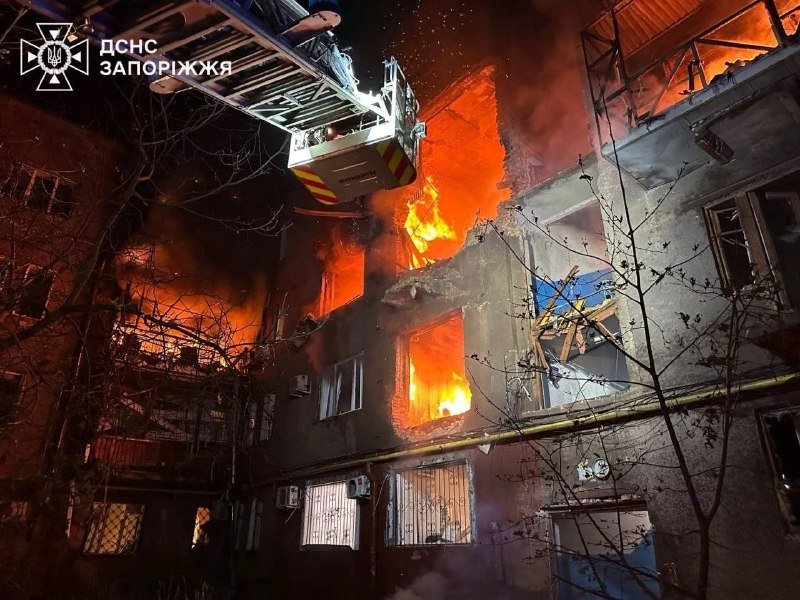
At roughly 08:00 UTC on 2 July 2026, the mayor of Kyiv reported that Russia had, overnight, launched its largest single attack on the capital since the full-scale invasion began. At least thirteen people were killed and eighty-six injured, with strikes recorded across every district of the city. Within the same operational window, Ukraine struck back deep into Russian territory, hitting the Lukoil-Nizhegorodnefteorgsintez refinery in Kstovo, Nizhny Novgorod region — more than 700 kilometres from the Ukrainian border — and reportedly damaging the AVT-6 primary oil-processing unit, one of the plant's most critical installations.
The two events, separated by a few hours and several time zones, describe a war that has tilted into a new phase. Russia is no longer rationing long-range strikes on Ukrainian cities; Kyiv is no longer signalling when it will hit Russian energy infrastructure. Both sides are testing what the other can absorb.
What hit Kyiv, and what is known
Reporting filed in the early hours of 2 July UTC describes a combined missile-and-drone barrage hitting residential districts of the capital. The thirteen fatalities and eighty-six injuries cited by the mayor's office are the highest overnight toll of the war on the city and arrived in attacks characterised as reaching "all districts." Strikes on residential buildings, rather than purely military or grid targets, account for the bulk of the casualty load. Aerial bombardment of this density is consistent with a shift in Russian targeting logic away from infrastructure-and-morale signalling and toward population pressure — a posture that has implications for civilian protection, air-defence prioritisation, and the political climate inside Ukraine.
The figures remain preliminary. Local emergency services continue to work through rubble, and tolls in barrages of this scale typically rise in the first forty-eight hours as searches complete. Kyiv's reporting has been consistent with later Western-wire tallies throughout the war; the order of magnitude here is unlikely to be revised downward.
What Ukraine hit, and why it matters
The Lukoil-Nizhegorodnefteorgsintez plant in Kstovo is one of Russia's largest refineries, processing crude for both domestic distribution and export. Reporting indicates the overnight strike hit the AVT-6 primary processing unit — the kind of installation that, once damaged, takes weeks rather than days to bring back online. The same operational package also targeted a key railway bridge in occupied territory, suggesting a deliberate pairing of energy-economy and logistics pressure.
Refinery strikes have become Ukraine's principal lever on the Russian war economy. Each successful hit reduces the throughput of refined product available for both the front and the export market that keeps Moscow's fiscal balance afloat. AVT-class units at Lukoil-owned plants have featured in earlier reporting as priority targets precisely because their loss cannot easily be substituted from other complexes in the network.
The counter-narrative, taken seriously
Russian-aligned channels framed the overnight exchange as evidence that Ukraine is now striking civilian-adjacent Russian infrastructure and that Kyiv's drones are reaching the heartland — a positioning intended to support domestic narratives about the war's escalation. That framing has internal logic: a 700-kilometre strike does change the geography of risk for Russian civilians and for Russian regional governors. It does not, however, alter the asymmetry. A refinery in Nizhny Novgorod is a strategic-economic target serving a war machine; a residential block in Kyiv is a target with no comparable military function. Treating both as equivalent is a framing choice, not an analytical one.
There is also a real debate, inside Ukraine and among its partners, about the optimal strike list. Energy infrastructure compresses Russian state revenue and the fuel supply that feeds front-line logistics; it also raises the political cost of the war for ordinary Russians. The alternative — strikes on military-industrial sites alone — produces fewer headlines and slower economic effect. Kyiv's bet, evidently, is that the revenue lever is the faster one.
Structural frame
What is unfolding is a contest of absorption. Russia is signalling that Ukrainian cities can be hit at any hour of any night, on any scale it chooses; Ukraine is signalling that Russian territorial depth no longer insulates the economic assets that finance the war. Neither side has so far imposed decisive cost on the other. The more interesting question is which side reaches its political ceiling first: Moscow's tolerance for refinery downtime and export shortfalls, or Kyiv's tolerance for residential-block tolls and the resulting pressure on mobilisation politics and Western aid coalitions.
The Western policy debate, often framed around whether to permit longer-range strikes, is already being overtaken by the facts. Ukraine is reaching deep into Russia with domestically produced systems. The remaining policy question is not capability but resupply cadence and the political bandwidth to sustain a war economy on both sides for as long as the contest requires.
What remains uncertain
The full inventory of damage at the Lukoil plant will take days to verify through independent satellite imagery and Russian regional reporting. The overnight Kyiv toll, while reported by the mayor's office, will likely be revised as building searches conclude. The framing of "largest attack of the war" is a moving definition — each new barrage becomes the reference point for the next. What is not in doubt is the trajectory: more strikes, deeper reach, and a war that has moved past the phase where either side can plausibly talk about protecting the other country's civilians.
Desk note: Monexus framed the overnight exchange as a paired operation — a record-density barrage on Kyiv and a deep strike on Russian refining capacity — rather than as two unrelated events. Casualty and damage figures are drawn from Ukrainian and Telegram-wire reporting at the time of filing; later revisions are likely.
Wire provenance
This editorial synthesis draws on the following public wire/social posts:
- https://t.me/rnintel
- https://t.me/noel_reports
- https://t.me/Kyivpost_official