Kyiv Under Fire: Reading the Pattern Behind the July 2 Strikes
A coordinated overnight barrage on Kyiv killed at least 10 and injured dozens more — the latest data point in a campaign the wires are racing to characterise.
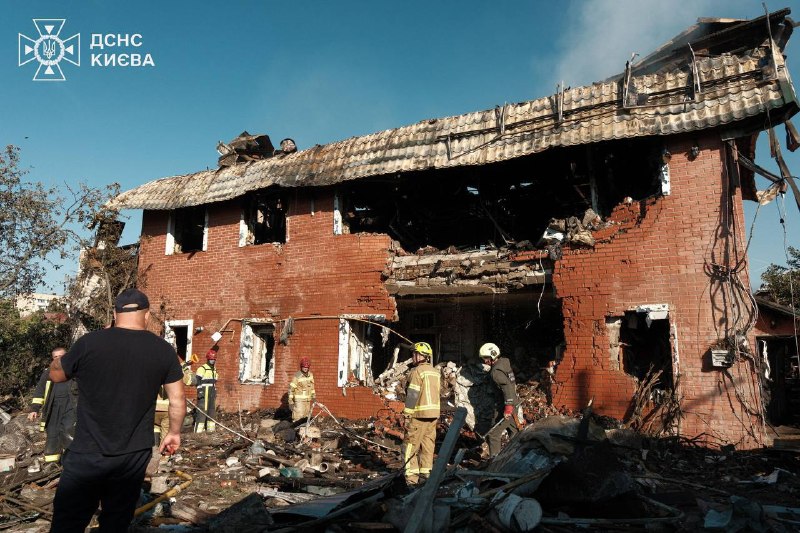
Kyiv woke on 2 July 2026 to a city broken open in at least 28 places. Ukrainian outlets reported ten civilians killed and 56 injured in what the country's domestic press described as a large-scale combined strike on the capital and the surrounding region (Ukrainska Pravda, 2 July 2026, 06:10 UTC; TSN, 2 July 2026, 04:14 UTC). The pattern — residential blocks, infrastructure, multiple districts at once — was familiar enough to be called by its proper name within hours.
What's worth slowing down on is not the horror of a single night but the architecture of these attacks and the way the reporting has come to read them. Each salvo teaches the next one something.
What the wires confirmed
The early-morning bulletins from Ukrainian outlets tally the immediate human cost: ten dead, 56 injured, damage logged in 28 locations across the city, with fires and demolitions documented in multiple districts (Ukrainska Pravda, 2 July 2026, 06:10 UTC). TSN's overnight summary labelled the barrage one of the largest on Kyiv, citing a military observer who flagged "disturbing features" in the strike profile — combinations of drones and missiles timed to overwhelm air defences (TSN, 2 July 2026, 04:14 UTC). The phrase "combined attack" recurs across the morning file: not a single weapon class, but a layered one.
The threads also note fires and structural damage to residential housing stock and surface footage of destroyed buildings, photographed at street level by emergency services and residents (TSN, 2 July 2026, 05:14 UTC).
What the dominant framing misses
Most Western wire copy on overnight Ukrainian strikes operates on a familiar template: incident, casualty count, Western capital reaction, a line on Russian denial or silence. That template has its uses. It also flattens three things worth keeping distinct.
First, the militarised logic inside the strike itself. A "combined attack" is not improvisation. Layering cruise missiles, Shahed-type drones, and ballistic munitions in sequence is designed to exhaust interceptor stocks before the most damaging payloads arrive. Reporting that lists the damage but skips the weapons-mix lets the war look passive — as if Kyiv were unfortunate rather than targeted.
Second, the targeting choice. Strikes hit residential districts and infrastructure scattered across at least 28 sites. The Ukrainian outlets describe houses destroyed, demolitions, and fires — not military garrisons or arms depots named in the bulletins. Russian state messaging continues to frame these as strikes on "military infrastructure," but the morning-after photograph trail tells a different story (TSN, 2 July 2026, 05:14 UTC).
Third, the political economy of air-defence depletion. Every combined barrage obliges Kyiv to spend interceptors it cannot replace quickly. The longer the pattern runs, the cheaper each subsequent strike becomes the launching side. That arithmetic deserves at least the column-inches given to whichever foreign minister issued the night's condemnation.
Reading the pattern in plain prose
The broader picture is what military theorists would call a campaign of cumulative pressure, and what residents of Kyiv experience as a long, grinding attrition dressed up as one-off horrors. Russia's full-scale invasion of Ukraine, now in its fourth year, has settled into an exchange in which the launching side absorbs international opprobrium at a rate it appears able to tolerate, in return for steady degradation of Ukrainian air-defence inventories, civilian morale, and the political will of third-country capitals underwriting Kyiv's resupply.
Coverage of this war has tended to treat these strikes as episodic — single nights to be condemned and forgotten — which buries the cumulative pressure inside the noise of the news cycle. The structural pattern is not hidden, just unemphasised. When a capital is struck at 28 points overnight, the right editorial question is not "how bad was last night" but "what does last night's profile tell us about the trajectory."
Stakes over the next quarter
If the pace of combined barrages holds, the cost calculus converges on three pressure points. Ukrainian interceptor stockpiles will continue to draw down; Western aid shipments — already a recurring source of friction in donor capitals — will face louder domestic objection each time a salvo lands on a residential block photographed for the morning news; and the humanitarian case for tougher sanctions on Russian oil revenues will harden, with secondary effects on the global energy trade.
A counter-reading worth taking seriously: Ukraine's dispersed air-defence network has proved more adaptive than first-year assessments predicted, and each round of strikes has also produced fresh data on Russian launch trajectories and decoy tactics that Kyiv's forces recycle. The arc is not unidirectional.
What the morning wires do not yet resolve is the weapons-mix breakdown — how many cruise missiles, how many one-way attack drones, how many ballistic munitions — and the question of which specific districts absorbed what. Those details will arrive over the next 24 hours from the Ukrainian air force and ground authorities, and from the OSINT community tracking open-source wreckage footage. Until then, the headline count of ten dead and dozens injured is the floor, not the ceiling, of the night's record.
Desk note: this article treats Ukrainian outlet reporting as the baseline of record for civilian casualties and on-the-ground damage inside Ukraine, in line with Monexus's standing compass on the Russia–Ukraine war.
Wire provenance
This editorial synthesis draws on the following public wire/social posts:
- https://t.me/ukrpravda_news
- https://t.me/TSN_ua
- https://t.me/TSN_ua
- https://t.me/TSN_ua
- https://t.me/TSN_ua