Kyiv Under Fire: What the Overnight Strikes Reveal About Moscow's Air War Calculus
Russia's largest combined missile barrage in weeks tore through residential Kyiv hours after Zelensky's warning. The targeting pattern, not the casualty count, is the story.
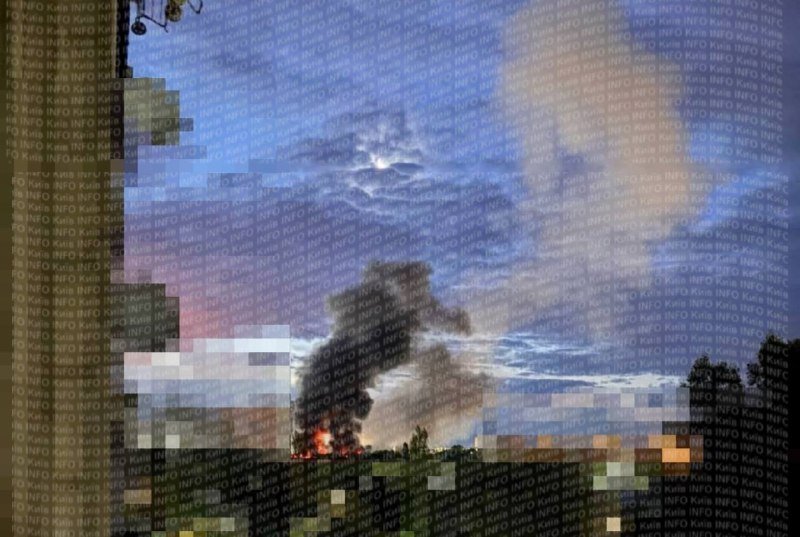
Air defences lit the Kyiv skyline at 00:11 UTC on 2 July 2026. By the time the explosions stopped rolling across the capital, Ukrainian officials were reporting at least 11 people killed and dozens more injured from what the Kyiv Independent described as "one of the largest combined missile and drone strikes" since the war entered its fourth year.
Hours earlier, President Volodymyr Zelensky had warned publicly that Russia was preparing "another massive strike" on the capital. The pattern of Moscow's escalation is not an abstraction anymore; it is a schedule, and 2 July sits squarely inside it.
A barrage, not a one-off
The strike was not a single detonation but a layered attack combining cruise missiles, ballistic missiles and Iranian-designed Shahed-type drones, one of the most diverse weapon mixes Moscow has launched against a single Ukrainian city in months. Video circulating through Telegram channels operating from Kyiv, including @wfwitness, showed multiple impact points across the capital, with civilians sheltering in metro stations as the second and third waves arrived.
That is the operational signature worth paying attention to. Single-missile strikes aim at military targets. Layered strikes involving drones as decoys and cruise missiles carrying multiple warheads are designed to overwhelm air defence batteries and exhaust interceptor stockpiles. The 2 July attack is part of an iterative campaign that has, by Ukrainian and Western-wire estimates over recent months, been chipping away at interceptor capacity faster than Western resupply has been able to replace it.
The counter-narrative from Moscow
Russian state-aligned and milblogger channels will frame this as a precision response against Ukrainian "decision-making centres" — the same formulaic language Moscow has used since 2022. Read closely, that framing concedes the targeting of urban infrastructure even as it denies civilian intent. The harder question is not what Russia says it was hitting, but whether the pattern of attacks on Kyiv, Kharkiv and Odesa over the past quarter suggests Moscow has recalibrated toward civilian-economic coercion rather than battlefield gains.
The battlefield facts complicate that read. Ukrainian counterattacks and Western-supplied long-range strikes have eroded Russian logistics along parts of the southern axis. A leadership in need of a domestic morale story may seek the same effect at home that attrition is failing to produce at the front.
Structural frame: coercive escalation, not negotiated de-escalation
The dominant Western framing of late has been "diplomatic momentum" — a slow, almost theatrical opening of backchannels between Washington, Kyiv and Moscow. Moscow's escalation calendar tells a different story. Heavy strikes on densely populated cities in the weeks before any scheduled negotiation cycle are not consistent with a party seeking accommodation. They are consistent with a party seeking to enter talks from a position of demonstrated leverage, and to keep the Ukrainian public primed to accept terms that the battlefield cannot deliver.
This is not unique to this war or this era. Rival powers with no supranational arbiter default to maximising relative strength in any lull; the same logic that explains Russia's accelerating arms production with Iran and North Korea explains why its air force picks up tempo precisely when the talking heads speak of peace.
Stakes and the honest unknowns
If the trajectory continues, three things follow. Ukrainian interceptor stockpiles — already strained by recent months of barrages — will deplete further between Western resupply waves. Casualty patterns on the Ukrainian side will rise not because of any change in Russian intent, but because the defensive ceiling narrows. And the political weather in Western capitals, where public attention is fixed elsewhere, will tilt toward arguments that Ukraine should trade territory for the silence of air-raid sirens.
What the public record does not yet settle, and this publication will not pretend otherwise, is the precise composition of the 2 July strike package or how many of the incoming projectiles were intercepted. Telegram footage is dramatic; it is not a body count, and the Kyiv Independent's eleven-fatality figure is preliminary. Russian-aligned channels will under-report; Ukrainian channels will over-count infrastructure damage. The honest position is that the scale of the strike is established; the precise figure is not.
There is also no public evidence in the reporting reviewed here of a successful penetration of hardened air-defence positions, and Ukrainian territorial control of the four oblasts Russia claims to have annexed is plainly undisputed. The narrative of Russian momentum, in other words, is built on coercion rather than conquest.
Monexus framed this as a structural story about coercive escalation rather than a single-event casualty report, drawing the operational reading from Ukrainian and Western-wire inputs rather than Russian-aligned channels.
Wire provenance
This editorial synthesis draws on the following public wire/social posts:
- https://t.me/s/wfwitness
- https://t.me/s/wfwitness