Ankara summit tests NATO's bandwidth as the alliance's agenda outgrows its founding brief
On 7-8 July 2026 NATO's heads of state and government gather in Ankara — a venue that itself signals how much the alliance's perimeter, and its agenda, have shifted since the Cold War.
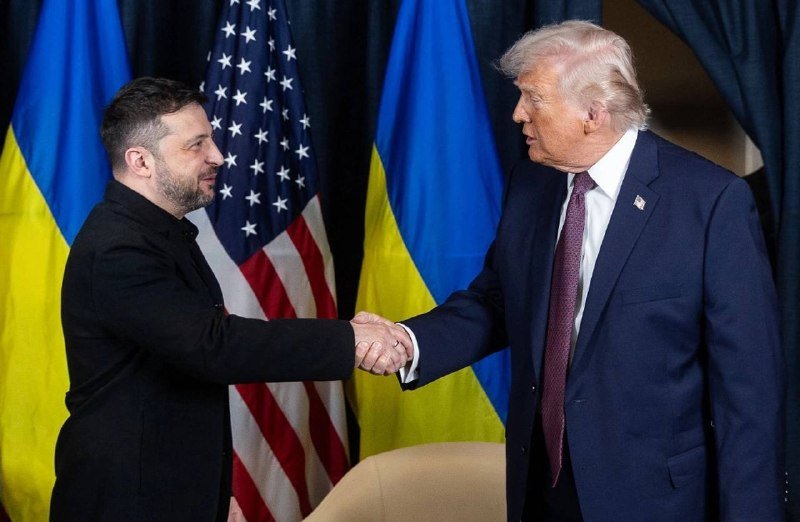
On 7 and 8 July 2026 the thirty-two members of the North Atlantic Treaty Organisation will sit down in Ankara for a summit that, on paper, looks like routine allied business. In substance it is anything but. The agenda now circulating through allied delegations stretches well beyond the communiqué-style deliverables that have defined past gatherings: a defence-spending floor that has already been raised once and is being raised again, an eastern-flank posture that has hardened from a temporary reinforcement into something closer to a permanent order of battle, an Indo-Pacific partnership track that did not exist in any formal sense a decade ago, and an industrial-base question — who actually builds the weapons the alliance says it needs — that has moved from the back office to the leaders' table.
The Ankara summit is the first test of whether the alliance can run a wider agenda without losing coherence on the narrower one. That question matters more than any single communiqué line, because the alliance's centre of gravity has visibly moved since the last full summit. Mark Rutte, the alliance's Secretary General, has framed the gathering as the moment when members move from rhetorical commitment to binding deliverable.
The agenda items doing the real work
The pre-summit briefings now in circulation name four substantive tracks. First, the defence-spending floor: allied leaders are expected to formalise a higher minimum, building on the 2025 pledge that members spend at least 5 percent of GDP on defence and defence-related infrastructure over the coming decade. The argument inside allied capitals is no longer whether the line moves, but how it is measured — what counts as defence, what counts as the adjacent infrastructure spend, and how compliance is reported when fiscal pressures at home are rising.
Second, the eastern flank. Forward land deployments on the alliance's north-eastern edge have been thickened since 2022, and the Ankara gathering is being positioned as the moment that reinforcement becomes structural rather than rotational. The language in the pre-summit material emphasises persistence — equipment pre-positioning, logistics corridors, integrated air and missile defence — rather than the surge-and-withdraw pattern that defined the first months after the full-scale invasion of Ukraine.
Third, the Indo-Pacific partnership file. NATO's four Asia-Pacific partners — Japan, South Korea, Australia and New Zealand — are expected to be in the room in some form, and the deliverables being discussed include joint projects on critical-technology protection, maritime domain awareness, and defence-industrial cooperation. The track is no longer framed as a courtesy dialogue; it is being written into the summit communiqué.
Fourth, defence industrial capacity. This is the item that has done the most moving in pre-summit discourse. The argument inside allied governments is that money committed on paper is not the same as artillery shells, air defence interceptors, and submarine cable repair ships actually delivered; the summit is being positioned as the moment when allied capitals collectively answer the question of who builds, at what pace, and under whose authority.
The Turkish chair, and why the venue matters
Hosting in Ankara is itself a signal. Turkey sits on the alliance's south-eastern edge, controls the Bosporus and Dardanelles under the 1936 convention, fields the alliance's second-largest standing military, and has spent the last several years pursuing a more autonomous security policy — including the development of indigenous air defence and unmanned-systems platforms and a working relationship with Moscow that has at times sat awkwardly with allied positioning.
Ankara's chairing of the summit therefore puts a question to the alliance that is older than this gathering: can a thirty-two-member body that spans the Atlantic from Oslo to Ankara, and now reaches into the Pacific through its partners, actually agree on what it is for? The Ankara agenda answers with a longer list. The test is whether the list holds.
What the dissenting reading looks like
There is a parallel reading of the same agenda, and it deserves airtime. The longer the list, the argument runs, the harder it is to deliver on any one item. The eastern flank posture assumes a threat picture that some allied publics are increasingly skeptical of sustaining at the cost of domestic social spending. The Indo-Pacific partnership track is read in some chancelleries as mission creep — an alliance designed for the North Atlantic drifting into theatres where its legal and political foundations are thinner. The industrial-base agenda is read in others as protectionism dressed up as security — a coalition of national champions that will, in practice, slow procurement and raise costs.
This publication's read is that the dissenters are pointing at real costs, but misreading the trajectory. The alliance's agenda is widening because the security environment has widened, and the question is no longer whether the alliance does more but whether it can do more without diluting the core task. Ankara will not resolve that, but it will give the clearest signal yet of which way the alliance is tilting.
Stakes, and what remains genuinely uncertain
The winners if the Ankara agenda holds are the eastern-flank members who have spent two years arguing for permanence rather than rotation, and the defence-industrial actors — large primes and mid-tier specialists alike — who stand to benefit from a binding allied production commitment. The losers, in the short run, are allied treasuries, whose fiscal math now has a new line item they cannot easily defer, and parts of the wider public for whom the security dividend is less visible than the social cost.
What remains genuinely uncertain is whether the spending line and the industrial line reinforce each other or work against each other. A higher floor without a working industrial base produces paper commitments and slow delivery. A working industrial base without a common demand signal produces capacity that goes unused or is sold off-shore. The Ankara summit's deliverable on this point — the language, not the rhetoric — will be the most consequential single paragraph of the gathering.
The pre-summit material in circulation does not specify how that trade-off will be resolved. It names the items, signals the direction, and leaves the binding language to the leaders themselves in the room. That is, in the end, what an Ankara summit is for.
This piece was framed by Monexus from allied-channel pre-summit material in circulation on 2 July 2026; it reads the agenda items named in that material against the broader question of whether the alliance can deliver on a longer list without losing focus on the narrower one.
Wire provenance
This editorial synthesis draws on the following public wire/social posts:
- https://t.me/DDGeopolitics
- https://t.me/rybar_in_english
- https://t.me/rybar