Oyarzabal's brace sends Spain into the last 16 as Austria's tournament ends
A 3-0 win in the round of 16, settled by goals from Baena and an Oyarzabal double, keeps Spain's deep tournament run on track and underlines how the Real Sociedad forward has become La Roja's most decisive player.
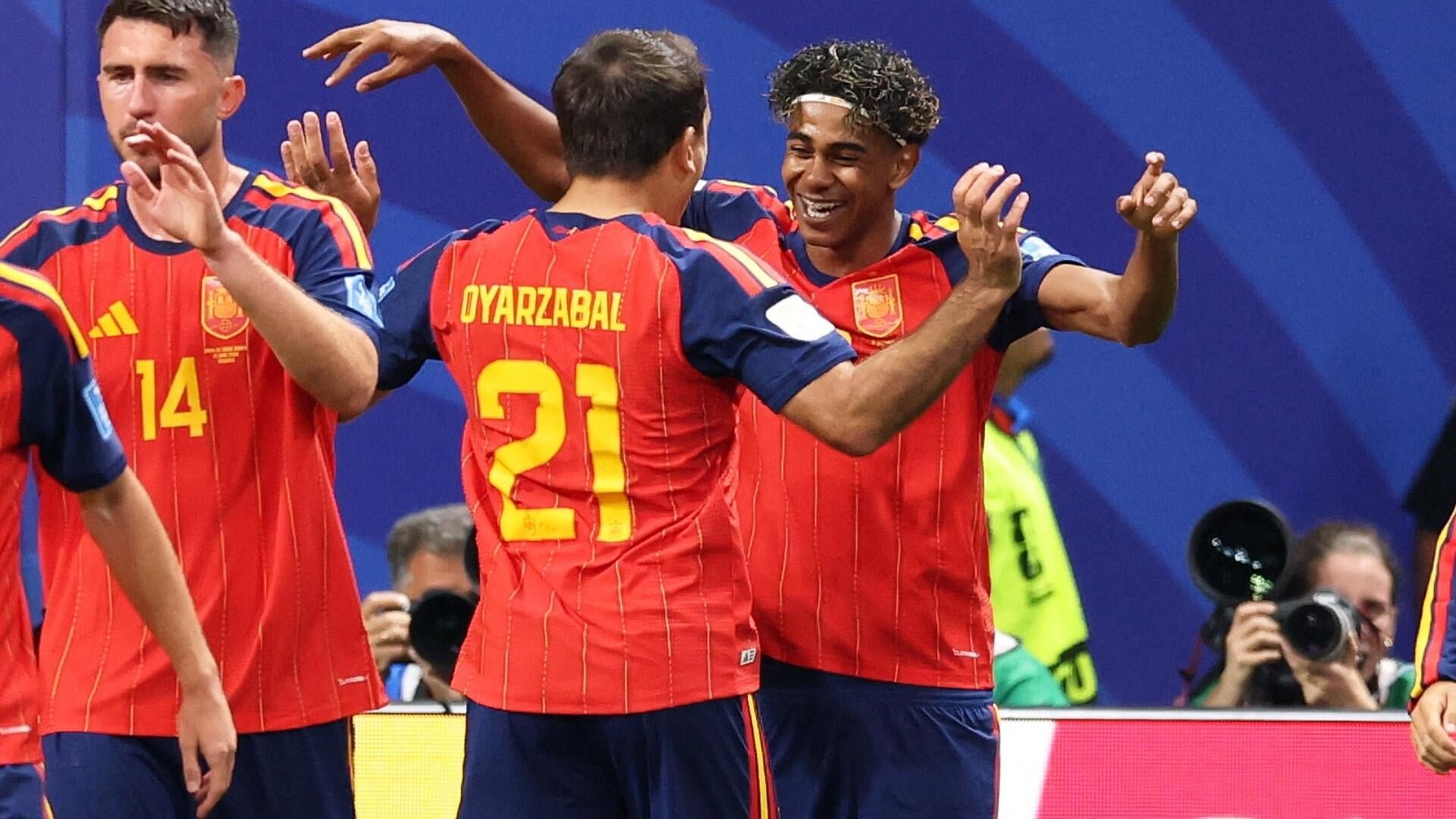
Spain are through to the quarter-finals of the 2026 World Cup after a controlled 3-0 victory over Austria on 2 July 2026, with Mikel Oyarzabal once again the difference-maker in a knockout fixture. The result, confirmed by full-time in the late evening UTC, sends La Roja deeper into a tournament they arrived at as one of the favourites and continues a pattern in which Oyarzabal has scored when Spain have needed him most.
Austria, by contrast, exit at the round-of-16 stage. They had navigated a tricky group to reach the knockouts, but the gap in composure and finishing in front of goal told over ninety minutes in front of a heavily pro-Spain crowd.
How the match was won
Spain opened the scoring before the break and never looked back. The second half was defined by two moments: a sweeping team move finished off by Álex Baena in the 66th minute, and a late Oyarzabal double that put the result beyond any doubt. The first of Oyarzabal's goals came in the closing stages, with the third arriving in the 89th minute, sealing a comprehensive scoreline and, more importantly, passage to the next round.
The performance was the kind Spain's recent tournament sides have made their trademark: patient possession, vertical passing at the right moments, and a forward line willing to stretch opponents. Baena's strike was the kind of goal Austria's defensive block could not prevent — a quick exchange on the edge of the area finished low and into the corner. Oyarzabal's second, the 89th-minute effort, was the goal of the night: a forward's finish, taken early, that ended the game as a contest.
Oyarzabal, the recurring theme
If there has been a through-line of Spain's tournament, it is the Real Sociedad captain's knack of appearing in the right place at the right time. BBC Sport's coverage of the match framed him as the side's "most decisive player" — language that captures what the statistics and the eye-test both suggest. He does not start every move, and he is not the face of the squad in the way younger attacking teammates are, but when Spain need a goal, the ball has a habit of finding the number nine.
That profile is not an accident. Oyarzabal has spent his career in a system at club level that asks him to time his runs, hold the width when required, and arrive in the box unannounced. The same traits translate directly to international football, where Spain's wide creators and central midfielders generate enough chances that a poacher of his calibre is rarely going to waste them.
What the win tells us about Spain — and about Austria's ceiling
Austria arrived at this knockout tie on the back of a disciplined group stage, but the structural problem they have faced across the last two major tournaments is straightforward: they can keep games tight for sixty minutes, but they lack the individual quality in the final third to punish a side of Spain's calibre when the game opens up. Spain do not need many chances; they need only the right ones. Austria needed to be near-perfect, and were not.
For Spain, the more interesting question is rotation. With the squad depth they travelled with, the manager can afford to manage minutes through the knockouts, and Oyarzabal's form gives him the option to start or to bring his captain on as an impact substitute in the next round. Both routes have worked in this tournament already.
Stakes, and what comes next
Spain's last-eight opponent will be set by the conclusion of the surrounding round-of-16 ties. Whoever it is, the pattern of the tournament suggests Spain will be favourites; Oyarzabal's record in this competition suggests he will be the one they turn to when the tie is in the balance.
Austria, meanwhile, leave with a campaign that justified their place in the knockout draw but stopped where Austrian sides tend to stop at major tournaments — one round further than the group stage, and not quite far enough. The challenge for the next cycle is converting competitive group-stage showings into a knockout scalp of a side in the world's top six.
How Monexus framed this: the wire coverage focused on the scoreline and Oyarzabal's headline role; this piece reads those two facts together — Spain's patient structure and a striker who keeps arriving at the right moment — as the same story.
Wire provenance
This editorial synthesis draws on the following public wire/social posts:
- https://t.me/wfwitness
- https://t.me/tasnimnews_en
- https://t.me/tasnimnews_en