USMNT's Bosnia win is short on elegance, long on consequence
A red card, a marginal VAR decision and a first knockout win since 2002: the U.S. cleared Bosnia-Herzegovina 2-0 in Santa Clara, but the lasting story is what the result exposes about the squad Pochettino is still building.
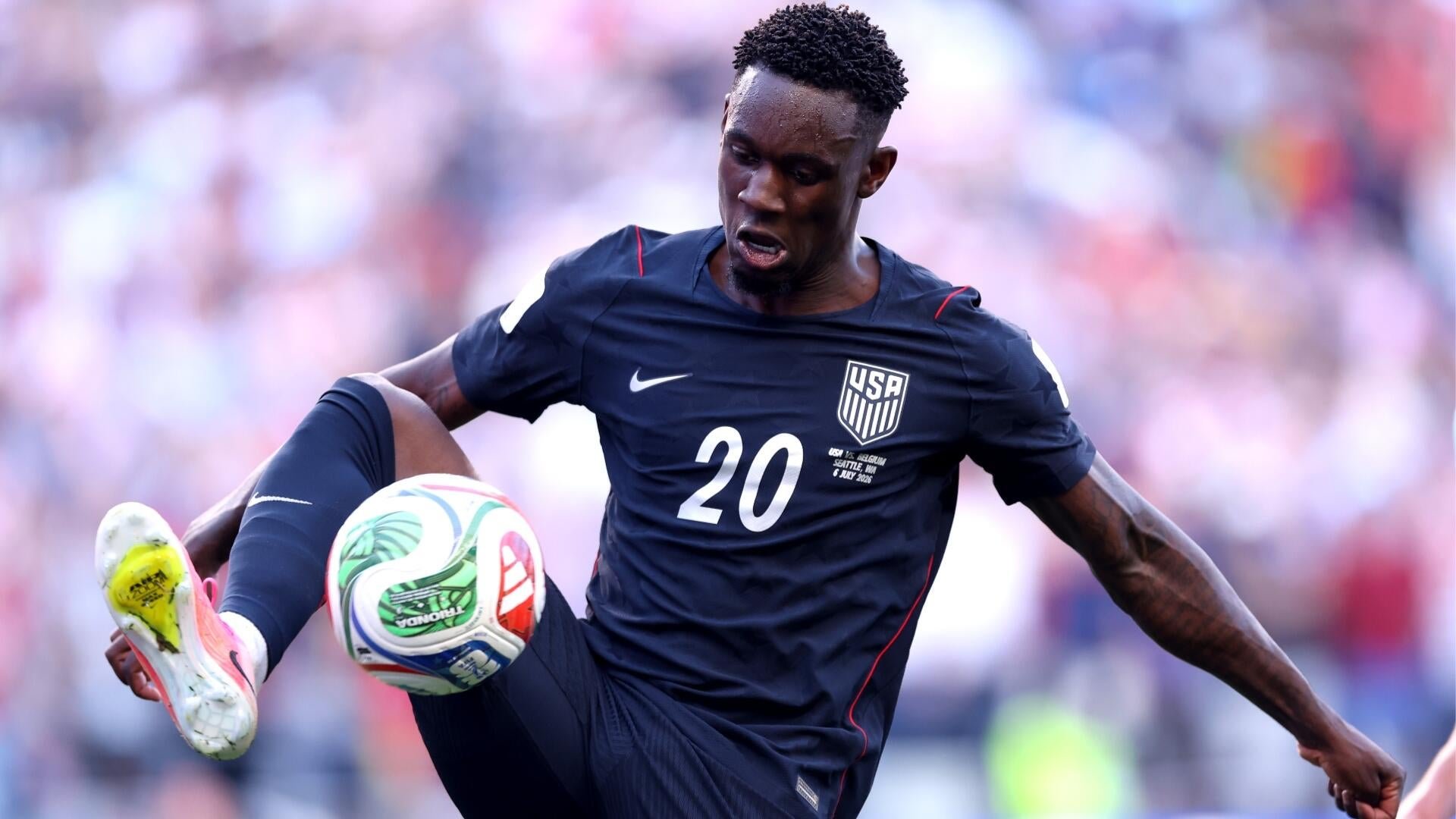
The United States men's national team beat Bosnia-Herzegovina 2-0 at Levi's Stadium in Santa Clara late on Wednesday, advancing to the World Cup round of 16 in front of a home crowd. The scoreline reads comfortably. The match did not. A first-half opener from Folarin Balogun, an early second-half sending-off for the same forward and a late insurance goal — all played under a video-assistant-review dispute that has already begun to feed the post-match discourse — left the U.S. with a result that matters less for how it was built than for what it represents on the bracket.
This Monexus staff piece reads the Bosnia game as both a milestone and a stress test. The milestone is real and overdue: it is the United States' first knockout-stage victory at a men's World Cup since 2002, a run of five tournaments without one. The stress test is what the performance around the scoreline exposes about a Pochettino side still finding its competitive ceiling. The U.S. finished the match a man down, contested the second half on its own terms, and had to absorb a VAR decision its own camp disputes. None of that is a complaint. All of it is a clue.
What actually happened at Levi's Stadium
Bosnia-Herzegovina arrived cautious and low-block; the U.S. probed without piercing through the opening half-hour. The breakthrough came when Balogun, leading the line, finished a chance inside the box to give the hosts a 1-0 lead late in the first half, a goal that settled the stadium and gave the U.S. the kind of clean, early-tournament lead it rarely managed in the 1990s and 2000s against organised European sides. According to BBC Sport's write-up of the match, the half-time state of play suggested the U.S. had found a route past a defence willing to absorb pressure without offering much on the break.
The second half is where the night turned. Balogun, already on the scoresheet, was shown a red card early in the period, leaving the U.S. to play sixty-plus minutes with ten men. ESPN's reporting records a foul that, on first viewing, looked careless; on second, looks contestable. A former Premier League referee writing for the network argued afterwards that the protocols around the decision were misapplied and that the card should not have stood. The U.S. then absorbed pressure, controlled territory, and scored a second late in the half to put the result out of reach. CBS Sports's match file characterised the evening as the USMNT "refusing to blink," a useful phrase for a side playing for sixty minutes a man down against a team with nothing to lose.
Why the red card will not go away
The VAR decision has already begun to calcify into a talking point, and it will follow this team into the next round. ESPN's dedicated VAR review frames the issue plainly: the on-field call was for a foul; the video review had a narrow job — was the contact cynical, was it a clear goalscoring opportunity, was the threshold for intervention met? — and the broadcast analysis suggests the answer, on most readings of the law, was no. The U.S. may or may not pursue the matter formally; either way, the league's disciplinary apparatus will move on. What stays is the optics: a side already a man down for an hour of knockout football, still winning.
This is the part of the night that does the most work. World Cups are decided by which squad can absorb an adverse call and continue producing. The U.S., for three matches now, has shown a capacity to play through tactical and personnel disruption in a way earlier American squads often did not. Pochettino's bench, his willingness to use it, and the calm of the centre-backs under sustained Bosnia possession are not glamorous details. They are the difference between going home in the round of 32 and reaching the round of 16 for the first time since South Korea and Japan.
The longer arc: what this team still has to prove
This result does not, on its own, move the U.S. into the conversation of tournament contenders. The draw, the seeding and the bracket will. The opponent profile widens with each round, and the red card — even if the protocols were misapplied — is the kind of cumulative officiating noise that compounds over four matches in three weeks. BBC Sport's dispatch noted that Bosnia-Herzegovina looked "lacklustre," an honest summary of a side that travelled a long way to sit deep and wait for something that never came. The U.S. will not find many round-of-16 opponents this passive.
The Pochettino tenure was sold on a tactical fluency this match only intermittently delivered. There were long spells of sterile possession, moments of direct running that produced the opener, and a structural flexibility when the side dropped into a back five. The next opponent will test whether the same shape can absorb pressure from a team willing to attack it, rather than just absorb attacks from one willing to defend. That is the open question the Bosnia performance has not answered.
Stakes, and what stays unclear
In the short term: a home World Cup, a favourable draw, a goalkeeper in form, and a side that has now won three matches and not lost inside ninety minutes. In the medium term: a generation of American players that has spent two cycles getting bounced at the group stage, and is now a single round-of-16 win from matching the deepest run of the modern era. The stakes are asymmetric: a loss, and the discourse pivots immediately to whether the Pochettino project has plateaued. A win, and the bracket tilts, the squad gains a week's recovery, and the questions about midfield control become manageable instead of defining.
What remains genuinely uncertain is the second goal. The sources cover Balogun's opener and the late insurance strike without specifying the scorer or the assist sequence in detail; the published match files describe a "2-0" line without naming the second goalscorer. That gap is small but worth flagging. The VAR red card will also continue to attract scrutiny, and a formal protest — if one is filed — could reshape the narrative around this fixture within the tournament's own internal review process. The performance itself sits somewhere between gritty and unconvincing, depending on which minute you rewind to. Either way, the round-of-16 draw is what the U.S. now waits on, and that is a sentence American fans have not been able to write since 2002.
This piece was framed as a stress test rather than a celebration: the source material supports the milestone but points in several directions on the merit of the performance. Where the wire consensus runs hottest — on Pochettino's bench management, on the VAR threshold, on Balogun's duel — we have run the argument both ways and let the result, not the rhetoric, carry the headline.