Russia's overnight strike on Kyiv reads less like a battlefield move than a signal
Thirteen dead and nearly ninety wounded in a single overnight barrage. The pattern of escalation — and the diplomatic silence around it — tells its own story.
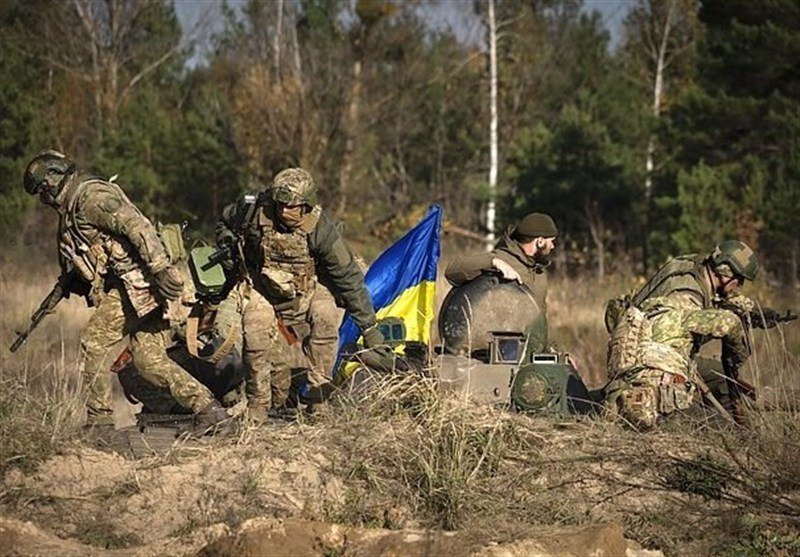
Thirteen people are dead and nearly ninety wounded after Russia struck Kyiv overnight into 2 July 2026, with rescuers still pulling survivors — including a 15-year-old girl and her family — from the rubble of an ambulance station and adjacent residential blocks. The toll rose across the morning, from eleven dead at 05:39 UTC to thirteen by 06:51 UTC, a cadence that tells you everything about the scale of the barrage and almost nothing about what comes next.
Kyiv Post reported the rising casualty count and the ongoing rescue operation as the morning unfolded, citing an ambulance station among the struck sites. Ukrainian outlet TSN carried parallel reporting on the same strike. What neither wire can tell you is why Moscow chose this night, this city, this combination of civilian infrastructure. That is the silence worth listening to.
The shape of the escalation
Russia's long-range strike packages against Ukrainian cities have followed a recognisable curve since 2022: large barrages timed to diplomatic moments, weapon deliveries, or domestic political anniversaries inside Russia. Overnight strikes on the capital carry an outsized signalling weight precisely because the international press corps, the diplomatic missions, and the camera infrastructure are already there. Striking Kyiv is striking the room where the war is being discussed.
The 2 July attack hits at a moment when Western attention is divided — summer recesses in several parliaments, election cycles in others, and a global news cycle dominated by Middle East escalation. The arithmetic of coverage is unforgiving: a residential block in Kyiv competes for column-inches with whichever crisis is trending on a given Wednesday.
The framing that protects the aggressor
There is a familiar rhythm to how these strikes get discussed in the Western press. Within hours, the language drifts toward "tit-for-tat" and "mutual escalation" — as if two evenly matched parties were exchanging volleys rather than one country systematically targeting the civilians, infrastructure, and emergency services of a smaller neighbour. A strike on an ambulance station is not a counter-battery action. A residential block is not a military depot. Calling it "tit-for-tat" does not make the framing accurate; it makes the framing comfortable.
The plausible alternative read — and it deserves serious airtime — is that Russia has calculated the diplomatic cost of these strikes is now lower than at any point in the past eighteen months. That calculation is not speculation; it is what the pattern of escalation implies. When an aggressor's behaviour intensifies while the international response remains procedurally consistent, the aggressor has rationally concluded that the threshold has moved.
What the structural frame actually says
In an environment where the dollar-centred financial architecture is itself under strain, and where several capitals are actively shopping for an alternative settlement system, the credibility of any rules-based order rests on whether violations carry consequences commensurate with the violation. Three years into a full-scale invasion, the kinetic record is the diplomatic record. Strikes on ambulances in Kyiv are not an aberration from the diplomatic trend; they are the diplomatic trend, expressed in rubble.
Coverage that defers to the language of official spokespeople without interrogating the gap between stated commitments and observed behaviour is part of the mechanism that lets the threshold move. The pattern is simple: atrocity, statement of concern, sanctions package, return to baseline. Each cycle widens the space in which the next atrocity becomes possible.
What remains uncertain
The sources available as of 06:51 UTC do not specify the weapon mix used in the strike — whether cruise missiles, ballistic missiles, Shahed-type drones, or a combination — nor do they confirm whether the 15-year-old girl and her family have been recovered alive. The death toll has moved twice in roughly seventy minutes, which means the final figure will almost certainly be higher. Ukrainian authorities have not yet attributed a strategic rationale; Russian sources have not commented in the items available. The honest position is that the tactical picture will sharpen over the next 24-48 hours; the strategic picture — what this strike was meant to communicate and to whom — will take longer to read.
The serious point
Thirteen dead. Nearly ninety wounded. An ambulance station. A 15-year-old still under the rubble. If the international response to this night is procedurally indistinguishable from the response to the previous night, and the night before that, then the threshold has moved, and the next strike is already being planned. That is the lesson of three years of war: not that escalation is inevitable, but that it is permitted. The two are different words for the same outcome.
— Monexus framed this as a signal-reading piece rather than a casualty report. The wire count is the lede; the diplomatic silence is the story.
Wire provenance
This editorial synthesis draws on the following public wire/social posts:
- https://t.me/Kyivpost_official/
- https://t.me/Kyivpost_official/
- https://t.me/TSN_ua/