Russia's Overnight Strikes on Kyiv Remind the West That 'War Fatigue' Is a Luxury Kyiv Cannot Afford
Russian ballistic and cruise missiles hit residential districts of Kyiv in the early hours of 2 July 2026, with Mayor Vitaliy Klitschko reporting trapped residents and a rising casualty toll — a reminder that calls for de-escalation in Western capitals track no reality on the ground in Ukraine.
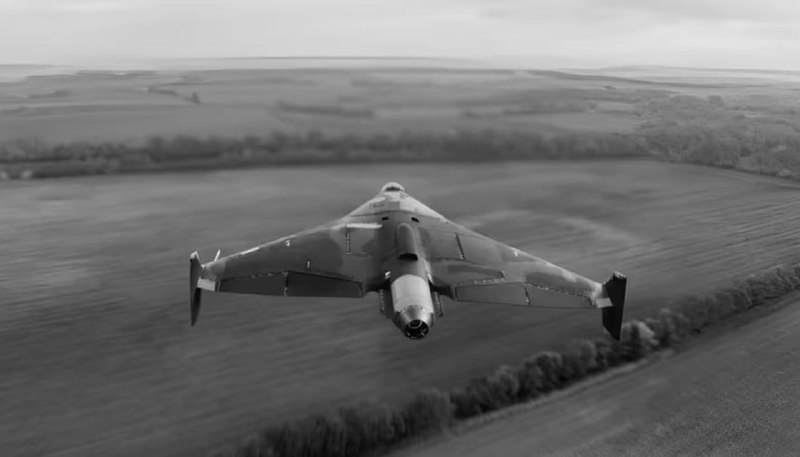
Kyiv took another direct hit in the early hours of 2 July 2026. According to a Telegram post by the Ukrainian outlet TSN at 01:14 UTC, Mayor Vitaliy Klitschko reported that residents were locked inside their homes after the Russian strikes and that the casualty count was still climbing. A separate TSN message at the same timestamp, attributed to a Ukrainian official identified as Tkachenko, said a residential building had been destroyed and a high-rise was on fire. A third post, at 00:56 UTC from the channel @intelslava, described "huge fires in Kyiv" caused by "Russian ballistic and cruise missile strikes."
The story these three brief wire items tell is the same one Kyiv has been telling for more than four years: the missile offensive against Ukrainian cities has not slowed, and the only thing that changes from night to night is the postcode. That is the operative fact beneath Western debates about war fatigue, cost ceilings and "strategic patience." It deserves more column-inches than it is currently getting.
What the wire actually shows
The public accounting on this strike is thin, but its contours are familiar. A combined Russian ballistic- and cruise-missile salvo was directed at Kyiv. Multiple residential structures were hit, fires were burning across more than one district, and emergency services were dealing with people trapped inside damaged buildings. Klitschko's name attaches to the operational update; Tkachenko's attaches to the destruction of a specific residential block. None of the three source items gives a consolidated casualty figure, a weapon count, or a list of intercepted missiles — those numbers will arrive, if at all, in daylight statements from the Ukrainian air force and the Kyiv City Military Administration.
The framing in Russian-aligned channel @intelslava — "huge fires in Kyiv" attributed to "Russian ballistic and cruise missile strikes" — is broadly consistent with the Ukrainian reporting, though stripped of its human dimension. The two TSN posts, by contrast, lead with residents trapped inside buildings and a rising toll. Both belong in the record; one cannot substitute for the other.
The framing problem this strike exposes
In Western commentary, language around the Russia–Ukraine war has drifted towards vocabulary drawn from consumer finance: sustainability, escalation management, exit ramps. The argument runs that Kyiv's allies have given generously, that stockpiles are finite, and that the political bandwidth for further transfers is narrowing. Each of those claims is arguable in the abstract. None of them are visible from a Kyiv apartment block struck at 01:14 local time.
Coverage routinely defers to the language of official spokespeople, and the official spokespeople most quoted on this story are the ones negotiating the next budget cycle. Ukrainian officials appear in the closing paragraphs, after the analytical frame has already been set. The result is a steady westward drift of attention at precisely the moments when Russian strikes on civilians are intensifying.
What "fatigue" actually costs
Stakes are concrete. If Western capital flight from Ukraine continues at the pace implied by recent commentary, the Ukrainian air-defence budget — already stretched across dozens of missile types, interceptors and legacy Soviet systems — will get thinner in 2027 than in 2026. That arithmetic is not theoretical; it shows up in the live hours of a city under missile attack. The same pattern repeats at every layer: artillery ammunition, drone intercepts, glide-bomb kits, mobile air-defence around critical infrastructure. Each is a budget line that a finance ministry in Frankfurt or Washington can choose to deprioritise; each translates, inside Ukraine, into a building that burns.
The counter-argument — that accelerating Western support risks direct confrontation with Moscow — deserves to be heard on its merits. Moscow has shown no comparable restraint in choosing its targets. Russian strikes on residential districts are not a response to weapons deliveries; they are a baseline Russian doctrine of force projection against Ukrainian population centres. Treating them as the dependent variable in a Western policy equation inverts the causal arrow.
What remains uncertain, and what doesn't
The biggest unknowns sit around the edges: the full casualty figure for this salvo, the type and number of missiles fired, the share intercepted by Ukrainian air defence, and whether the night was part of a single concentrated barrage or a sustained campaign. The three source items in this cluster do not resolve those questions, and it would be dishonest to pretend they do.
What does not require further evidence is the basic pattern. Russian missile and drone strikes on Ukrainian residential infrastructure are continuing. Ukrainian emergency services are continuing to respond. Western commentary is increasingly framed around domestic fiscal limits rather than Ukrainian operational ones. Each of those facts is independently verifiable; each has policy implications that are not being matched, in real time, by the rhetoric of Western capitals. That gap — between the temperature in Kyiv and the temperature in the editorial pages — is itself the news.
Desk note: Monexus frames this strike from Ukrainian primary reporting first, with the Russian-aligned channel cited explicitly for what it does and does not show. We have declined to repeat Western wire framings that treat support levels as a financial-stress question rather than a civilian-protection one.
Wire provenance
This editorial synthesis draws on the following public wire/social posts:
- https://t.me/TSN_ua
- https://t.me/TSN_ua
- https://t.me/intelslava