Russian strikes target Ukrainian grid as Ka-52 loss underscores attritional air war
Overnight Russian missile and drone strikes hit Ukraine's energy system on 2 July 2026, while Russian-aligned channels acknowledged the loss of a Ka-52 attack helicopter, the latest data point in a grinding attritional air campaign.
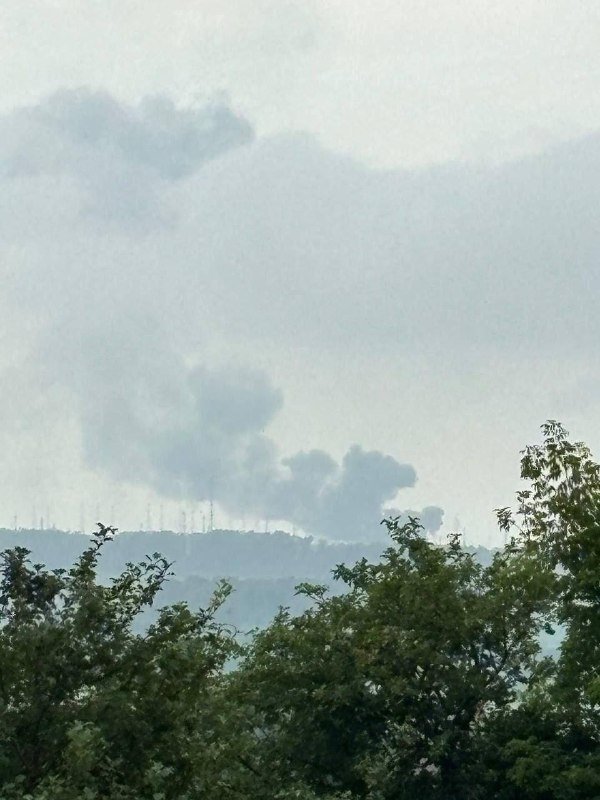
Russian missile and drone strikes hit Ukrainian energy infrastructure overnight on 2 July 2026, Ukrainian outlets reported, knocking out power across multiple regions and putting scheduled outage regimes under immediate strain. The attack was the latest in a pattern of grid-targeting strikes that has run for more than three years of full-scale invasion, and it landed on the same day that Russian-aligned Telegram channels acknowledged the loss of a Ka-52 "Alligator" attack helicopter, an aircraft that has been one of the more visible symbols of Moscow's air effort since 2022.
The pattern on display is not new, but the cadence is tightening. Strikes on transformers and generation capacity, followed by rolling blackouts, followed by another wave — this is the routine that Ukraine's energy operators have been forced to normalise, and the routine that Russian planners keep returning to. The Ka-52 loss, reported in parallel, is a smaller data point but a useful one: it shows that the air war is producing wreckage on both sides, even if the reporting asymmetry between the two belligerents remains stark.
What hit the grid, and where
According to a 10:14 UTC Telegram post by the Ukrainian outlet TSN, the Russian attack damaged the energy system across multiple oblasts, with the post directing readers to a live tracker of where power had been cut and whether scheduled outage regimes would hold through the day. TSN did not specify, in the headline item, which regions were affected or which generation or transmission assets had been hit. The framing — damage, scheduled outages, uncertainty about the day's regime — is consistent with how Ukrainian outlets have covered previous waves: acknowledge the strike, surface the operational consequence, point readers at the dispatcher.
The detail matters because the Ukrainian grid has been reconstituted several times since the first wave of strikes in the autumn of 2022. Distribution-level repairs, mobile substations, and dispersed generation have shortened the gap between an attack and a partial return to service. But generation capacity is harder to replace than distribution, and thermal and hydroelectric plants in particular take longer to bring back online after a direct hit. The TSN item does not specify which class of asset was struck on this occasion, and the sources do not yet disaggregate the damage.
The air-war ledger: one Ka-52 down
At 10:04 UTC, the Telegram channel ClashReport posted that Russian forces had "reportedly lost" a Ka-52 attack helicopter. One minute later, at 10:03 UTC, the channel noel_reports — citing Russian sources — confirmed the loss, with the qualifier that the circumstances surrounding the incident remained unclear. Both items are short, both lean on Russian-side reporting, and neither attributes the downing to a specific Ukrainian system.
That reporting asymmetry is itself the story. Ukrainian air-defence claims tend to be issued through official channels and tend to specify the system — a man-portable air-defence system, a mobile surface-to-air missile battery, a drone interception — and the platform claimed. Russian-side losses, when acknowledged at all, are usually reported by milbloggers and Telegram channels before they are confirmed by the Russian Ministry of Defence, and they are often described in deliberately opaque language. The Ka-52 is a known quantity on this ledger: a twin-rotor, side-by-side cockpit attack helicopter designed for battlefield support, used extensively in the early phase of the invasion and repeatedly documented as lost to Ukrainian small-arms fire, man-portable missiles, and drones over the course of the war.
The honest read of two near-simultaneous posts is that something happened to a Russian Ka-52 on or before 2 July 2026 — a crash, a shoot-down, a maintenance incident — and that the operational cause has not yet been established by anyone willing to put their name to the assessment. That is the standard evidentiary posture for an early-stage loss report and should be treated as such.
Counterpoint: what the Russian-side framing leaves out
The Russian-aligned channels that surface these losses typically frame them as the cost of doing business, or as evidence that the airframe in question was already being withdrawn from service. That framing is structurally identical to how the Russian Ministry of Defence handles Ukrainian equipment losses in its daily briefings: a tally, a category, and a movement on. The Ukrainian framing of Russian losses tends to be more specific — system, location, method — because Kyiv's information environment rewards granularity, while Moscow's rewards opacity.
The structural point is that neither side's loss reporting is a clean dataset. Each side has incentives to over-claim enemy losses and under-state its own, and Telegram channels on both sides amplify the framing that suits their audience. A reader who sees one Ka-52 confirmed loss in a day should not extrapolate to a fleet-level attrition rate from that single data point; the more honest read is that the war is grinding down Russian rotary-wing capacity at a pace that is consistent with three years of combat operations, with each individual loss producing a small but cumulative effect on sortie generation.
What this sits inside
The combination — a grid strike and a helicopter loss on the same day — is a useful snapshot of the war's character at this point in 2026. The full-scale invasion that began in February 2022 has settled into an attritional contest in which Russia uses long-range fires to impose chronic costs on Ukrainian civilian infrastructure, while Ukraine uses a layered air-defence network and a growing domestic drone industry to impose chronic costs on Russian crews and airframes. Neither side has the capacity to deliver a decisive blow on the other's territory; both sides have the capacity to keep the other side paying.
The structural shift since the early phase of the war is the decentralisation of the Ukrainian response. Energy operators, regional military administrations, and a constellation of Telegram channels now provide near-real-time operational information that the central grid dispatcher would once have monopolised. The TSN item on 2 July is an example: it points readers at a tracker, names the regime in place, and acknowledges that the regime may not hold. That is the kind of public-facing operational posture that is hard to maintain under sustained attack, and that the Russian information environment is not structurally equipped to match.
Stakes
For Ukraine, the immediate stake is whether the grid holds through the working day and whether scheduled outages, where they exist, remain an inconvenience rather than a humanitarian crisis. The medium-term stake is whether repeated strikes on generation capacity will force a longer-term shift in how Ukrainian industry and households are powered — a question that European financing for distributed generation and grid hardening has tried to answer since 2023. For Russia, the stake is whether the air war continues to consume rotary-wing capacity at a rate that sortie planners can absorb, and whether the domestic political system is willing to absorb the visible signs of that consumption. The Ka-52 loss reported on 2 July is one such sign.
What remains uncertain
The sources reviewed here do not specify the exact region or asset class affected by the overnight strikes, do not name the Ukrainian system or tactic responsible for the Ka-52 loss, and do not provide casualty figures on either side. Russian-aligned channels acknowledged the helicopter loss but described the circumstances as unclear; Ukrainian outlets covered the grid strike in operational rather than strategic terms. A fuller picture — which oblasts, which substations, which air-defence system, which crew — will emerge over the coming days as official briefings, OSINT analysts, and the Russian milblogger ecosystem each apply their own incentives to the same underlying event.
Desk note: Monexus frames this as a routine data point inside an attritional air-and-energy war, not as a turning-point story. Where Russian-aligned channels are the only available source for a specific loss, the framing is hedged accordingly; where Ukrainian operational reporting provides the lead, the institutional context (energy operator, dispatcher) is named.
Wire provenance
This editorial synthesis draws on the following public wire/social posts:
- https://t.me/TSN_ua
- https://t.me/ClashReport
- https://t.me/noel_reports
- https://en.wikipedia.org/wiki/Ka-52
- https://en.wikipedia.org/wiki/Russian_strikes_on_Ukrainian_energy_infrastructure