Damascus reaches for Beirut: what Syria's new diplomatic warmth actually means
Syria's foreign minister has publicly rejected Israeli strikes on Lebanon and offered a 'new era of brotherhood'. The gesture is real — and so are the structural reasons to treat it with caution.
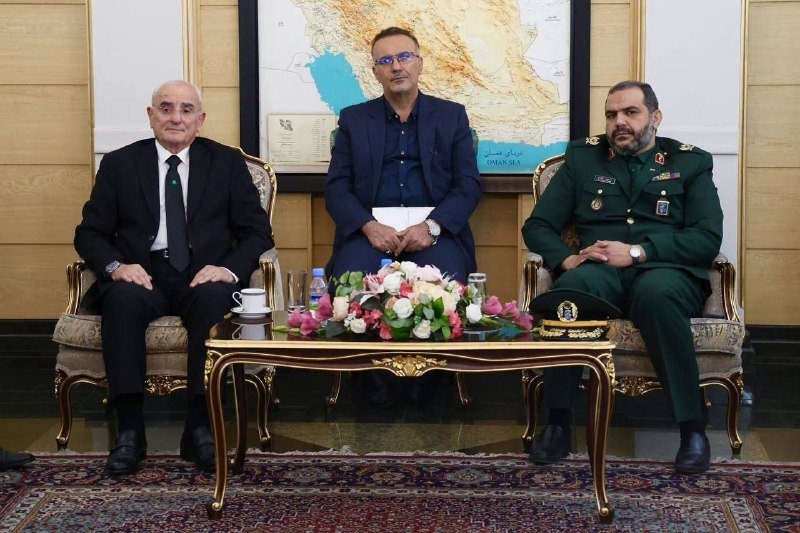
Syria's new foreign minister, Asaad al-Shaibani, used a public appearance on 2 July 2026 to do something Damascus has avoided for the better part of a decade: openly side with Beirut. According to two Telegram posts by the channel Clash Report, al-Shaibani declared that "Syria's official position is to reject all Israeli attacks against Lebanon" and that Syria also rejects "all acts of shelling and displacement that have affected the Lebanese people." A third post, by the channel wfwitness, recorded a separate exchange in which a "model of the Lebanese cedar" was presented to the Syrian foreign minister bearing the inscription: "Between the cedar of Lebanon and the rose of Damascus, a new era of brotherhood and cooperation."
The language matters. For most of the post-2011 period, Damascus and Beirut were not on speaking terms — a rupture engineered by the Assad regime's own alignments and deepened by the Lebanese political class that tolerated them. A Syrian foreign minister publicly rebuking Israeli strikes on Lebanon, in a forum where he could have said nothing at all, is a deliberate signal. It is also the kind of signal that comes wrapped in symbolism rather than substance. The cedar-and-rose gesture is diplomacy as theatre, and theatre tells you what a government wants to be seen as, not necessarily what it is.
What changed in Damascus
The most obvious answer is the government itself. The post-Assad transition in Syria has produced a foreign-policy apparatus that speaks a different regional language: warmer toward the Gulf monarchies, more careful with Iran, and visibly eager to be reabsorbed into Arab League circuits. Al-Shaibani's framing — "love, respect, cooperation, and the determination to overcome the bad legacy" — is the verbal posture of a leadership trying to write itself out of the Syrian regime's old pariah file. Lebanon, which bore a heavy direct cost from the old arrangement, is a relatively cheap place to start: the audience is sympathetic, the optics are favourable, and there is no immediate domestic constituency inside Syria powerful enough to punish the gesture.
It also helps that Lebanon has, by mid-2026, become a place where a Syrian statement of solidarity lands rather than bounces. The Lebanese state's capacity to push back against Israeli military operations has been visibly constrained; civil society and diaspora networks have filled some of the vacuum. A neighbour offering rhetorical cover is not nothing.
What the gesture is not
It is not a security guarantee. Damascus cannot, on the available evidence, project the conventional military power required to deter Israeli strikes on Lebanese territory, and there is no indication al-Shaibani was offering to try. It is not a doctrinal shift on the long Syrian file with Hezbollah either; the channels through which that relationship operated have not been publicly renounced, only deprioritised. And it is not, on its own, evidence that the Syrian state has internalised the diplomatic restraint its Lebanese interlocutors would need it to absorb.
The plausible alternative reading is that this is a low-cost, high-visibility move calibrated for an Arab and Western donor audience that wants to see the new Syria behaving like a normal Levantine state. Rejecting Israeli strikes on Lebanon costs Damascus nothing material and buys considerable goodwill in Beirut, in the Gulf, and in European chanceries that have been easing sanctions. That reading is not cynical; it is, if anything, the most flattering interpretation, because it presumes the government is acting strategically rather than rhetorically.
The structural frame
Read across the region, the pattern is recognisable. After a phase of maximum fragmentation, Levantine diplomacy is being re-laid along older civilisational lines — Arab League normalisation, ceasefire diplomacy, the quiet re-knitting of state-to-state ties that were severed in the 2010s. Damascus is doing what Tunis, Amman and Cairo began earlier: signalling that the post-2011 regional order, in which Syria was a frozen conflict and a pariah, is being quietly wound down. The new Syrian leadership wants to be a node in that network, not a hole in it. Lebanon is the test case, because Lebanon is the place where the old Syria caused the most asymmetric harm and where the new Syria's gestures are cheapest to make.
The deeper question is whether gestures convert into institutional cooperation: border management, refugee returns, trade routes, electricity interconnection. None of that is on the table yet, and none of it will be until the Lebanese state itself has the political cover at home to receive it.
Stakes
If the rapprochement holds even modestly, Beirut gains a diplomatic interlocutor it has not had in fifteen years, and the Syrian refugee file — still the single heaviest bilateral burden between the two states — becomes more tractable. If it is largely theatrical, the Lebanese political class will absorb the warmth, file the photographs, and return to its own internal deadlock, which is the more likely near-term outcome. The honest reading is somewhere in between: a real opening, deliberately modest, with the heavier questions deliberately left for another day.
Desk note: Monexus framed this from the Damascus-Beirut bilateral axis rather than the more familiar Hezbollah-Israel lens; the wire coverage of al-Shaibani's comments is still developing, and we will update if a full transcript of his remarks becomes available.
Wire provenance
This editorial synthesis draws on the following public wire/social posts:
- https://t.me/ClashReport
- https://t.me/wfwitness
- https://t.me/ClashReport/2