Tehran stages a martyr's farewell: the choreography of a managed succession
Six hundred foreign journalists have been credentialed to cover the funeral of Iran's 'martyred leader,' and state outlets are already publishing the iconography of succession in real time.
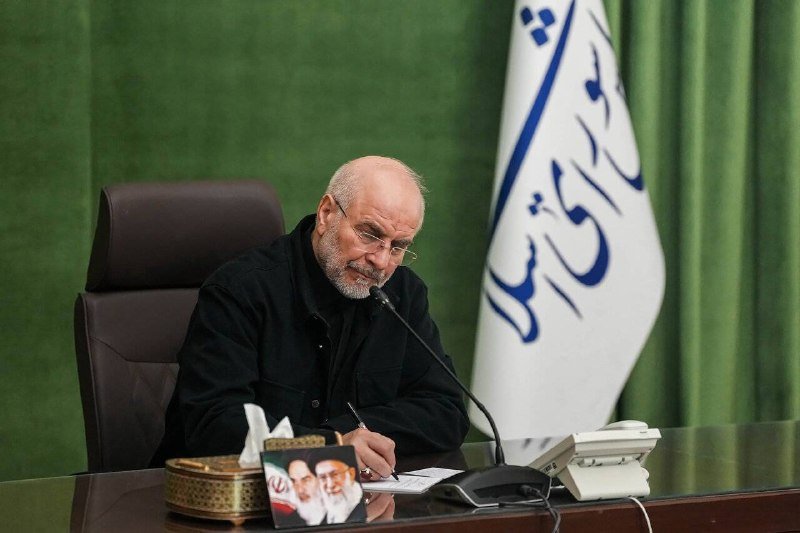
By 04:47 UTC on 2 July 2026, both Al-Alam and Fars News — two of the Islamic Republic's principal state broadcasters — were circulating the same opening frames of a hearse being prepared to carry the body of Iran's "martyred leader." The identical footage, posted minutes apart across Persian-language Telegram channels, marks the visual opening of a state-managed funeral that Iran's Ministry of Education says will draw roughly 600 foreign journalists and media representatives to Tehran over the coming days.
The choreography is the story. Within hours of the announcement of the leader's death, the apparatus that built his public image has begun rebuilding it for posterity — and for whoever inherits the office.
The imagery is already canonical
The Al-Alam and Fars News frames released in the early hours of 2 July are not raw news footage. They are composed. The vehicle is centred, draped, photographed in clean light before crowds arrive. That sequencing — preparation first, mourning second — is the same order used after the assassination of Qasem Soleimani in January 2020, when the Islamic Revolutionary Guard Corps released hours of tightly edited tribute imagery before any public gathering took place. The state's media wing understands that what a global audience photographs, and in what order, becomes the historical record.
Six hundred foreign-accredited journalists is a notable number for a country under heavy Western sanctions and with patchy press freedom ratings. It signals two things at once: the regime wants the funeral photographed, and it wants the selection of who photographs it to remain its own.
What the credential list actually tells us
Foreign press access in Iran is mediated through the Ministry of Culture and Islamic Guidance and, for security events, the relevant security ministry. Six hundred visas approved on a days-long timeline implies that the Iranian state expects — and intends — sustained international coverage, including from outlets that have been critical of the regime. That is not the same as unfettered access. The pool is large; the choreography is not.
The countervailing reading is also worth taking seriously: a hostile press corps inside Iran can produce material that escapes editorial control, and the regime has historically preferred tightly staged funerals to ones that drift. Six hundred is a number that signals both openness and confidence.
The structural read, without the slogans
A succession in a revolutionary theocracy is not merely a personnel change. It is a re-enactment of the founding compact between clerical authority, the security services, the bazaar class and the street. The iconography of a martyr's funeral — the hearse, the crowds, the foreign press pen — does ideological work. It tells Iranians who is still in charge, tells regional rivals that the system absorbs a killing strike, and tells foreign governments that the diplomatic interface will continue to function.
The early framing, with its emphasis on martyrdom rather than assassination, places the leader inside the same martyrdom register the state reserves for Soleimani and for the Iran-Iraq war dead. That register is not accidental. It tells domestic audiences that the succession is an act of continuity, not rupture.
What remains uncertain
Three things are not yet knowable from the open sources. First, the size and composition of the successor council that will manage the transition; Iranian constitutional procedure specifies a temporary council, but its membership is not in the public thread. Second, the security architecture around the funeral itself — past Iranian state funerals have been hit by hostile activity, and the credentialing of 600 foreign journalists does not by itself close that question. Third, the regional fallout: any successor inherits not only the office but the active confrontations in Lebanon, Iraq, Syria and Yemen. None of the Iranian-state sources circulated in the early hours of 2 July addresses any of these directly.
The foreign press corps will, as credentialed, do its job. The question is whether what it is allowed to photograph will be the whole story, or only the frames the state has decided the world should keep.
Wire provenance
This editorial synthesis draws on the following public wire/social posts:
- https://t.me/alalamfa
- https://t.me/farsna
- https://t.me/alalamfa