Four hundred million in the air: the small corruption story hiding inside Trump's 2025
A $400m palace jet, 21,000 reported trades, and an AI safety announcement timed to look like drift. The pattern, not the plane, is the story.
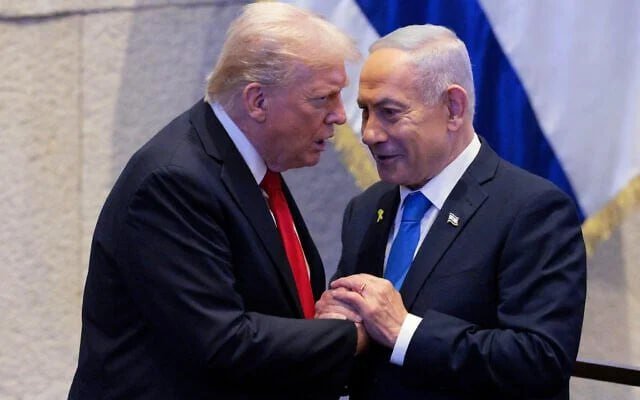
On the morning of 2 July 2026, the US president climbed the staircase of a Boeing 747 that had been converted, by every visible measure, into a flying executive suite. The plane, valued at roughly $400 million, was a gift from the government of Qatar. The first flight was treated by supportive outlets as a milestone of refurbished American grandeur. Read it instead as a receipt.
The receipts, in this case, are unusual in their variety. In the same week that the palace plane made its debut, the White House signalled it would announce new AI model safety standards "as soon as next week"; financial disclosures showed the president reporting more than 21,000 trades across eight investment accounts in 2025 — an average of roughly 80 a day; and a BBC review of the same disclosures documented the presidential money machine's smaller tributaries, from Bibles to Home Alone merchandise to branded perfume. Four stories, one presidency, and a pattern that the political class has been trained not to call by its name.
The palace problem, stated plainly
The constitutional question attached to a foreign government gifting a head of state a $400 million aircraft is older than the jet itself. The relevant clause, written by men who had just watched European courts hand crowns and palaces to favourites, is unambiguous about the principle: an officeholder should not receive presents from a foreign state without the consent of Congress. That consent has not been reported. The aircraft will, according to coverage circulating on 2 July, be transferred to the presidential library foundation after the administration ends, which converts an impermissible present into a deferred impermissible present — the gift moves from the officeholder to his archive, the constitutional question politely unpacks itself.
The friendly framing — that this is a courtesy between allies, a refurbished airframe, a logistical upgrade — elides the political economy of why Qatar would extend such a gift and what the United States receives in exchange. Doha's foreign policy operates on the long ledger: a major US air base sits in Qatar; mediation credit has accrued to the Qatari government on hostage files and regional talks; LNG offtake arrangements bind the two economies. A $400 million aircraft, in that context, is not generosity. It is a line item in a relationship that the receiving branch of government is now personally entangled in. The Emoluments Clause exists precisely because the founders understood that gifts and offices corrupt the appearance of judgment, even when they do not corrupt the substance.
Eighty trades a day
If the plane is the visible corruption story, the trade disclosures are the slow one. Reporting on 1 July tallied more than 21,000 trades across eight accounts during 2025 — a cadence that no human being is making investment decisions about. Most are best understood as positioning: the accounts run, the algorithm rebalances, the president holds the assets. But the legal status of presidential trading sits in a peculiar gap. There is no statute that flatly forbids it, and the disclosure regime — designed for a 1970s portfolio — is not built to surface conflicts in real time. The BBC's 1 July catalogue of presidential money-makers — Bibles, Home Alone, perfume — sits on top of the same foundation: a president whose brand and whose trades and whose office are run through overlapping vehicles, none of which is fully visible to voters at the moment a policy choice is being made.
The market consequence is concrete. When the president posts a position, the equities move on the post. When the administration floats a tariff line, the futures move on the float. Sixty million Americans with brokerage accounts are now trading around a single disclosed portfolio whose composition is reported, in arrears, in documents most voters will never open. That is not a market failure. It is a governance failure with a market attached.
Safety theatre, announcement-timed
The AI safety announcement, reportedly slated for the week of 6 July, lands inside this same news cycle and deserves to be read as part of it. Voluntary safety standards for frontier models are the policy outcome the industry prefers: a White House-led framework that signals seriousness without the binding force of statute. If the framework is light, the frontier labs get a competitive moat — incumbents can absorb compliance, challengers cannot. If the framework is heavy, the labs get a regulatory capture story they can sell to their boards. Either way, the announcement is timed to land in a week when the political weather is dominated by a palace plane and a trade ledger. That timing is not an accident. The best safety framework in the world, announced into a media cycle consumed by the small corruptions of the office, is a safety framework the country will not remember.
What the receipts add up to
Step back from any one of these items and the rest of the pattern sharpens. A foreign government gives the president a $400 million aircraft. The president's personal investment accounts generate tens of thousands of trades a year, in markets that move on his posts. The administration announces a major AI framework in the same week, into a press environment saturated with the other two stories. Each item is plausibly deniable on its own. The plane is a refurbishment. The trades are a portfolio. The AI framework is a policy. Together, they describe a presidency in which the institutional separation between the office, the family business, and the policy machine has thinned to a membrane — and the membrane is most useful to the people on the other side of it.
The counter-narrative is straightforward and worth airing: nothing illegal has been charged; the plane is a gift to the country, not the man; the trades are disclosed; the AI framework is overdue. Some of that is even true. The constitutional question is not whether the president broke a criminal statute. It is whether the office is being run in a way that a foreign state, a domestic brokerage, or a frontier-lab CEO would recognise as accessible on terms different from anyone else's. The Qatari government evidently does. The brokers trading around the presidential feed evidently do. The labs hoping for a voluntary framework evidently do. The American voter, watching a $400 million staircase at the same moment the disclosure forms are being litigated, is the only party at the table who is not.
The structural frame here is older than the plane. When the distance between office and incumbent narrows, and when the incumbent's assets and the office's decisions begin to share an audience, the system starts to mis-price risk in the markets and to mis-price trust in the politics. The remedy is not a single prosecution. It is the boring institutional work — disclosure in real time, statutory separation of holdings, a hard rule on foreign gifts — that the current arrangement has chosen not to do. A flying White House is, in the end, a White House that no longer needs the ground.
The desk frames the palace-plane story as an emoluments question, not a luxury question; reads the 21,000-trade disclosure as governance, not finance; and treats the AI safety announcement as timed policy, not coincidence.
Wire provenance
This editorial synthesis draws on the following public wire/social posts:
- https://x.com/sprinterpress/status/
- https://x.com/polymarket/status/
- https://x.com/unusual_whales/status/