USA into the last 16 — and into a tactical headache they chose
The co-hosts beat Bosnia-Herzegovina 2-0 to reach the knockout rounds, but a needless second yellow for Folarin Balogun hands Mauricio Pochettino a selection problem just as the bracket tightens.
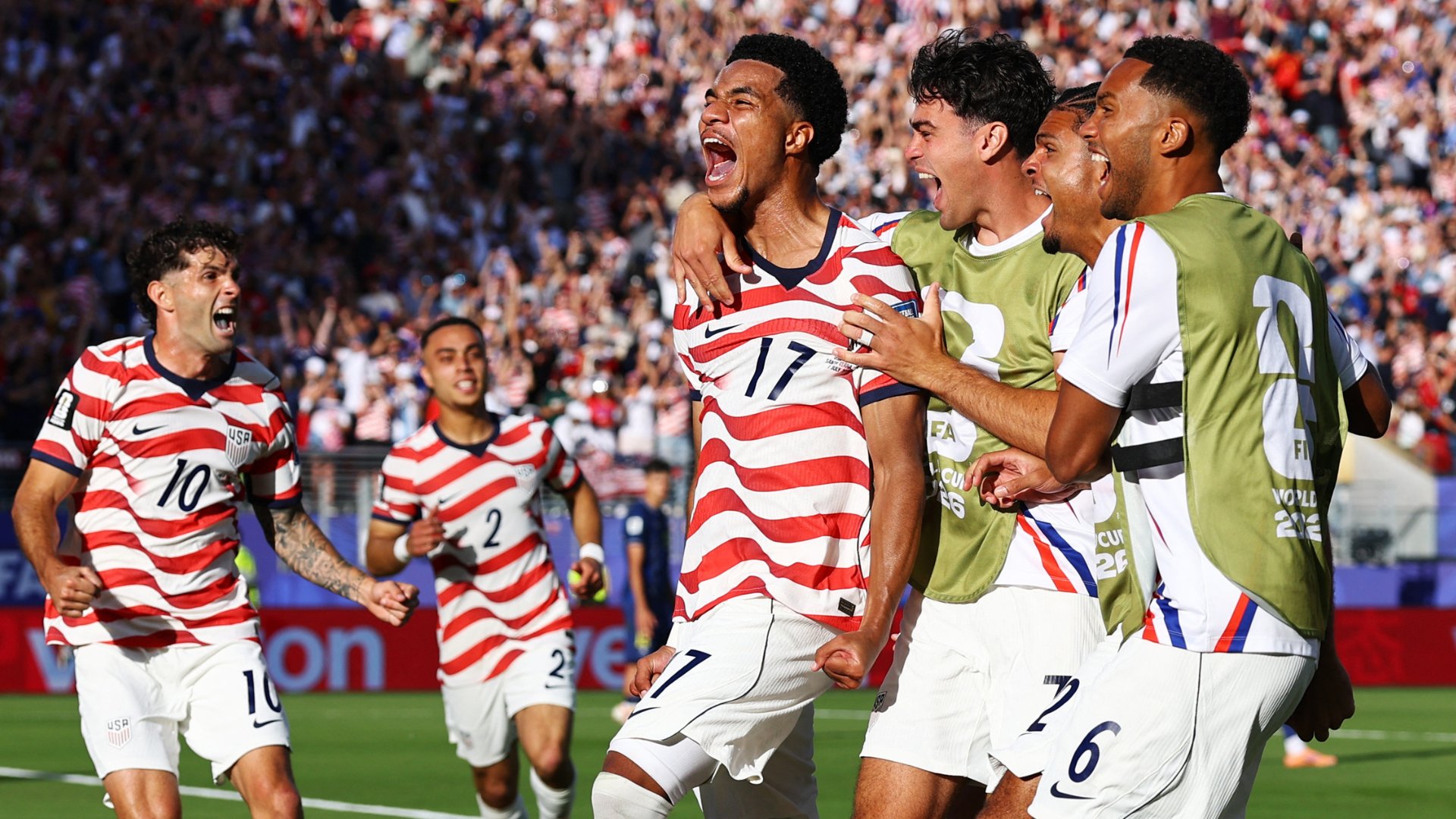
The arithmetic is straightforward, the headache less so. The United States advanced to the World Cup round of 16 on Wednesday with a 2-0 win over Bosnia-Herzegovina, but the cost of the night at SoFi Stadium may not show up on the scoreline until they meet Belgium. Folarin Balogun scored the opener and then, within the space of 45 minutes, turned from protagonist to liability. A second yellow card means the Monaco forward — on loan most recently at the club from which he takes his surname, by way of Arsenal, Middlesbrough and Reims — is suspended for the last-16 tie, leaving Mauricio Pochettino to reconstruct a front line that had, until the 70th minute, looked coherent.
This is the part of a tournament that does not show up in highlight packages. Co-hosts are meant to enjoy the gravity of home advantage; instead the United States are spending the gap between group and knockouts rebuilding a structure they had finally got working.
A win that doubles as a warning
Balogun's goal was exactly the kind of moment Pochettino's project has been waiting for. A striker, in form, finishing the kind of chance that creates a bracket. He took it. Then, in the second half, the discipline frayed: a first caution for a late challenge, a second for an altercation that the referee deemed bookable. Two yellows, one red, one match missed. The sequence is the sort Pochettino used to manage out of players at Tottenham; the fact that he could not manage it out of Balogun here, with the last-16 days away, is the story.
Belgium is not a kind opponent to face without your starting centre-forward. Even in a tournament where they have looked beatable, their back line punishes hesitation. The United States now face the choice they have been trying to avoid all summer: start a forward who is not yet at full tilt, or improvise with a winger through the middle and accept the structural cost.
The co-host economy
It is worth pausing on what this fixture was, before what it becomes. ESPN reported on 1 July that Pochettino had framed the Bosnia match as "the final of the World Cup" — the kind of line a coach uses to keep a young squad from coasting through a group stage on home soil. The framing worked in the technical sense: the United States treated the game with the urgency the bracket required. Whether it worked in the deeper sense — whether a co-host programme can really ask players to treat every fixture as a final when the calendar does not relent until mid-July — is the open question of the tournament.
A separate piece in Football, published the day before the game, made the more interesting observation. The United States are not merely playing a World Cup; they are playing for a place in the attention economy of a country that still treats soccer as an event sport rather than a habit. Every round they survive is a deposit on a future broadcast deal, a future attendance figure, a future round of expansion in Major League Soccer. The Bosnia result was, in that sense, both a sporting outcome and a piece of institutional bookkeeping.
What Pochettino actually has
Strip out the co-host optics and the question is tactical. The squad is deeper than it was in Qatar — that much is conceded even by critics who regard the manager as a temporary figurehead. But depth is not the same as clarity. The front line that finished the Bosnia game was not the front line Pochettino began with, and the front line that begins against Belgium will not be the one Balogun's red card forced the staff to plan around.
There is a defensible read here: this is what international football is, in 2026, for a team in transition. Suspended players, returning players, players in and out of form, and a manager whose task is to coax a result from the squad available on a given Tuesday. Belgium will not be deceived by the absence; if anything, they will be more cautious against an opponent who has had to adjust. The risk for the United States is not that they lose to Belgium. It is that they lose to Belgium while learning the lesson they should already have absorbed.
What it costs if the trajectory bends
The stakes are not existential. A co-host team's tournament does not end with a last-16 elimination; the project continues into the next cycle, the next cycle after that, the next World Cup on home confederation soil. But there is a difference between a tournament that ends with a learning curve and one that ends with a referendum on the manager, the federation, the federation's wider plan for the sport in the United States. The Bosnia red card, in that light, is a small event with an outsized shadow.
Pochettino will pick his team, the United States will play Belgium, and either the bracket opens or it closes. The honest summary, the morning after, is that the United States have given themselves a chance — and given themselves the harder version of the chance, in the same ninety minutes.
Desk note: Monexus treated Wednesday's result as a sporting story with structural subtext — co-host economics, squad management, the discipline ledger — rather than as a standalone highlight. The wire led on the scoreline; the more durable question is the one Balogun's red card put on the staff's desk.
Wire provenance
This editorial synthesis draws on the following public wire/social posts:
- https://t.me/france24_en