USMNT's World Cup exit hands Pochettino a reckoning he can no longer defer
A second-half red card for Folarin Balogun turned a 1-0 lead into a last-32 elimination, deepening the questions around an American project that keeps promising the knockout stage and keeps arriving late.
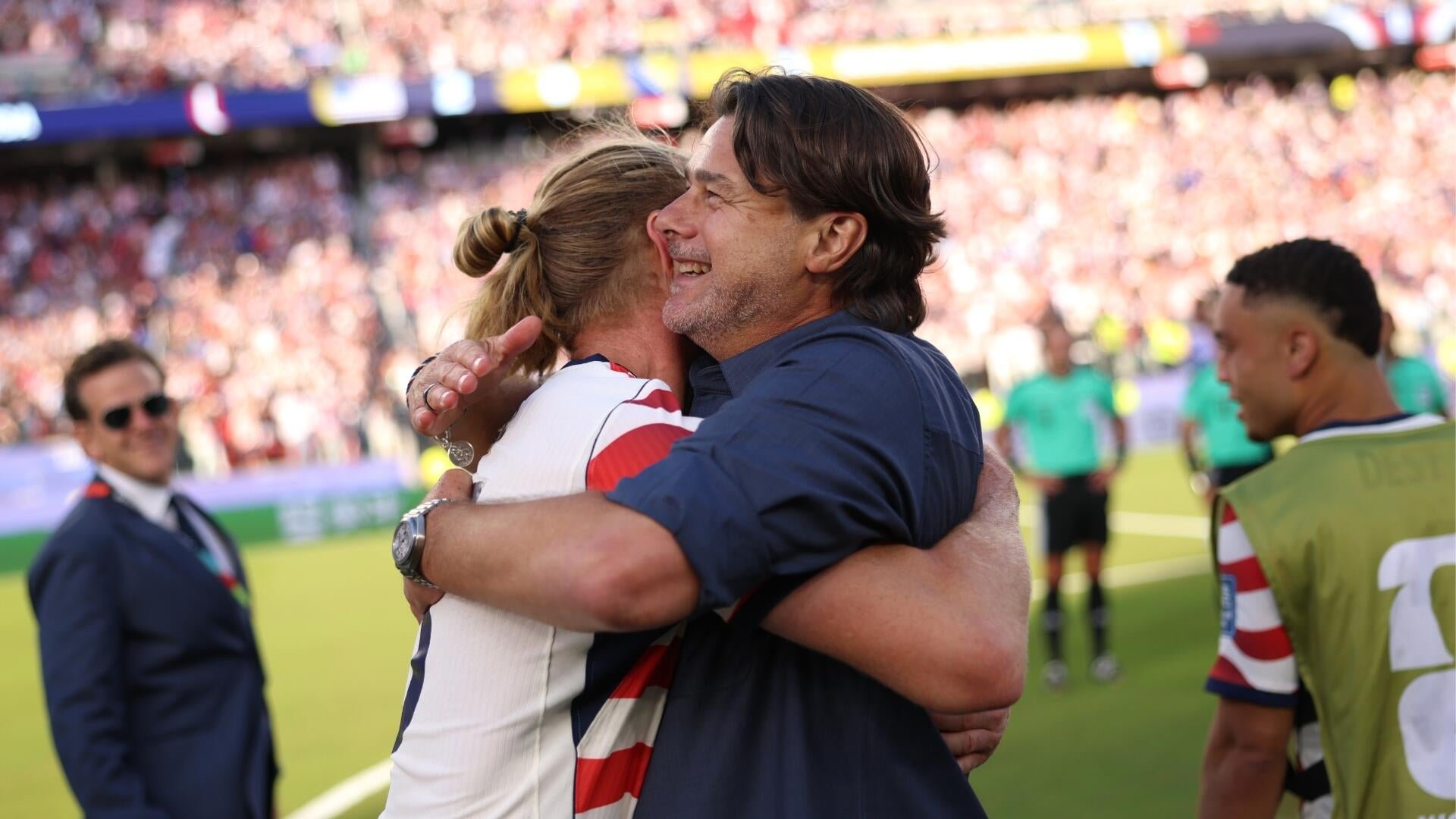
Lead
The USA led Bosnia-Herzegovina 1-0 at the San Francisco Bay Area Stadium on the evening of 1 July 2026, and for 47 minutes the night looked like the night American soccer had been waiting two decades for. Folarin Balogun had finished a move he started and Christian Pulisic, recovered from a calf injury, was back in the starting eleven. Then, early in the second half, Balogun was shown a red card and the script flipped again. By full time the United States were out of their home World Cup in the round of 32, and Mauricio Pochettino's side were left reciting the same line they have rehearsed since 2002: a generation of talent, another short tournament, the same calendar turning to 2030.
Nut graf
Elimination at this stage is not a tactical footnote. It is the second cycle in a row in which the United States has entered a World Cup as host or co-host and exited before the quarterfinals, and it lands on a coach hired to end exactly that pattern. Pochettino called Wednesday's match "the final of the World Cup" in advance; the line read as motivation at the time. It reads as a verdict now. The structural question for U.S. Soccer is no longer whether the talent pool is good enough — it plainly is — but whether the federation's preference for European-name managers and headline-grabbing attacking pieces is producing a team that can survive a knockout game when it stops being friendly.
A lead, then a sending-off, then the lesson the U.S. keeps relearning
Balogun's goal arrived shortly before half-time, the kind of forward's finish — turn, run, finish — that reminded a watching public why U.S. Soccer invested so heavily in switching the player's national allegiance. Christian Pulisic, absent from the previous outing through a calf complaint, was restored to the starting XI by Pochettino on a night in which every other choice appeared designed to communicate that the United States was treating Bosnia-Herzegovina, in their first-ever World Cup, with the seriousness of a final. The U.S. had not won a knockout game at a World Cup since 2002; that stat was the backdrop to every lineup decision, every press conference line, every CBS-predicted-XI debate.
The dismissal came early in the second half, per ESPN's match report, and the shape of the game bent with it. Bosnia-Herzegovina, who had arrived as a debutant and an underdog, did not need to do anything spectacular; they needed only to play up the field and let the numbers do their work. The last 35 minutes of open football became a study in what an American team looks like when it has stopped dictating.
The framing the federation has been selling, and the framing the game kept returning
Coverage in the run-up leaned heavily on an attention-economy reading of the tournament: the World Cup as a vehicle for converting casual viewers into permanent fans, the U.S. run as a soft-power instrument, Pochettino's appointment as a statement about how the federation wants to be perceived abroad. That framing is not wrong, and it is not invented by the press; the federation has visibly built its messaging around the idea that every televised minute is an asset. The problem with attention-economy framing is that it treats the match itself as instrumental to something else, and the match keeps refusing to cooperate. Bosnia-Herzegovina were not a vehicle for a brand campaign; they were a football team playing the biggest game in their history.
That is the missing context in most of the public-facing coverage: that the opponent had their own first-ever World Cup to defend, and that an underdog in that position is more dangerous, not less, when the favourite tilts toward them. Bosnia-Herzegovina, win or lose, take a national narrative home with them. The U.S., win or lose, take a still-image and a Nielsen rating.
Why the U.S. keeps losing the games it is built to win
The structural argument is straightforward and does not require a foreign-policy metaphor to make. U.S. Soccer has, for roughly a decade, run a programme that prioritises attacking flair imported from Europe, manager prestige imported from Europe, and a tournament posture built around group-stage moments — the goal against Portugal, the save against the Netherlands, the running-into-the-corner-flag celebration. What the programme has not consistently built is the unglamorous infrastructure of a knockout side: a settled defensive spine, a clear second-game substitution pattern, a goalkeeper hierarchy that has played together under pressure, a tactical plan for the hour after a red card. Those are the kinds of traits that separate a team that beats Mexico in a friendly from a team that survives the first time an opponent sends someone off in a knockout match.
Pochettino's appointment, in late 2024, was an explicit acknowledgement that the federation had decided prestige was the missing ingredient. The 2026 cycle suggests that prestige, on its own, does not redraw the ceiling. It changes the press clippings and the Instagram metrics; it does not change the moment in the 51st minute when the centre-back has to take three fewer touches on the ball and the referee is still reading your player's name into a microphone.
What changes now, and what does not
The likeliest near-term outcome is continuity: Pochettino is unlikely to be sacked in the immediate aftermath, both because the federation has invested in the choice and because there is no obvious successor on its shortlist. The likeliest medium-term outcome is a referendum on the European-manager model itself, the same way the 2002 cycle produced a sober pivot toward project-based coaching after Bruce Arena's run. The likeliest long-term outcome is that the men's national team enters 2030 still trying to win a knockout game at a World Cup, because the 12-year gap from 2002 to 2014 did not produce a real solution either.
The harder, less comfortable questions are the ones U.S. Soccer now has to put on the table: whether the player-development pathway is producing centre-backs, defensive midfielders and goalkeepers in the numbers a knockout side needs; whether the federation's preference for high-ceiling, high-cost forwards is crowding out the unglammer positions; whether the men's programme has, over a decade, been quietly optimised for selling highlights rather than surviving them. None of those questions are answerable in a press conference. All of them have been visible in the gap between the U.S. squad's wage bill and its knockout record for some time.
Stakes
For the players — Pulisic, Balogun, Tyler Adams, the rest — the 2026 cycle has now ended in a way that will not be undone by a friendly win in September. For Pochettino, the next four qualifiers are an audition for a job he already holds. For U.S. Soccer, the cycle ends with a near-miss that has now happened twice in a row, against a backdrop of record broadcast-rights value and the largest viewing audience the programme has ever commanded. The federation will decide, in private, whether those two curves can continue to diverge. History, so far, has not been kind to that bet.
Desk note: Monexus framed this as a structural story about a federation's choices, not a refereeing piece; ESPN and BBC match reports were used for verified facts only, and the CBS Sports and Football reads were used to document the pre-match consensus that the round-of-32 line "had not been won since 2002."