Live Wire
14:27ZKHAMENEIENIslamic Jihad chief al-Nakhalah pays respects to killed movement leader14:27ZMEGATRONROUkraine carried out Nord Stream attack, plunging Germany into energy crisis, German officials say14:26ZTASNIMNEWSTunisian representative attends memorial for late Iranian figure14:26ZDAILYNATIOInvestors plan Sh1.46 billion sugar factory in Siaya County14:24ZDDGEOPOLITGas station hit in Mykolaiv region, Ukraine14:24ZTASNIMNEWSTehran Metro to begin 24-hour operations tomorrow14:23ZTHECRADLEMArmenian parliament passes law tightening voting rules for citizens abroad14:23ZTHECRADLEMArmenian parliament passes law tightening voting rules for citizens abroad
Markets
S&P 500744.78 0.13%Nasdaq25,833 0.80%Nasdaq 10029,329 1.61%Dow527.88 1.05%Nikkei93.14 0.10%China 5031.91 0.19%Europe89.35 1.80%DAX42.31 2.67%BTC$61,809 0.35%ETH$1,730 1.81%BNB$563.89 0.56%XRP$1.11 1.24%SOL$81.06 0.67%TRX$0.3206 0.76%HYPE$69.38 6.07%DOGE$0.076 1.87%RAIN$0.0155 0.20%LEO$9.16 0.79%QQQ$712.6 1.73%VOO$684.84 0.09%VTI$368.76 0.14%IWM$297.58 0.58%ARKK$81.25 0.73%HYG$79.71 0.15%Gold$378.13 2.03%Silver$55.02 2.69%WTI Crude$103.98 0.69%Brent$39.67 0.66%Nat Gas$11.58 0.52%Copper$37.29 0.21%EUR/USD1.1399 0.00%GBP/USD1.3306 0.00%USD/JPY161.58 0.00%USD/CNY6.7890 0.00%
OPENNYSEcloses in 5h 29m
The Monexus
Vol. I · No. 184
Friday, 3 July 2026
Saturday Ed.
Updated 14:30 UTC
  • UTC14:30
  • EDT10:30
  • GMT15:30
  • CET16:30
  • JST23:30
  • HKT22:30
← The MonexusGeopolitics

Azerbaijan's parliamentary speaker lands in Tehran as the Islamic Republic buries its slain Supreme Leader

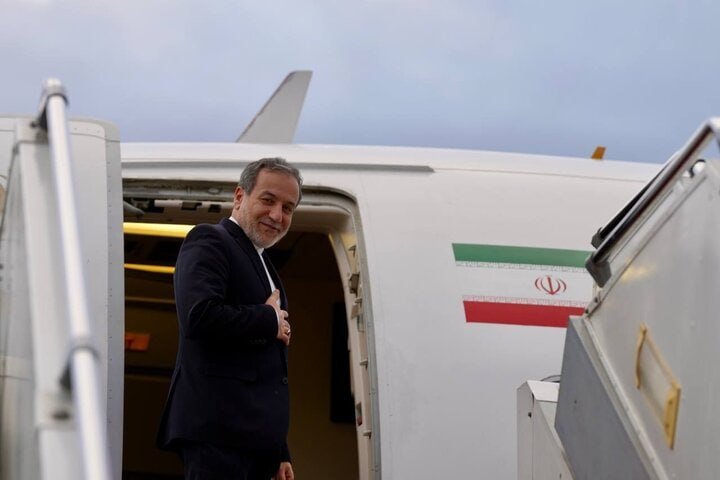
Sahibeh Ghafarova joined a procession of foreign dignitaries in Tehran on 3 July 2026 to pay respects to the martyred Supreme Leader, a visit that places Baku inside the diplomatic choreography surrounding the succession.
A flight-tracking map displays two aircraft, an Ilyushin Il-96-300 (RA-96023) at 6,850 m and another (RA-96018) at 11,285 m, traveling from Moscow (VKO) toward Tehran (IKA). @FotrosResistancee · Telegram

Sahibeh Ghafarova, Speaker of the Parliament of the Republic of Azerbaijan, touched down in Tehran on the morning of 3 July 2026 to attend the official tribute ceremony for the Supreme Leader killed in last week's strike on the Iranian capital, according to Iranian state outlets Tasnim and Fars, with corroborating posts from Middle East Spectator and the Fotros Resistance channel.

The arrival is a small piece of a much larger diplomatic choreography. Every foreign dignitary who walks into the Iranian capital this week is being read twice — once as condolence, and once as a signal of where each neighbouring state thinks the post-Khamenei settlement is heading. Baku's posture matters more than its size suggests: Azerbaijan shares a 700-kilometre border with Iran, hosts a substantial Azerbaijani diaspora community across it, and has spent the last decade building a carefully hedged relationship with Tehran that simultaneously deepened its ties with Israel and Turkey.

What the visit actually is

The Telegram traffic on 3 July tells a consistent story. Tasnim News English reported at 10:30 UTC that Ghafarova "arrived in Tehran to participate in the ceremony of paying tribute to the martyred leader of the Islamic Revolution," a phrasing that frames the visit inside the official Iranian lexicon for a leader killed in service of the republic. Fars News Agency confirmed the arrival at 11:07 UTC and distributed footage of Ghafarova paying tribute. Tasnim's Persian-language channel and the Middle East Spectator account, the latter a widely followed English-language aggregator of regional dispatches, carried the same item within minutes of each other. The Fotros Resistance channel, an Iran-aligned outlet covering regional security affairs, added the diplomatic-flag framing and tagged the post for its defence-and-resistance readership.

There is no claim in the public record, yet, of a bilateral meeting between Ghafarova and any Iranian official beyond the ceremonial. The reporting describes attendance at the tribute ceremony only. That distinction matters: a condolence visit is a routine act of regional diplomacy; a substantive working meeting would carry foreign-policy weight. As of the available reporting, the visit is the former.

Why Baku's presence carries weight

Azerbaijan under President Ilham Aliyev has threaded a difficult needle since 2020. After the second Nagorno-Karabakh war, Baku emerged as the dominant party in the South Caucasus, with Turkish military and Israeli unmanned-systems support credited by Western analysts as decisive. The country also signed a gas swap agreement with Iran in 2024 and has maintained a working relationship with Tehran even as it deepened ties with Israel. The result is one of the more plural foreign-policy portfolios in the post-Soviet space.

A parliamentary speaker is not a head of state. But a parliamentary speaker is also not a protocol-only figure. The Milli Majlis ratifies treaties and inter-parliamentary ties have their own signalling value, particularly in a system where the Iranian Majles remains a meaningful political body. The decision to send Ghafarova personally — rather than dispatching a deputy or a foreign-ministry official — signals that Baku wants the optics of senior representation, on Iranian television, at a moment when the Islamic Republic is reorganising its leadership after the killing of Khamenei.

For Tehran, the optics matter too. A procession of foreign dignitaries on Iranian state media is a domestic-political artefact as much as a foreign-policy one: it performs continuity at a moment of acute institutional stress. The Iranian framing — "the martyred leader of the Islamic Revolution" — is the official theological-political register, and every visiting dignitary who appears under that frame becomes part of that performance.

The structural read

What the wires are documenting in real time is the early choreography of an Iranian succession after a leader whose tenure spanned four decades. The diplomatic traffic at the tribute ceremony is the public-facing layer of that process. Beneath it sit harder questions: who controls the IRGC, who controls the Majles, who controls the bonyads and the bonyad-style economic empire, who succeeds as Supreme Leader, and what the new configuration will look like on nuclear posture, on regional armed proxies, on relations with Russia and China.

In that context, every small state on Iran's periphery is recalculating. Azerbaijan's calculation is unusually exposed: a long shared border, a large cross-border Azerbaijani minority in Iran, an economy whose natural-gas exports are increasingly routed through pipelines that bypass Iranian territory, and a relationship with Israel that the Islamic Republic has periodically criticised in sharp terms. Attending the tribute ceremony is the cheapest available signal that Baku intends to maintain working relations with Tehran regardless of who sits at the top of the system.

That posture is consistent with how Aliyev's government has handled earlier moments of Iranian transition stress. The 2024 gas-swap arrangement, in which Azerbaijani gas was trucked and piped into Iran's northern provinces, was framed by Baku as energy pragmatism and by Tehran as an act of neighbourly cooperation — a useful template for the present moment.

What remains uncertain

The available reporting does not confirm whether Ghafarova's programme includes any meetings with senior Iranian officials beyond the ceremony itself, nor whether the visit produced any readout on bilateral business. None of the wire items reviewed describe a joint statement. The condolence-versus-substantive-meeting distinction is therefore provisional.

There is also no public reporting yet on whether other senior Azerbaijani officials — the presidential administration, the foreign ministry, the state oil company SOCAR — have issued parallel statements. The speaker's trip is documented; the institutional reaction around it is not.

What is documented is the fact of arrival, the venue, and the framing. On those three points, the Telegram record across Tasnim, Fars, Middle East Spectator and Fotros Resistance converges.

Stakes

If the post-succession settlement in Iran tilts toward a harder-line configuration with greater IRGC weight, Azerbaijan's room for plural alignment narrows. The Israeli relationship, in particular, would come under renewed pressure. If the settlement tilts toward a more pragmatic republican-technocratic configuration, the gas swap, the border arrangements and the working diplomatic channel all survive more easily.

Either way, the funeral-week optics are the first public signalling round of the new era. Ghafarova's arrival in Tehran on 3 July is a minor but legible entry in that round.


Desk note: Monexus framed this story at the level the wires support — a senior foreign parliamentary dignitary attending a state funeral — and resisted the temptation to infer a bilateral meeting that the sources do not record. The Iranian state outlets' lexicon ("martyred leader of the Islamic Revolution") is preserved as the official framing rather than paraphrased into softer language, because diplomatic choreography is precisely what is being reported.

Wire provenance

This editorial synthesis draws on the following public wire/social posts:

  • https://t.me/tasnimnews_en
  • https://t.me/farsna
  • https://t.me/JahanTasnim
  • https://t.me/Middle_East_Spectator
  • https://t.me/FotrosResistancee
© 2026 Monexus Media · reported from the wire