Cape Verde chase history against Messi’s Argentina in World Cup knockout clash
A 525,000-strong island nation faces the reigning champions in a knockout round that will define a generation, win or lose.
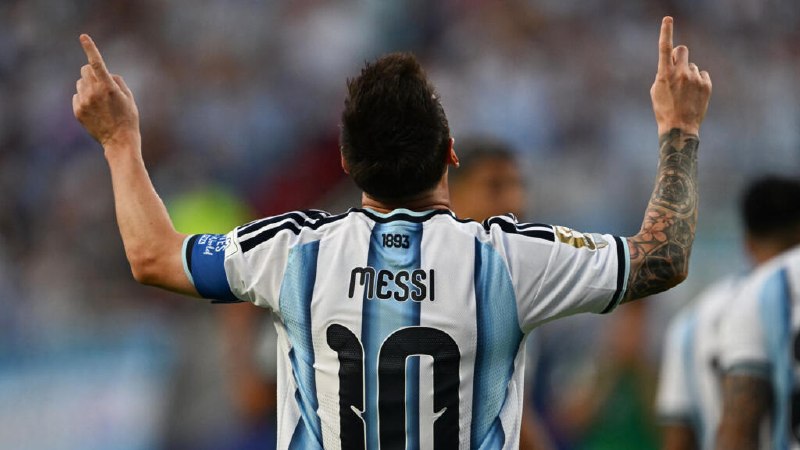
On 3 July 2026, the smallest nation ever to reach a World Cup knockout round walks onto the pitch against the reigning champions. Cape Verde — an Atlantic archipelago of roughly 525,000 people, ten inhabited islands off the coast of West Africa — faces Lionel Messi’s Argentina in a fixture that the federation itself frames as the continuation of a fairytale rather than the end of one.
The story is not complicated. A country with fewer residents than most European second-division cities has, by the morning of 3 July 2026, already done the improbable. The task ahead is to do the impossible.
The scale of the mismatch, and why it does not feel like one
Cape Verde is a small island economy whose footballing infrastructure was, until recently, a story of diaspora and improvisation. The current squad is drawn heavily from the Portuguese, French, Dutch and American second tiers — players whose passports trace back to a country many of them have never lived in. Argentina, by contrast, arrived at this tournament as defending champions and as the side whose captain has been the defining player of the generation.
And yet the framing in Praia this week is not one of being outmatched. France 24’s reporting on 3 July 2026, the most detailed English-language account of the build-up, describes the mood in the Cape Verdean camp as one of "continuing a fairytale," not as one of damage limitation. That framing matters: in knockout football, the gap between a side expecting to lose and a side expecting to compete shows up in the first ten minutes.
The numbers understate the case for confidence. Cape Verde topped a qualifying group that included continental heavyweights. They did so without a domestic professional league of any meaningful size. The pool of players available to the federation is, by the standards of elite football, vanishingly small — and yet a meaningful share of that pool is now playing week-in, week-out in European professional football, which is the only reason the trajectory has bent upward at all.
The counter-read: prestige, not progression
There is a less flattering version of the same story. A nation of Cape Verde’s size reaching a knockout round is, structurally, a triumph of diaspora scouting and dual-nationality recruitment rather than a triumph of domestic football development. The country has no top-flight league, no academy infrastructure on the scale of the European academies where its players were actually formed, and no realistic pathway to replicating this run on a four-year cycle.
That read deserves air. A fairytale is also, by definition, unrepeatable. If the federation’s ambition is to turn this appearance into a sustainable presence at the top table of African and world football — rather than a one-off media moment — then the harder work is just beginning, and the lights of this tournament will not help pay for it.
The honest version is that both readings are true at once. Cape Verde has over-performed its resource base to an almost absurd degree. It is also a one-off, and the federation’s senior leadership will know that the long-run project is academy-building, league consolidation, and retention of dual-national talent before the US and Portuguese academies snap them up permanently.
The structural frame: small nations and the World Cup economy
What Cape Verde is doing this week sits inside a wider pattern the World Cup does not usually acknowledge on its own broadcast. The tournament’s economic and broadcast architecture rewards large markets, large federations, and large audiences. The prize money, the gate receipts, the FIFA distribution formulas — none of these are calibrated for a country of half a million people to make a meaningful return on its appearance.
The deeper story is therefore one of who captures the upside of a small nation’s over-performance. When Cape Verde players win headers against Argentina, the rights-holders in the major markets monetise the highlight. The federation back in Praia gets a participation cheque. The players, mostly, return to their second-tier European clubs a little better-paid and a little more sellable.
This is not a criticism of Cape Verde’s run. It is the structural context in which every small-nation run at this tournament takes place, and it is rarely named in the broadcast commentary, which prefers the fairytale register.
Stakes, on both sides
For Argentina, the stakes are existential in a quieter way. Messi’s tournament career is, by any reasonable accounting, in its final chapter. A slip against a side ranked in the second tier of African football would not end the campaign — it would, however, end the conversation around a graceful send-off. Defending champions lose to minnows at World Cups, but it is the kind of loss that follows a team through the rest of the tournament and the rest of the cycle.
For Cape Verde, the stakes are different and more durable. A win would rewrite the federation’s bargaining position with European clubs, with sponsors, and with the next generation of dual-national players deciding which jersey to wear. A narrow loss — the most likely outcome on paper — still leaves the federation with the strongest case it has ever had for sustained investment in the structures that produced this run.
The least likely outcome, but the one Praia will plan for anyway, is extra time and penalties against the holders. Small nations do not get many nights like that. Cape Verde has earned one.
What remains uncertain
The available reporting does not specify Cape Verde’s likely starting XI, injury status of key players, or tactical shape — the pre-match detail that usually dominates build-up coverage is absent from the wires this morning. Argentina’s lineup decisions, particularly around Messi’s minutes in the knockout phase, are similarly under-reported at the time of writing. Both will firm up in the hours before kick-off, and the game itself will resolve the only question that has actually mattered since the draw was made.
This publication framed the build-up around Cape Verde’s structural achievement — a federation punching far above its resource base — rather than around Messi’s farewell narrative that most wires are leading with. The fairytale frame belongs to the players and the fans; the resource-base frame belongs to anyone trying to understand how they got here.
Wire provenance
This editorial synthesis draws on the following public wire/social posts:
- https://t.me/france24_en