Egypt's shootout win over Australia hands Gaza a rare football catharsis
Mohamed Salah's Egypt beat Australia on penalties to reach the World Cup last 16, and in Gaza — where the match was broadcast live — fans treated every goal as a small act of defiance.
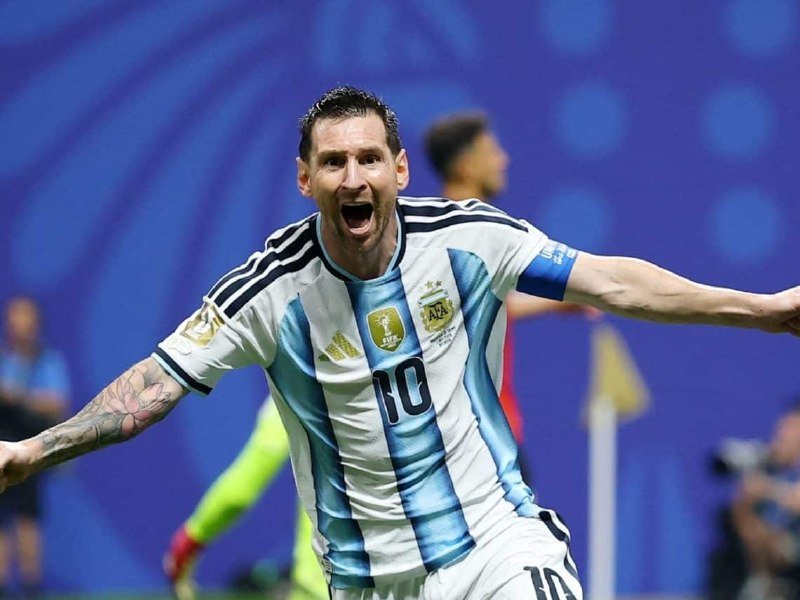
Egypt booked its place in the 2026 World Cup knockout rounds on 3 July 2026, eliminating Australia on penalties after a 1-1 draw that ran the full ninety minutes plus extra time. The final score in the shootout was not specified in the immediate reporting. The victory, sealed by a Mohamed Salah-led side in front of a heavily pro-Egypt crowd, completed a group-stage story that had looked in doubt only days earlier and earned Cairo a last-16 meeting that is yet to be confirmed.
The result was reported simultaneously by the pan-Arab broadcaster France 24 and by Egyptian and Gulf-aligned Telegram channels, with the Telegram channel @wfwitness posting confirmation of the elimination at 20:56 UTC. What made the night unusual was not the scoreline but the audience watching it from a place the World Cup's commercial broadcast partners rarely picture: Gaza. Fans in the Strip, displaced and unreachable for most of the past two years, gathered around phones and televisions to follow the match. When Egypt scored its opener, supporters spilled into streets and rooftops, an image captured in a video circulated by Middle East Eye at 20:40 UTC and viewed tens of thousands of times within hours.
A football result, and a wider reading
Strip the spectacle away and the sporting facts are routine: a knockout tie between an African heavyweight and an Asian confederation side, decided by penalties after neither team could be separated across 120 minutes. France 24's live blog noted Egypt's progression as the headline of the evening's African football coverage, framed in the language of regional pride rather than geopolitics. The Socceroos exit after a Round of 32 match that, on paper, they had every right to contest.
The harder question is why this particular result travelled so widely, and so fast, through a part of the world where football is rarely allowed to be just football. The Middle East Eye footage shows men, women and children in narrow streets clapping, ululating and holding up mobile phones. Several of those clips were filmed in daylight conditions that suggest northern Gaza, where intermittent pauses in military operations have made large outdoor gatherings possible in recent weeks. Egyptian flags and improvised Palestine banners appear in the same frame, an image that tells the reader something the scoreline cannot.
Cairo's national team as a regional symbol
Egypt's football team has carried a regional weight that goes well beyond Cairo's domestic league. The Pharaohs' seven Africa Cup of Nations titles and their consistent qualification for global tournaments have made the squad a default carrier of pan-Arab sporting identity. Salah's celebrity, built across stints at Roma and Liverpool, has only amplified that role; the France 24 match report treats the forward as the team's emotional centre of gravity without needing to belabour the point.
For audiences in Gaza, the West Bank, Lebanon and Sudan, watching an Egyptian team win on the world stage is not a neutral act of fandom. The flags on display in the Middle East Eye footage are doing political work: they tell a besieged civilian audience that the wider Arab world is still capable of producing something other than war news. Telegram channels aligned with Palestinian civil-society reporting treated the result as confirmation, in coded language, that Egypt remains the most consistent diplomatic and cultural counterweight on the Strip's southern border.
The political reading should be handled carefully. Cairo's role in Gaza since 2023 has been ambiguous at best: Egypt has mediated hostage and ceasefire negotiations, allowed limited humanitarian convoys through the Rafah crossing when the route was open, and simultaneously kept its border with the Strip largely closed for ordinary Palestinians. The on-pitch performance of Egypt's players does not authorise any claim about Egyptian state policy. It does, however, authorise the claim that for ninety minutes the team functioned as a proxy for a regional public looking for any channel through which to express solidarity with Palestinians without speaking in the formal diplomatic register.
Counter-reads and what the evidence does not settle
The standard Western-wire framing of the match is straightforward: a penalty shootout decided by superior nerve from the Egyptian side, an Australian exit that extends a difficult World Cup cycle for the Socceroos, and a last-16 date to be confirmed. That framing is accurate on the facts available. It is also incomplete. None of the wire reports pulled for this piece — France 24's live coverage and the @wfwitness Telegram post being the primary inputs — address the Gaza reaction directly; that picture comes from Middle East Eye's X feed and adjacent Palestinian social-media reporting.
Several uncertainties remain. The shootout scoreline and the identity of the decisive taker were not specified in the source material available at the time of writing. The exact location and conditions of the Gaza gatherings cannot be independently verified from the footage alone, and the crowd sizes implied by circulation numbers on X are a proxy for engagement, not for attendance. Cairo's official communications have not, in the public reporting reviewed here, addressed the Gaza celebrations one way or the other. Whether the result has any diplomatic second-order effect on the Egypt–Israel–Gaza triangle is, at this point, speculation.
Stakes: football as the only camera still rolling
The structural point worth holding on to is not about Egypt's sporting trajectory, which was expected to reach the knockout rounds and may yet go further. It is about which audiences the global broadcast of a World Cup actually reaches, and what those audiences do with the footage. For most of the past two years, television cameras inside Gaza have been limited to embedded military releases, the occasional journalist with a sat-phone uplink, and the steady drip of drone footage verified by open-source investigators. A live football match, transmitted through normal commercial broadcast rights and pirated streams in equal measure, is one of the few pieces of imagery that arrives without an editorial frame attached.
That is the context in which the Middle East Eye clip of cheering fans matters. The footage does not change the facts of the war; it does not open a border; it does not deliver a single calorie of aid. But it documents, in real time, a population that the international media system otherwise speaks about rather than to. If Egypt's run in the tournament continues, expect more of those images, and expect them to be read in two registers at once: as a sporting story, and as a rare, unauthorised view of ordinary life in a place that the world's cameras have largely stopped entering.
Monexus framed this as a sporting result with a regional-reception story attached, rather than the reverse. Western wires led on the penalty outcome; the Telegram and Middle East Eye sources added the Gaza audience. Both halves are necessary to read the night.
Wire provenance
This editorial synthesis draws on the following public wire/social posts:
- https://t.me/wfwitness