Tehran pushes back on Trump's food-aid taunt, sharpening the diplomatic frame around sanctions relief
Iran's parliament speaker told the US president to fix America's hunger problem before lecturing Tehran, escalating a war of words that now sits alongside nuclear and sanctions talks.
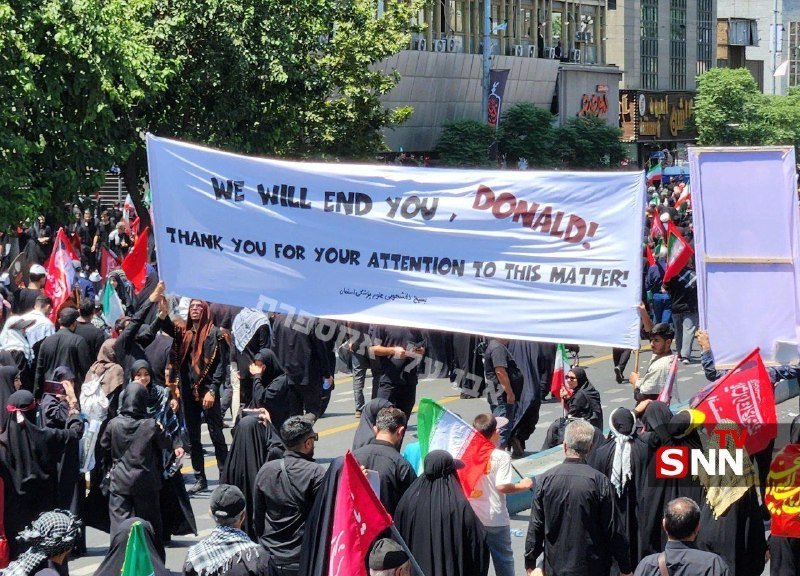
Iran's parliament speaker, Mohammad Bagher Ghalibaf, used a televised address on 3 July 2026 to reject US criticism of Tehran's handling of its own assets, telling President Donald Trump to fix America's hunger problem before offering Tehran unsolicited advice on food aid. The remarks, carried first by Iranian state-aligned outlets and amplified across regional Telegram channels within minutes, marked a sharper rhetorical turn than the Iranian side has shown in months of on-and-off nuclear diplomacy.
The exchange matters less for the insult than for the timing. It lands in the same week that US and Iranian negotiators are reportedly working through technical annexes of a possible understanding on enrichment caps and sanctions sequencing, and it arrives while a Republican-controlled Washington is finalising budget text that reshapes the Supplemental Nutrition Assistance Program. Both threads are now publicly fused in the Iranian speaker's frame, and that is the news.
What Ghalibaf actually said
In a statement broadcast on Iranian state television and posted in summary form on Al-Alam Arabic's breaking-news feed at 19:12 UTC, Ghalibaf urged Trump to "keep your advice on food aid to yourselves," and to remember that Iran is the party that decides how to dispose of its own assets, before asking the US president to consider "the rate of malnutrition in your country." Earlier items in the same feed, timestamped 19:08 and 19:09 UTC, sharpened the political charge: more than 40 million American citizens depend on food-aid vouchers, Ghalibaf said, and Washington has nonetheless described another country as "hungry."
The framing on the Iranian side was deliberately symmetrical. Tasnim News's English-language feed carried the core message in compact form at 18:41 UTC — "Think about the malnutrition of 40 million people in America, don't blame your problems on others. Iran makes its own decisions about its assets." Telegram channels aligned with the Islamic Republic's political base, including Fotros Resistancee and Clash Report, restated the same passages with light editorial embroidery, presenting Ghalibaf's intervention as the formal rebuttal rather than a personal outburst.
The choice of SNAP — the US federal food-stamp programme — as the foil is deliberate. SNAP caseloads are a public, US-government-published figure that the Iranian speaker can deploy without needing to source an alternative dataset. It hands Tehran a talking point that cannot be dismissed as Iranian-state fabrication of Western numbers, because the figure originates in Washington itself.
The diplomatic backdrop
Ghalibaf's intervention does not come from a neutral platform. As speaker of the Majles, he sits atop an institution that has, since 2019, passed a series of binding laws obliging the Iranian government to accelerate uranium enrichment whenever certain sanctions thresholds are crossed. Those laws are the legislative spine behind the escalations that brought Tehran to 60% and then 84% enrichment. The speaker is therefore not a commentator on the nuclear file; he is one of its authors.
That makes the tone of his remarks informative. Iranian negotiators in Geneva and Muscat have spent the past three rounds speaking in measured, lawyerly language, careful not to publicly personalise disputes with the White House. The speaker's choice to do the opposite, on a working day in the middle of an active technical track, suggests either a coordinated signal that Tehran is willing to publicly embarrass the US president to extract domestic-political concessions, or an institutional divergence that the Iranian side has decided to surface openly. The two readings carry different implications for the negotiations; the diplomatic circuit will spend the next 72 hours trying to work out which is operative.
The Washington half of the story
What triggered the exchange was a Trump remark on US food aid to Iran, the substance of which the wire items in this thread do not reproduce. The reference, as Ghalibaf reconstructs it, accused Tehran of mismanaging the assets that sanctions have left inside the Iranian economy. US domestic context frames the choice of food policy as the rhetorical vehicle: budget reconciliation text moving through the US Senate this week includes the largest restructure of SNAP eligibility since 1996, and the Congressional Budget Office's published scoring has become a recurring news peg. The Iranian side appears to have selected this peg deliberately.
The structural frame is not complicated. Two governments negotiating over the unfreezing of Iranian assets have an incentive to define who controls those assets — the Iranian state, or a humanitarian escrow under external supervision. The Trump formulation, as quoted by Ghalibaf, implies the latter. The speaker's response asserts the former. That is the underlying policy dispute, and it is now being fought out in the vocabulary of food aid rather than escrow mechanics.
Stakes and what to watch next
If the dispute stays rhetorical, the technical track in Muscat can absorb it. If it hardens into a precondition — either side tying a sanctions-relief mechanism to a domestic political test — the diplomatic calendar slips. The marker to watch is whether the Iranian foreign ministry echoes Ghalibaf's SNAP framing in its official briefings, or whether it returns to the technocratic register of the negotiating team. The former would mean Tehran has decided the public fight is worth more than the private deal. The latter would mean Ghalibaf spoke for the Majles, not the negotiating table.
The evidence so far is mixed. Tasnim and Al-Alam have carried the speaker's text in full, without the diplomatic-ministerial distancing that usually accompanies a parliamentary broadside. That is a soft signal the political class in Tehran is willing to let the line stand.
What remains uncertain
The thread items do not include the original Trump formulation, so the precise US claim being rebutted has to be inferred from Ghalibaf's paraphrase. No independent wire reporting of either side's food-aid remarks has yet appeared in the items reviewed. The 40-million SNAP figure used by the Iranian speaker is in the right order of magnitude for total US SNAP participation in recent reporting cycles, but this article does not independently verify the exact number, and the sources in this thread do not either. Readers should treat the figure as Iranian-side framing of a US-published statistic, not as an independently corroborated point.
— Monexus framed this story around the diplomatic signal, not the insult. The wire cycle on Iran–US exchanges tends to lead with the personal confrontation; the policy substance sits one paragraph down. We kept it there.
Wire provenance
This editorial synthesis draws on the following public wire/social posts:
- https://t.me/alalamarabic
- https://t.me/alalamarabic
- https://t.me/alalamarabic
- https://t.me/ClashReport
- https://t.me/tasnimnews_en
- https://t.me/FotrosResistancee